
NEWS

7 October 2021
Horak comments eating disorder
A personal reflection on the Stasa Gejo 8a articles by Reino ”Nicki” Horak, Sportdirector Norweigian Climbing Federation. Prior to this he was Team manager for Sweden since 2010. In the picture together with Stasa’s father, Slobodan.
”I have all the respect for Stasa and I am grateful that she goes out and talks about her own experience and thoughts on the issue, eating disorders and weight loss. She is not the first and certainly not the last to vent her experiences and fears on this subject.
This issue regularly comes up in the media, social media and as a general topic of discussion. What has not changed is that nothing drastic and consistent has been done to counteract the problem.
Over the years, I and many others with me have tried to meet this problem in climbing. Since my time as Swedish national team captain and later in the Norwegian federation, I have introduced measures that can help detect and try to prevent eating disorders within the sport. Several other unions have done the same. Unfortunately, no action will be effective until measures are taken on central global level. We can read in strategy plans and statutes that work must be done to ensure that climbing is and is experienced as a healthy sport. Through proposals in recent years, I have tried to bring about a sharpening that directly points to and actively tries to solve the problem of eating disorders within the sport, which is the sports major health problem. Unfortumately without greater success.
Top-level elite sport is seldom healthy given the extreme amount of training and the strain our top athletes have to endure in order to reach the ultimate world elite. On the other hand, we have the possibility and are able to prevent what Stasa describes and reflects on in her article. Before we do that, climbing can never be seen as a healthy sport. On the contrary, the sport will be seen as a health risk for athletes in their ambition and what many consider necessary to do to reach the top. Therefore, let the Medical Committee within the IFSC make recommendations and measures. Be sure to implement these measures for all international competitions. Not until that is done we will hopefully see a end of this ever-recurring subject. I do not hope that a case of tragic event is needed to open our eyes. Lets instead be smart, preventive and actively prevent behaviors that pose extreme health risks to our elite climbers.”
”I have all the respect for Stasa and I am grateful that she goes out and talks about her own experience and thoughts on the issue, eating disorders and weight loss. She is not the first and certainly not the last to vent her experiences and fears on this subject.
This issue regularly comes up in the media, social media and as a general topic of discussion. What has not changed is that nothing drastic and consistent has been done to counteract the problem.
Over the years, I and many others with me have tried to meet this problem in climbing. Since my time as Swedish national team captain and later in the Norwegian federation, I have introduced measures that can help detect and try to prevent eating disorders within the sport. Several other unions have done the same. Unfortunately, no action will be effective until measures are taken on central global level. We can read in strategy plans and statutes that work must be done to ensure that climbing is and is experienced as a healthy sport. Through proposals in recent years, I have tried to bring about a sharpening that directly points to and actively tries to solve the problem of eating disorders within the sport, which is the sports major health problem. Unfortumately without greater success.
Top-level elite sport is seldom healthy given the extreme amount of training and the strain our top athletes have to endure in order to reach the ultimate world elite. On the other hand, we have the possibility and are able to prevent what Stasa describes and reflects on in her article. Before we do that, climbing can never be seen as a healthy sport. On the contrary, the sport will be seen as a health risk for athletes in their ambition and what many consider necessary to do to reach the top. Therefore, let the Medical Committee within the IFSC make recommendations and measures. Be sure to implement these measures for all international competitions. Not until that is done we will hopefully see a end of this ever-recurring subject. I do not hope that a case of tragic event is needed to open our eyes. Lets instead be smart, preventive and actively prevent behaviors that pose extreme health risks to our elite climbers.”
Read more
13
2
7 October 2021
Moonlight Sonata 8C+ FA by Taylor McNeill
Taylor McNeill, who previously has done three 8C's, has done the FA of Moonlight Sonata 8C+ in Joe's Valley (UT). (c) Drew Mercer
"Three and a half years in the making. So much frustration knowing I was capable for so many years and not having it come together. Ultimate satisfaction. Realizing this is not the peak, but just a stepping stone on the path to something greater. It required the perfect harmony of mind, body, and spirit. Now for the sit start..."
"Three and a half years in the making. So much frustration knowing I was capable for so many years and not having it come together. Ultimate satisfaction. Realizing this is not the peak, but just a stepping stone on the path to something greater. It required the perfect harmony of mind, body, and spirit. Now for the sit start..."
Read more
8
07 October 2021
Europeans more negative towards kneepads
Here are the results based on some 1 000 unique votes in regard to, What about kneepads?
66 % Kneepads help us to climb harder
17 % Saves the skin but two grades needed
17 % They should not be allowed
Interestingly, the climbers from the USA are more positive towards kneepads as 78 % voted: Kneepads help us climb harder respectively only 9 % voted: They should not be allowed. The most negative towards kneepads in Europe are found in France and the most positive in UK and Poland.
66 % Kneepads help us to climb harder
17 % Saves the skin but two grades needed
17 % They should not be allowed
Interestingly, the climbers from the USA are more positive towards kneepads as 78 % voted: Kneepads help us climb harder respectively only 9 % voted: They should not be allowed. The most negative towards kneepads in Europe are found in France and the most positive in UK and Poland.
Read more
0
07 October 2021
Battle Cat 8c by Stasa Gejo and part 3 eating disorder
Staša Gejo has done her first 8c, Battle Cat in Frankenjura. Just the last week, she talked about her previous eating disorder, Part 1 and Part 2. Below is the third and final part. Currently, the 175 cm tall weighs 69 kg.
"I did a variant of Battle Cat last year, Cringer 8b+, so I checked out the traverse and the top quickly afterwards. I had 3 serious sessions last year, but I lacked endurance. This year I went once in April and once last Sunday to dial in the moves again. It felt ridiculous how quickly I did it this year. This route is very special to me. It is very long, with no really hard moves, but all force you to dance and adapt your body position to it. I enjoyed it so much every time I climbed it. I kinda wish it took me longer 😅"
What is next?
I have another 8c project in Frankenjura - Father and Son. I tried it twice last year and never since; it is usually wet. Also an 8b+ I tried a few times.
Part 3 - Eating disorder:
"My name is Staša Gejo, I am 23 years old, 175 cm tall, and I have won medals at the World level competitions when I weighed 67 kg, 57 kg, 62 kg, 65 kg, 69 kg and 67 kg again. I had lost 10 kg in my teenage years, making me lose my periods, get prone to injuries and fall down this deep hole of never-ending starving, which luckily came to an end in 2017. I won all the possible titles in the Junior category by eating 1200 kcal, running 4 times a week and climb 5 times a week, all while attending a difficult high school programme IB (International Baccalaureate). Didn’t last long until I burned out. Mom and Dad took me to a nutritionist, a very respected doctor in the Serbian sports scene, dr. Marija Andjelković, who helped me rearrange my food intake, start eating more, and train harder. After a few years, I now have 50% muscle mass, 13% fat and a BMI of 22.2. I feel healthy, strong and confident.
To go back to how weight management should be approached. There is no such thing as quick weight loss. If you are one week away from the competition, all you can do is take down 1 kg max (of water). Everything else is not healthy in the long run.
Intake should be around 300 kcal less than the output to lose weight consistently. No difference to maintain weight.
Eating lots of protein prevents muscle loss in long term. The surplus in calories builds muscles in this case.
Cardio is good for fat burning when performed at 60% of HR max (meaning light activity) for more than 45 min, few times a week. In my experience HIIT just makes you hungrier.
Carbs are very good for you! 50-60% is a must-have for climbers.
Keep the fat under control! 20% of the daily intake. We all like to snack on nuts at the training or crag.
Balance is the key. Balance of trainings, diet, and the mind.
The stomach can learn anything. It learns how to binge, and it learns how to starve. Teach it how to be calm, controlled, and functional.
These are just some basics. I recommend reading PEAK by Dr. Marc Bubbs for more insights. I am not promoting the bulky climbing chicks' movement. I am suggesting that a good diet offseason, combined with proper weightlifting, strength training and injury prevention can lead to very impressive results on the wall. The real power is born, you can do moves you never could before. You can climb for so much longer and more intense than ever. The recovery is much better and eventually, the hormones regulate themselves too.
It is hard to adapt to the new look. We all admire that skinny body we once had. Want to go back there so badly…. but remind yourself that it is just lots of trouble masked up in a sculpted appearance. Once you match the way you feel and look, that is when you have hit the right balance. Whenever life gets hard and you start falling into the disordered eating trap, try to remember why the end scenario would be really bad for your health."
"I did a variant of Battle Cat last year, Cringer 8b+, so I checked out the traverse and the top quickly afterwards. I had 3 serious sessions last year, but I lacked endurance. This year I went once in April and once last Sunday to dial in the moves again. It felt ridiculous how quickly I did it this year. This route is very special to me. It is very long, with no really hard moves, but all force you to dance and adapt your body position to it. I enjoyed it so much every time I climbed it. I kinda wish it took me longer 😅"
What is next?
I have another 8c project in Frankenjura - Father and Son. I tried it twice last year and never since; it is usually wet. Also an 8b+ I tried a few times.
Part 3 - Eating disorder:
"My name is Staša Gejo, I am 23 years old, 175 cm tall, and I have won medals at the World level competitions when I weighed 67 kg, 57 kg, 62 kg, 65 kg, 69 kg and 67 kg again. I had lost 10 kg in my teenage years, making me lose my periods, get prone to injuries and fall down this deep hole of never-ending starving, which luckily came to an end in 2017. I won all the possible titles in the Junior category by eating 1200 kcal, running 4 times a week and climb 5 times a week, all while attending a difficult high school programme IB (International Baccalaureate). Didn’t last long until I burned out. Mom and Dad took me to a nutritionist, a very respected doctor in the Serbian sports scene, dr. Marija Andjelković, who helped me rearrange my food intake, start eating more, and train harder. After a few years, I now have 50% muscle mass, 13% fat and a BMI of 22.2. I feel healthy, strong and confident.
To go back to how weight management should be approached. There is no such thing as quick weight loss. If you are one week away from the competition, all you can do is take down 1 kg max (of water). Everything else is not healthy in the long run.
Intake should be around 300 kcal less than the output to lose weight consistently. No difference to maintain weight.
Eating lots of protein prevents muscle loss in long term. The surplus in calories builds muscles in this case.
Cardio is good for fat burning when performed at 60% of HR max (meaning light activity) for more than 45 min, few times a week. In my experience HIIT just makes you hungrier.
Carbs are very good for you! 50-60% is a must-have for climbers.
Keep the fat under control! 20% of the daily intake. We all like to snack on nuts at the training or crag.
Balance is the key. Balance of trainings, diet, and the mind.
The stomach can learn anything. It learns how to binge, and it learns how to starve. Teach it how to be calm, controlled, and functional.
These are just some basics. I recommend reading PEAK by Dr. Marc Bubbs for more insights. I am not promoting the bulky climbing chicks' movement. I am suggesting that a good diet offseason, combined with proper weightlifting, strength training and injury prevention can lead to very impressive results on the wall. The real power is born, you can do moves you never could before. You can climb for so much longer and more intense than ever. The recovery is much better and eventually, the hormones regulate themselves too.
It is hard to adapt to the new look. We all admire that skinny body we once had. Want to go back there so badly…. but remind yourself that it is just lots of trouble masked up in a sculpted appearance. Once you match the way you feel and look, that is when you have hit the right balance. Whenever life gets hard and you start falling into the disordered eating trap, try to remember why the end scenario would be really bad for your health."
Read more
24
236 October 2021
El hijo libre 8c by Ida Kupś
Ida Kupś has done two 8c's in ; El hijo libre: "Hardest of 8c I've done, but worth the effort. One of the best moves I've ever done, perfect technical roof climbing." Florida: "I would say this route is more of a mental than a physical challenge. You’re getting to the upper crux completely rested with plenty of time to think while resting which results in putting too much pressure on yourself and falling off the boulder doing some stupid mistakes :) For me, Florida is not as good as El hijo but still, both are world-class routes."
Read more
9
06 October 2021
Six sessions needed for Rogora taking down Erebor 9b/+
Laura Rogora tried Erebor 9b/+ for two days in March and already on the first day she did all the moves. Returning from the World Championship in Russia, where she got the bronze, the 20-year-old needed only four more days for sending it, doing three attempts per session. Source: PlanetMountain
Noteworthy is that FA Stefano Ghisolfi projected it for some 20 days before sending it, including falling more than ten times on the last moves. As can be seen, comparing it with the Ghisolfi video, they used different beta in many sequences. Ghisolfi has commented on youtube saying that she used some "microscopical holds" for the jump, which was smaller than the tickmarks put on them.
Noteworthy is that FA Stefano Ghisolfi projected it for some 20 days before sending it, including falling more than ten times on the last moves. As can be seen, comparing it with the Ghisolfi video, they used different beta in many sequences. Ghisolfi has commented on youtube saying that she used some "microscopical holds" for the jump, which was smaller than the tickmarks put on them.
Read more
13
136 October 2021
Schubert in Ticino part #2
Read more
3
06 October 2021
Staša Gejo talks eating disorder part 2
"My name is Staša Gejo, I am 23 years old, 175 cm tall, and I have won medals at the World level competitions when I weighed 67 kg, 57 kg, 62 kg, 65 kg, 69 kg and 67 kg again. I had lost 10 kg in my teenage years, making me lose my periods, get prone to injuries and fall down this deep hole of never-ending starving, which luckily came to an end in 2017. I won all the possible titles in the Junior category by eating 1200 kcal, running 4 times a week and climb 5 times a week, all while attending a difficult high school programme IB (International Baccalaureate). Didn’t last long until I burned out.
Mom and Dad took me to a nutritionist, a very respected doctor in the Serbian sports scene, dr. Marija Andjelković, who helped me rearrange my food intake, start eating more, and train harder. After a few years, I now have 50% muscle mass, 13% fat and a BMI of 22.2. I feel healthy, strong and confident.
Unfortunately, I have observed patterns of unforgivable behaviour of those in charge of young athletes, especially girls, when they reach puberty. Girls are being blinded by some 'role models that look like skeletons, in the hope to make them achieve it too. Luckily, I was not a victim of such systematic torture, I was my own victim, as is mostly the case;
Somebody's mother forced her to diet, otherwise, she is no good.
Somebody's coach said she can't compete so 'fat'.
'Look at ****, she runs 10 km every other day!'
I must admit, ripped muscular bodies look unrealistically good. We all drop the jaws when we see all those abs and small muscles we rarely get to see. It has a good reason to be a social media viral content and magazine cover page. But anybody who has been there hasn't felt alright. Perfection simply isn't sustainable.
Climbing is known to be the sport of the skinny, even though it doesn't have weight categories. As the sport has seen the increase of critically underweight athletes, the regulations were set. Weight and height measurements have been taken before almost every World Cup Semifinals. In the beginning, the critical values were 17,5 for women and 18.5 for men. As it was realised later on, this limit was too low to address most of the critical cases, therefore it was increased to 18 and 19 respectively. Does it still address the issue? Not really.
The consequences of beating this limit are rather… complicated. Or it depends on the national federation, I guess… Some take it seriously, ban the athlete from the competition, take action to help return to normal weight, help maintain it and return the athlete to healthy performance. One beautiful example of recovery took place in 2019, I have seen the girl this year, more beautiful than ever, looking strong and healthy. It made me so happy to see it.
However, things aren't always handled this nicely. Most of the super skinny cases we still see on the competitions somehow pass these regulations, not sure how exactly. The good old signature move of handwashing, I suppose. A friend and colleague confessed to me:˝Whenever I underperform in bouldering, I know that I need to work on my power, coordination, whatever… but in lead, my first thought is – if I lose 5 kg I can beat them all, no problem. It is impossible to think in any other way when you see abnormally skinny people still competing and climbing higher than you. Then I must be too heavy!˝(claimed at weight probably 55 kg, maybe less, my guess). This thought process is hunting almost everybody who competes in the female category.
During the BMI screenings some athletes even take a peek to see who weighs how much… I don't understand the point. But from such peeking, I heard a rumour (which might not be true) that someone (not to be named) weighs 34 kg. I really hope it isn't true."
Mom and Dad took me to a nutritionist, a very respected doctor in the Serbian sports scene, dr. Marija Andjelković, who helped me rearrange my food intake, start eating more, and train harder. After a few years, I now have 50% muscle mass, 13% fat and a BMI of 22.2. I feel healthy, strong and confident.
Unfortunately, I have observed patterns of unforgivable behaviour of those in charge of young athletes, especially girls, when they reach puberty. Girls are being blinded by some 'role models that look like skeletons, in the hope to make them achieve it too. Luckily, I was not a victim of such systematic torture, I was my own victim, as is mostly the case;
Somebody's mother forced her to diet, otherwise, she is no good.
Somebody's coach said she can't compete so 'fat'.
'Look at ****, she runs 10 km every other day!'
I must admit, ripped muscular bodies look unrealistically good. We all drop the jaws when we see all those abs and small muscles we rarely get to see. It has a good reason to be a social media viral content and magazine cover page. But anybody who has been there hasn't felt alright. Perfection simply isn't sustainable.
Climbing is known to be the sport of the skinny, even though it doesn't have weight categories. As the sport has seen the increase of critically underweight athletes, the regulations were set. Weight and height measurements have been taken before almost every World Cup Semifinals. In the beginning, the critical values were 17,5 for women and 18.5 for men. As it was realised later on, this limit was too low to address most of the critical cases, therefore it was increased to 18 and 19 respectively. Does it still address the issue? Not really.
The consequences of beating this limit are rather… complicated. Or it depends on the national federation, I guess… Some take it seriously, ban the athlete from the competition, take action to help return to normal weight, help maintain it and return the athlete to healthy performance. One beautiful example of recovery took place in 2019, I have seen the girl this year, more beautiful than ever, looking strong and healthy. It made me so happy to see it.
However, things aren't always handled this nicely. Most of the super skinny cases we still see on the competitions somehow pass these regulations, not sure how exactly. The good old signature move of handwashing, I suppose. A friend and colleague confessed to me:˝Whenever I underperform in bouldering, I know that I need to work on my power, coordination, whatever… but in lead, my first thought is – if I lose 5 kg I can beat them all, no problem. It is impossible to think in any other way when you see abnormally skinny people still competing and climbing higher than you. Then I must be too heavy!˝(claimed at weight probably 55 kg, maybe less, my guess). This thought process is hunting almost everybody who competes in the female category.
During the BMI screenings some athletes even take a peek to see who weighs how much… I don't understand the point. But from such peeking, I heard a rumour (which might not be true) that someone (not to be named) weighs 34 kg. I really hope it isn't true."
Read more
13
56 October 2021
Soudain Seul 9A (8C+) Trailer
Read more
4
105 October 2021
So What 8C FA by Yves Gravelle
Yves Gravelle, who the last week did his first ever 8C, has done the FA's of So What 8C and Turn & Burn 8B+ in Kanata Treblant.
How can you explain this extraordinary peak?
I’ve been focusing a lot on gaining power endurance. I think this was the key for me to reach that next level. I was always very strong on single moves but ran out of steam after a few seconds. Another keys factor was to improve my flexibility and mobility. I think I also gain a lot of confidence and motivation after sending Low Miall’s (8C).
So What 8C FA: "A dream came true today! The link-up of Thessalhydra into Miall’s ahead. I’ve been working on this line for 4 years now. Had to spend months training my shoulders, lats and mobility to be able to do the first moves and doing laps on Miall’s ahead to build the power endurance to link the 2 sections. Fells like V13 into V14.
Turn & Burn 8B+ FA: "Some of the craziest moves I’ve ever done outside and another boulder I never taught I would send. I’ve been playing on this thing for years and could never link more than one move. Sit start next! Definitely V15 (8C) or maybe even V16 (8C+). I feel it might add another V13/14 section into the stand.
How can you explain this extraordinary peak?
I’ve been focusing a lot on gaining power endurance. I think this was the key for me to reach that next level. I was always very strong on single moves but ran out of steam after a few seconds. Another keys factor was to improve my flexibility and mobility. I think I also gain a lot of confidence and motivation after sending Low Miall’s (8C).
So What 8C FA: "A dream came true today! The link-up of Thessalhydra into Miall’s ahead. I’ve been working on this line for 4 years now. Had to spend months training my shoulders, lats and mobility to be able to do the first moves and doing laps on Miall’s ahead to build the power endurance to link the 2 sections. Fells like V13 into V14.
Turn & Burn 8B+ FA: "Some of the craziest moves I’ve ever done outside and another boulder I never taught I would send. I’ve been playing on this thing for years and could never link more than one move. Sit start next! Definitely V15 (8C) or maybe even V16 (8C+). I feel it might add another V13/14 section into the stand.
Read more
5
0Favorites
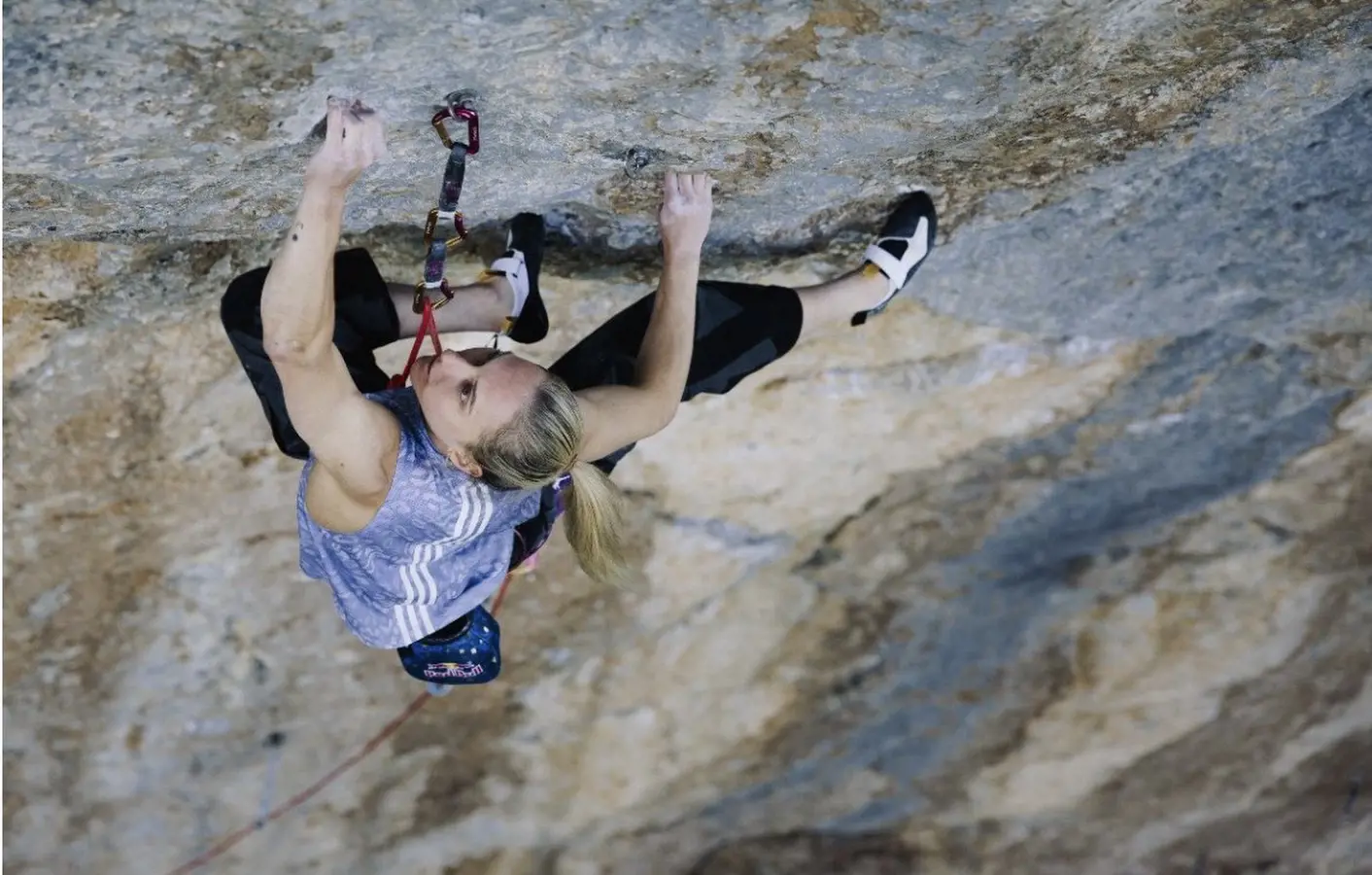
Janja Garnbret has added another milestone to her remarkable climbing career by becoming the first woman to climb Bibliographie (9b+) in Céüse, one of the harde…
361
48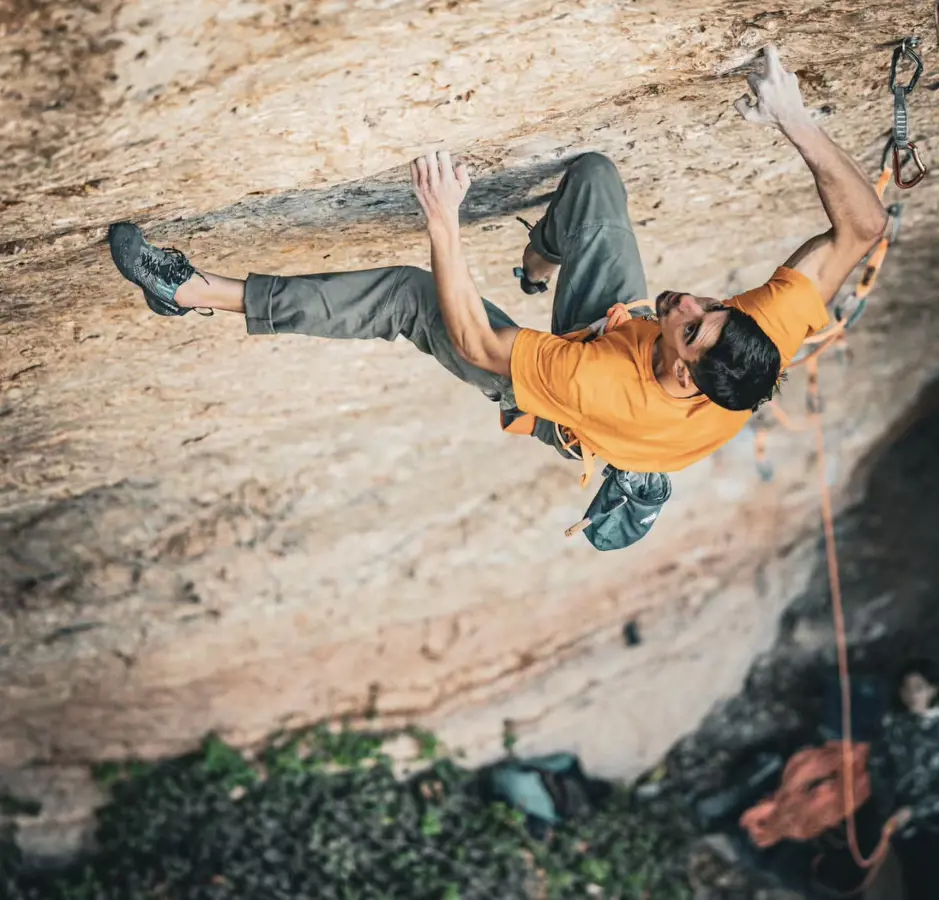
Jorge Diaz-Rullo reports on Instagram that he has made the first ascent of Cafe Colombia in Margalef. At 27, he’s already stacked four 9b+ sends and now he’s ad…
285
81
”I stopped focusing on competition bouldering after last year’s World Cup in Prague, partly because I can already feel it on my body, especially in my shoulders. The modern competition style, with a lot of jumping from one hold to another, is very demanding for the shoulders.
Outdoor bouldering is…
189
13Most commented
Jorge Diaz-Rullo reports on Instagram that he has made the first ascent of Cafe Colombia in Margalef. At 27, he’s already stacked four 9b+ sends and now he’s ad…
285
81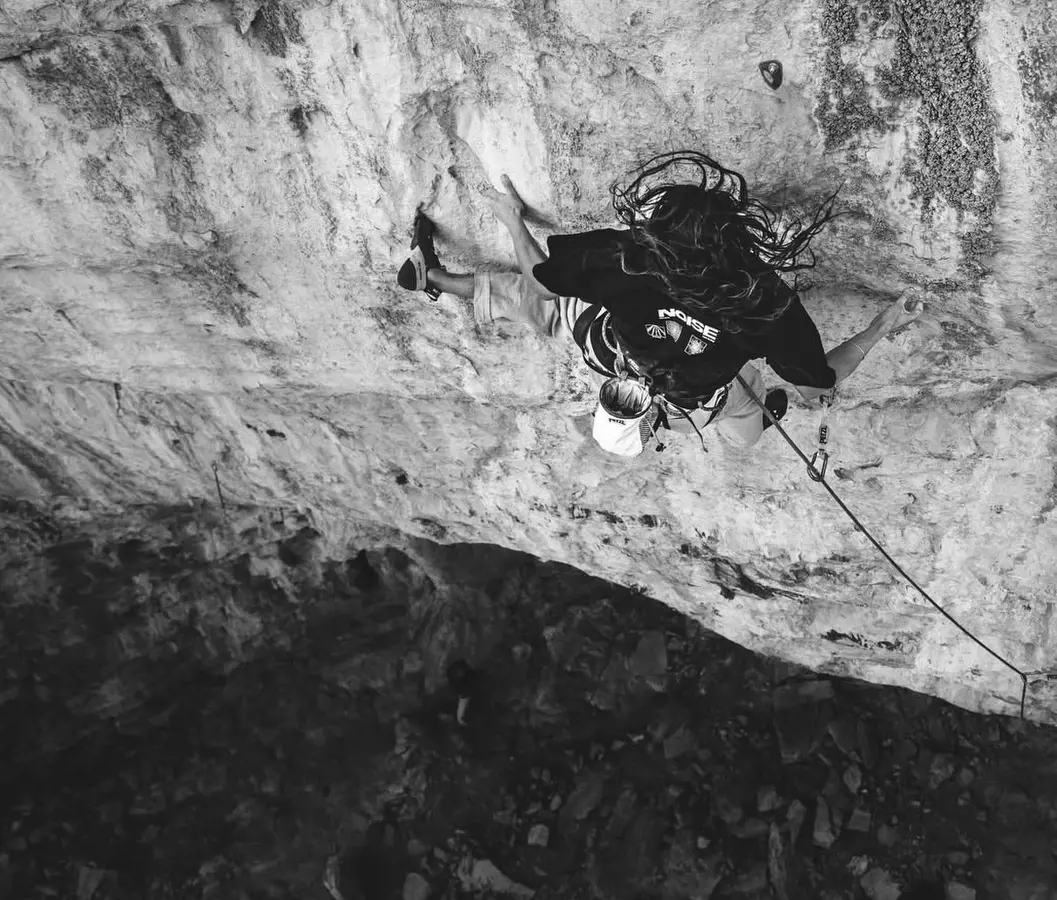
Sean Bailey reports on Instagram that he has done the first ascent of Duality of Man (9c) in Dry Canyon. ” After four total years and three seasons of climbing,…
163
69Jorge Diaz-Rullo elaborates on the reasons for him to suggest 9c for Café Colombia on Instagram, which he took down last week after projecting it for 240 sessio…
119
63