
NEWS
11 January 2022
Bayes Wilder (10) doing Rumble in the Djungle 8A+
Read more
1
0IFSC has presented a new Combined scoring format by points. The max score is 100 points in each discipline. Here is one example of how the winner in Boulder actually could end up tied dead last overall with the Lead winner! If IFSC would have used the old multiplication system they have instead been tied winners!
The example is based on that the boulders are too easy and all make at least three Tops. This means that the winner will get close to 100 points and then most of the guys will get just above 99 points and the others 75 - 81 points. If then the Boulder winner gets to hold 40, out of 45, on the lead route and all others make it at least one hold further, he/she could be dead last overall. Here is a fictive result board where also the Lead and Boulder winners becomes dead last overall.
1. 99.5 + 85 = 184.5
2. 99.4 + 85 = 184.4
3. 99.6 + 80 = 179.6
4. 99.3 + 80 = 179.3
5. 99.2 + 80 = 179.2
6. 80.9 + 95 = 175.9
7. 74.7 + 100 = 174.7 (Lead winner: with multiplication #1)
7. 99.7 + 75 = 174.7 (Boulder winner: with multiplication #1)
Another scenario that would not please the spectators could be if Janja Garnbret tops out all four boulders at the same time the runner up just makes two tops. This would mean that Janja has almost secured the combined victory as she is like 40-45 points ahead before Lead. Another not so good scenario is that the Lead route is too hard and the max points received is 25 as the winner just make it to hold 30 out of 45. In practice, this would mean that the overall ranking will simply be based on who made more Tops in Boulder and again that the Lead winner could be dead last overall.
I have discussed this with Stasa Gejo who has taken part in an IFSC meeting as she is in the athlete's commission. "The biggest flaw is that IFSC wants to equalize boulder and lead, which is impossible. The Athletes' Commission representatives, were fighting to implement a performance model, where everyone's score would depend on the leader's, but the authorities didn't want to hear about it. We'll see what happens on the first implementation. It is hard to have a clear opinion now, without a test. Also, the setting will play the biggest role. My proposal is to have an athlete-testing group, some non-qualified athletes for the olympics."
The easiest way to have a performance model like what the Athletes Commission representative want, is simply, to sum up the ranking in each discipline. This is what I suggested before the Tokyo Olympics. If so, both the Lead and the Boulder winners would end midways in the result list, based on the example above. It seems IFSC goes from one extreme ranking model in Tokyo to the opposite extreme for Paris at the same time the athletes want something in the middle.
Remember that if not Colin Duffy had made a false start of 0.005 seconds in his first Speed run in Tokyo against Alberto Gines Lopez, they would probably have changed their results overall. Colin had won the gold and Alberto had become dead last in the final.
The example is based on that the boulders are too easy and all make at least three Tops. This means that the winner will get close to 100 points and then most of the guys will get just above 99 points and the others 75 - 81 points. If then the Boulder winner gets to hold 40, out of 45, on the lead route and all others make it at least one hold further, he/she could be dead last overall. Here is a fictive result board where also the Lead and Boulder winners becomes dead last overall.
1. 99.5 + 85 = 184.5
2. 99.4 + 85 = 184.4
3. 99.6 + 80 = 179.6
4. 99.3 + 80 = 179.3
5. 99.2 + 80 = 179.2
6. 80.9 + 95 = 175.9
7. 74.7 + 100 = 174.7 (Lead winner: with multiplication #1)
7. 99.7 + 75 = 174.7 (Boulder winner: with multiplication #1)
Another scenario that would not please the spectators could be if Janja Garnbret tops out all four boulders at the same time the runner up just makes two tops. This would mean that Janja has almost secured the combined victory as she is like 40-45 points ahead before Lead. Another not so good scenario is that the Lead route is too hard and the max points received is 25 as the winner just make it to hold 30 out of 45. In practice, this would mean that the overall ranking will simply be based on who made more Tops in Boulder and again that the Lead winner could be dead last overall.
I have discussed this with Stasa Gejo who has taken part in an IFSC meeting as she is in the athlete's commission. "The biggest flaw is that IFSC wants to equalize boulder and lead, which is impossible. The Athletes' Commission representatives, were fighting to implement a performance model, where everyone's score would depend on the leader's, but the authorities didn't want to hear about it. We'll see what happens on the first implementation. It is hard to have a clear opinion now, without a test. Also, the setting will play the biggest role. My proposal is to have an athlete-testing group, some non-qualified athletes for the olympics."
The easiest way to have a performance model like what the Athletes Commission representative want, is simply, to sum up the ranking in each discipline. This is what I suggested before the Tokyo Olympics. If so, both the Lead and the Boulder winners would end midways in the result list, based on the example above. It seems IFSC goes from one extreme ranking model in Tokyo to the opposite extreme for Paris at the same time the athletes want something in the middle.
Remember that if not Colin Duffy had made a false start of 0.005 seconds in his first Speed run in Tokyo against Alberto Gines Lopez, they would probably have changed their results overall. Colin had won the gold and Alberto had become dead last in the final.
Read more
0
19 January 2022
43 8a and 8a+' by Cathy Wagner (56) in 2021
Cathy Wagner has done 834 routes 8a and harder which is probably most of all female out there. Only in 2021, the 56-year-old did 37 8a's and 6 8a+. Actually her best years, in terms of sending most hard routes have been since she turned 49. Cathy started climbing in 1986 and in 1994, at age 29, she did her first 8a.
It should be mentioned that one of her 8a+ logged routes in 2021 is Salsa-Burricada (8b). "A must-do! 8b in the guidebook, which makes sense if you climb this long traverse without any knee-pads! I've used them a lot right from the beginning and again before the final cruxy boulder section, for which I had to readjust the beta after falling twice. The thing is you have to recover after a 20-move section into a good kneer-bar rest before that boulder. Thanks Pires for sharing your beta with me 😊. I reckon it's (a soft?) 8a+ with pads."
It should be mentioned that one of her 8a+ logged routes in 2021 is Salsa-Burricada (8b). "A must-do! 8b in the guidebook, which makes sense if you climb this long traverse without any knee-pads! I've used them a lot right from the beginning and again before the final cruxy boulder section, for which I had to readjust the beta after falling twice. The thing is you have to recover after a 20-move section into a good kneer-bar rest before that boulder. Thanks Pires for sharing your beta with me 😊. I reckon it's (a soft?) 8a+ with pads."
Read more
14
09 January 2022
First Ley 9a+ by Marco Zanone
Marco Zanone, who previously has done three 9a's, has sent First Ley (9a+) in Margalef. "The hardest route I've ever climbed, such a relief to clip the chain of this beast!! So happy"" (c) Andrea Zanone
"The first time I tried this route was back in December 2019. I've been climbing in Spain for so many years that I felt like it was the right moment to try something very hard for me. First Ley was the one I decided to try because of its unique style that usually it's the one that suits me the most. After only a few days of work, I realized it was possible, I was feeling great on the sequence except for the middle section. I was struggling because of a tricky kneebar, It was my first time wearing a knee pad so my body was a little bit confused. The 15-days trip ended with very positive feelings, falling a bunch of times at the very last hard move before moving to the left.
After that trip, I came back in February 2020, just before covid happened, but I was not able to stick that infamous last move, also due to a partial break of a key hold. (It didn't change the way I was using the hold with my hand, but it became much worse as a foothold). Then winter 2020/2021 came, same fitness, same high point again, but this time I was really busy with work (I was climbing and working at the same time here in Spain) and also the conditions were awful, always very cold and foggy, until an epic snowstorm hit the Montsant area, blowing away any other possibility.
Two years after the first time, here I am again. I knew the route became almost only a matter of good weather conditions and about finding the right mindset. After a week of very hot weather, the wind started blowing again, the clouds came in and during a perfect mid-day session with some friends I was able to get to the top of my first 9a+."
"The first time I tried this route was back in December 2019. I've been climbing in Spain for so many years that I felt like it was the right moment to try something very hard for me. First Ley was the one I decided to try because of its unique style that usually it's the one that suits me the most. After only a few days of work, I realized it was possible, I was feeling great on the sequence except for the middle section. I was struggling because of a tricky kneebar, It was my first time wearing a knee pad so my body was a little bit confused. The 15-days trip ended with very positive feelings, falling a bunch of times at the very last hard move before moving to the left.
After that trip, I came back in February 2020, just before covid happened, but I was not able to stick that infamous last move, also due to a partial break of a key hold. (It didn't change the way I was using the hold with my hand, but it became much worse as a foothold). Then winter 2020/2021 came, same fitness, same high point again, but this time I was really busy with work (I was climbing and working at the same time here in Spain) and also the conditions were awful, always very cold and foggy, until an epic snowstorm hit the Montsant area, blowing away any other possibility.
Two years after the first time, here I am again. I knew the route became almost only a matter of good weather conditions and about finding the right mindset. After a week of very hot weather, the wind started blowing again, the clouds came in and during a perfect mid-day session with some friends I was able to get to the top of my first 9a+."
Read more
13
08 January 2022
Grandi Gesti 8c+ by Giorgio Tomatis (18)
Giorgio Tomatis and Alberto Gotta have done Grandi Gesti 8c+ in . It was put up as an 9a and then Adam Ondra did it second go and suggested a personal 8c+ grade. Both Giorgio and Alberto confirm this and together with Stefano Ghisolfi's recent grade update, the great roof traverse should be considered an 8c+.
Gotta was runner-up in the Italian Championship after Ghisolfi in 2021. Tomatis, who did his first 8c+ at age 14 and has done four 9a's, won one Euro Youth Cup last year. (c) Sara Grippo
What is your plan and ambition in 2022?
Surely try to climb Lapsus (9a+) and then in the competition a goal that I would like to achieve is the victory of the youth world championship in lead. For now, these are my first goals, surely during the season, there will be others.
Gotta was runner-up in the Italian Championship after Ghisolfi in 2021. Tomatis, who did his first 8c+ at age 14 and has done four 9a's, won one Euro Youth Cup last year. (c) Sara Grippo
What is your plan and ambition in 2022?
Surely try to climb Lapsus (9a+) and then in the competition a goal that I would like to achieve is the victory of the youth world championship in lead. For now, these are my first goals, surely during the season, there will be others.
Read more
4
38 January 2022
Grade updates by Adam Ondra and Stefano Ghisolfi
It has previously been reported that Adam Ondra has made some grade updates in his logbook. Examples are that Chilam Balam, La Capella and Lapsus have been taken down to 9a+ and that Goldrake was updated to 9a. Now Stefano Ghisolfi has made a total of 12 grade adjustments, including confirming the latter three mentioned by Ondra. The Italian has also suggested personal downgrades of three classical original 9a's in Massone near Arco.
Some of their grade updates are based on the use of knee pads and others are because neighbouring routes have been downgraded. Some updates have probably also been done as they hesitated of a FA grade, writing comments like, "Time will tell". When they later have seen and heard most others have called them "Soft", some original grades have been updated. It should be mentioned that Adam Ondra has since he was a teenager been the top climber in the world that have given most personal up- and downgradings.
Escalade9 is a website that originally tried to keep track of all 9a ascents in the world. Later, often based on Adam Ondra's personal grades, many routes have been updated to 8c+/9a. Interestingly is also that by checking the most repeated 9a's in the world, most have actually been downgraded to 8c+/9a, which makes popularity a good marker for soft grades. Based on Adam and Stefano's grade comments, probably, some of Escalade9' listed climbs will be taken out.
From a personal point of view, I think it is great that Adam and Stefano have made some grade reflections. Over the years, we have seen grade inflation that has led to some old school routes being upgraded. I often receive grade comments by top climbers who tell me that the topo grade is not correct but they do not want to be the guy calling it out and instead just marked the route as "soft". Hopefully, some more climbers will make grade updates. Overall, it is the quality of the line that is most important and which should be the selection criteria #1. Not which route has the softest grade :)
Ghisolfi comments, "Adam told me he updated some grades and I decided to do it too because some routes I did a few years ago are considered a different grade and it is not correct to keep the old grades in my scorecard."
Some of their grade updates are based on the use of knee pads and others are because neighbouring routes have been downgraded. Some updates have probably also been done as they hesitated of a FA grade, writing comments like, "Time will tell". When they later have seen and heard most others have called them "Soft", some original grades have been updated. It should be mentioned that Adam Ondra has since he was a teenager been the top climber in the world that have given most personal up- and downgradings.
Escalade9 is a website that originally tried to keep track of all 9a ascents in the world. Later, often based on Adam Ondra's personal grades, many routes have been updated to 8c+/9a. Interestingly is also that by checking the most repeated 9a's in the world, most have actually been downgraded to 8c+/9a, which makes popularity a good marker for soft grades. Based on Adam and Stefano's grade comments, probably, some of Escalade9' listed climbs will be taken out.
From a personal point of view, I think it is great that Adam and Stefano have made some grade reflections. Over the years, we have seen grade inflation that has led to some old school routes being upgraded. I often receive grade comments by top climbers who tell me that the topo grade is not correct but they do not want to be the guy calling it out and instead just marked the route as "soft". Hopefully, some more climbers will make grade updates. Overall, it is the quality of the line that is most important and which should be the selection criteria #1. Not which route has the softest grade :)
Ghisolfi comments, "Adam told me he updated some grades and I decided to do it too because some routes I did a few years ago are considered a different grade and it is not correct to keep the old grades in my scorecard."
Read more
4
08 January 2022
Dreamtime 8C (B+) by Marco Müller
Marco Müller has done Fred Nicole's classical Dreamtime 8C (B+) in Cresciano using the original dyno beta. "I finally decided to try this megaclassic in Cresciano, dreaming about it for a long time ;)
On my third session I found out how to move on the dyno and I could climb the stand start. I then checked out the lower moves, which are more technical and suited me well. It took me four more sessions to do the dyno move from the ground and I finally could climb the whole line." (c) Benjamin Weber
The Swizz has previously done three 8B+ and this summer he did his seventh 9a as well as his first 9a+.
The Swizz has previously done three 8B+ and this summer he did his seventh 9a as well as his first 9a+.
Read more
4
07 January 2022
Warm winter fingers = Talent for top climbers?
Is the potential to climb in freezing conditions a positive marker for being a top climber? Over the years, I have heard and seen many top climbers that can climb in very cold conditions. This has also been confirmed by four polls where actually 6 % say they prefer hardcore bouldering in freezing conditions and another 33 % voted 4 degrees is optimal.
Some are born with warm fingers and this should relate to having great blood circulation in the forearms. When such a forearm is exposed to climbing training, the size of the muscle and the number of capillaries might increase the possibility to climb on the rock in freezing conditions. What if you could test how warm fingers 100 beginners have and that you later could find a correlation with climbing performance?
This theory could be backed up from a medical point of view as one symptom of compartment syndrome is actually cold fingers and toes. The syndrome stops the blood circulation and the forearm will swell and could remain stiff for hours after a climbing session. What is your take on this new theory?
In the picture, Eva Hammelmüller climbs an 8b+ in minus 2 degrees, no sun and a nasty wind.
Some are born with warm fingers and this should relate to having great blood circulation in the forearms. When such a forearm is exposed to climbing training, the size of the muscle and the number of capillaries might increase the possibility to climb on the rock in freezing conditions. What if you could test how warm fingers 100 beginners have and that you later could find a correlation with climbing performance?
This theory could be backed up from a medical point of view as one symptom of compartment syndrome is actually cold fingers and toes. The syndrome stops the blood circulation and the forearm will swell and could remain stiff for hours after a climbing session. What is your take on this new theory?
In the picture, Eva Hammelmüller climbs an 8b+ in minus 2 degrees, no sun and a nasty wind.
Read more
1
46 January 2022
Draft: Top-10 FFA and OS females ahead of their time
This is a pretty tough one comparing the female climbers who through the First Female Ascents and their onsights have pushed climbing the most during the last 40+ years. Please comment to make changes in the draft Top-10.
1. Josune Bereziartu: FFA of an 8c, 8c+, 9a and 9a/+. First female to OS 8b and 8b+.
2. Lynn Hill: FA of The Nose 8b+, FFA of an 8b+, Masse Critique. FF onsights; 7b, 7c, 7c+ and 8a
3. Angy Eiter: Four 9a to 9b FA. FFA of a 9b, La Planta de Shiva
4. Barbara Zangerl: Several FFA of big walls and trad climbs
5. Laura Rogora: 22 routes 8c+/9a to 9b and OS up to 8b+
6. Margo Hayes: FFA of a 9a+ and also 2nd female to do a 9a+, La Rambla
7. Anak Verhoeven: 12 8c+ to 9a+ including a 9a+ FA
8. Janja Garnbret: First and second female 8c OS
9. Charlotte Durif: 2nd female 9a and 8b+ OS
10. Julia Chanourdie, Robin Erbesfield, Isabelle Pattisier, Catherine Destivelle, Ashima Shiraishi, Beth Rodden
1. Josune Bereziartu: FFA of an 8c, 8c+, 9a and 9a/+. First female to OS 8b and 8b+.
2. Lynn Hill: FA of The Nose 8b+, FFA of an 8b+, Masse Critique. FF onsights; 7b, 7c, 7c+ and 8a
3. Angy Eiter: Four 9a to 9b FA. FFA of a 9b, La Planta de Shiva
4. Barbara Zangerl: Several FFA of big walls and trad climbs
5. Laura Rogora: 22 routes 8c+/9a to 9b and OS up to 8b+
6. Margo Hayes: FFA of a 9a+ and also 2nd female to do a 9a+, La Rambla
7. Anak Verhoeven: 12 8c+ to 9a+ including a 9a+ FA
8. Janja Garnbret: First and second female 8c OS
9. Charlotte Durif: 2nd female 9a and 8b+ OS
10. Julia Chanourdie, Robin Erbesfield, Isabelle Pattisier, Catherine Destivelle, Ashima Shiraishi, Beth Rodden
Read more
1
126 January 2022
Two 8A+ by Bayes Wilder (10)
Bayes Wilder (10), who did his first 8c+ route two months ago, has during a two weeks trip to Hueco Tanks done ten boulders 7C and harder, including two 8A+, Barefoot on Sacred Ground and Rumble in the Jungle. The latter the 10-year-old actually did in just one day. We asked his father Matt, who back in the days made 8a news by doing a 9a, if he could share their story.
How did Bayes prepare for the trip?
Since our RRG trip in early Nov., Bayes has just been doing his 3 * 2-hour practices per week at Team ABC. Those have been all bouldering practices.
How are the climbs selected and how does he normally project them?
I'm very familiar with Hueco and many other areas from my years of climbing so I often will select potential climbs that I think might fit him well. He'll look through the guidebooks and pick stuff out as well. Things like Barefoot on Sacred Ground were goals he had from watching videos of Ashima in Hueco. Rumble in the Jungle wasn't even on our list, but he wanted to finish up a cool V6 nearby and so we decided to look at it and he got psyched.
When he's working on a problem, I'll often support him. Generally, it's a long process because he has to figure out the unique beta for his size. It's like in the old days when you couldn't watch videos of other people doing a problem before going out and you just had to figure the moves out yourself. He's pretty creative and knows his climbing style really well and so often comes up with a sequence himself. I'm pretty analytical too and so I'll often throw out different ideas if he's stuck somewhere. Sometimes I'll give him coaching on how to approach the problem and what parts to try, etc., but usually, I just let him do his thing. He has definitely gotten pretty good at figuring out the beta. What about your impact versus his own driving force?
Bayes has a love for climbing and he is super psyched on most problems. He is not overly goal-oriented so he doesn't usually have a long list of problems he has to do. He just likes to go out and challenge himself. He did have the goal of climbing V12 on this trip and was working Right Martini V12 a bunch. That problem didn't pan out for him, but a couple of the other ones did. I don't have strong goals for him either and just try to help him find problems that are classic and challenging so that he can direct his psych and love for the sport.
How did Bayes prepare for the trip?
Since our RRG trip in early Nov., Bayes has just been doing his 3 * 2-hour practices per week at Team ABC. Those have been all bouldering practices.
How are the climbs selected and how does he normally project them?
I'm very familiar with Hueco and many other areas from my years of climbing so I often will select potential climbs that I think might fit him well. He'll look through the guidebooks and pick stuff out as well. Things like Barefoot on Sacred Ground were goals he had from watching videos of Ashima in Hueco. Rumble in the Jungle wasn't even on our list, but he wanted to finish up a cool V6 nearby and so we decided to look at it and he got psyched.
When he's working on a problem, I'll often support him. Generally, it's a long process because he has to figure out the unique beta for his size. It's like in the old days when you couldn't watch videos of other people doing a problem before going out and you just had to figure the moves out yourself. He's pretty creative and knows his climbing style really well and so often comes up with a sequence himself. I'm pretty analytical too and so I'll often throw out different ideas if he's stuck somewhere. Sometimes I'll give him coaching on how to approach the problem and what parts to try, etc., but usually, I just let him do his thing. He has definitely gotten pretty good at figuring out the beta. What about your impact versus his own driving force?
Bayes has a love for climbing and he is super psyched on most problems. He is not overly goal-oriented so he doesn't usually have a long list of problems he has to do. He just likes to go out and challenge himself. He did have the goal of climbing V12 on this trip and was working Right Martini V12 a bunch. That problem didn't pan out for him, but a couple of the other ones did. I don't have strong goals for him either and just try to help him find problems that are classic and challenging so that he can direct his psych and love for the sport.
Read more
8
1Favorites
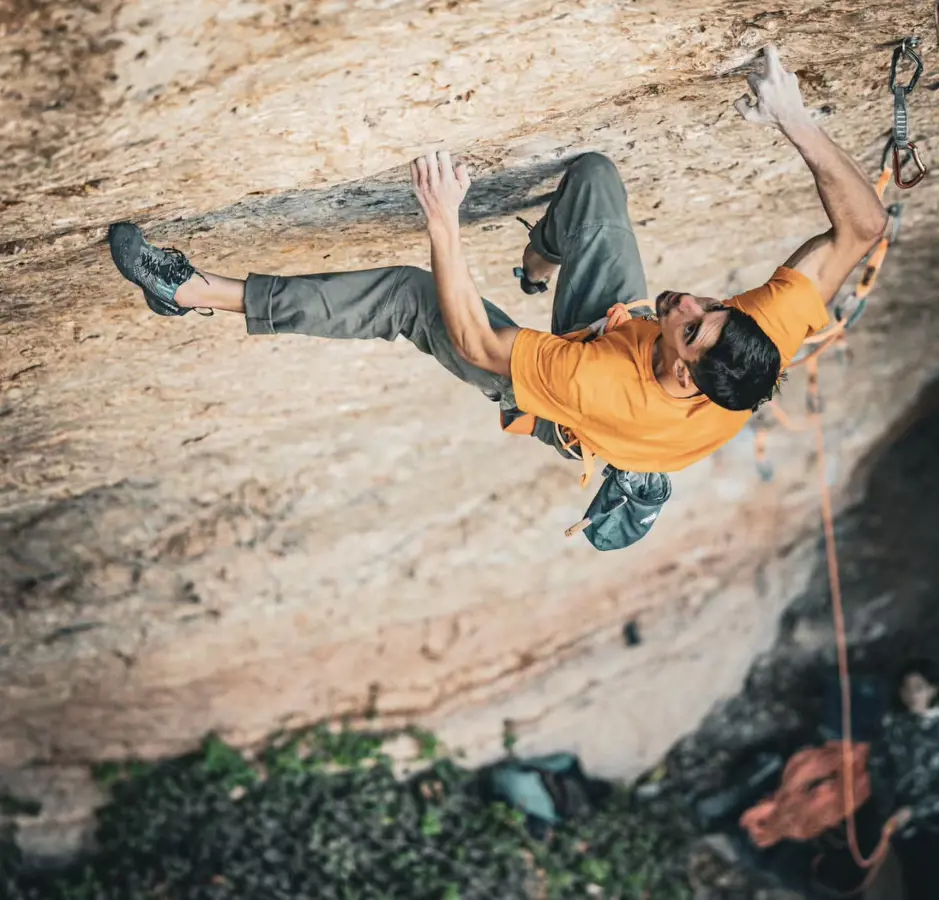
Jorge Diaz-Rullo reports on Instagram that he has made the first ascent of Cafe Colombia in Margalef. At 27, he’s already stacked four 9b+ sends and now he’s ad…
285
81
”I stopped focusing on competition bouldering after last year’s World Cup in Prague, partly because I can already feel it on my body, especially in my shoulders. The modern competition style, with a lot of jumping from one hold to another, is very demanding for the shoulders.
Outdoor bouldering is…
189
13Sean Bailey reports on Instagram that he has done the first ascent of Duality of Man (9c) in Dry Canyon. ” After four total years and three seasons of climbing,…
163
69Most commented
Jorge Diaz-Rullo reports on Instagram that he has made the first ascent of Cafe Colombia in Margalef. At 27, he’s already stacked four 9b+ sends and now he’s ad…
285
81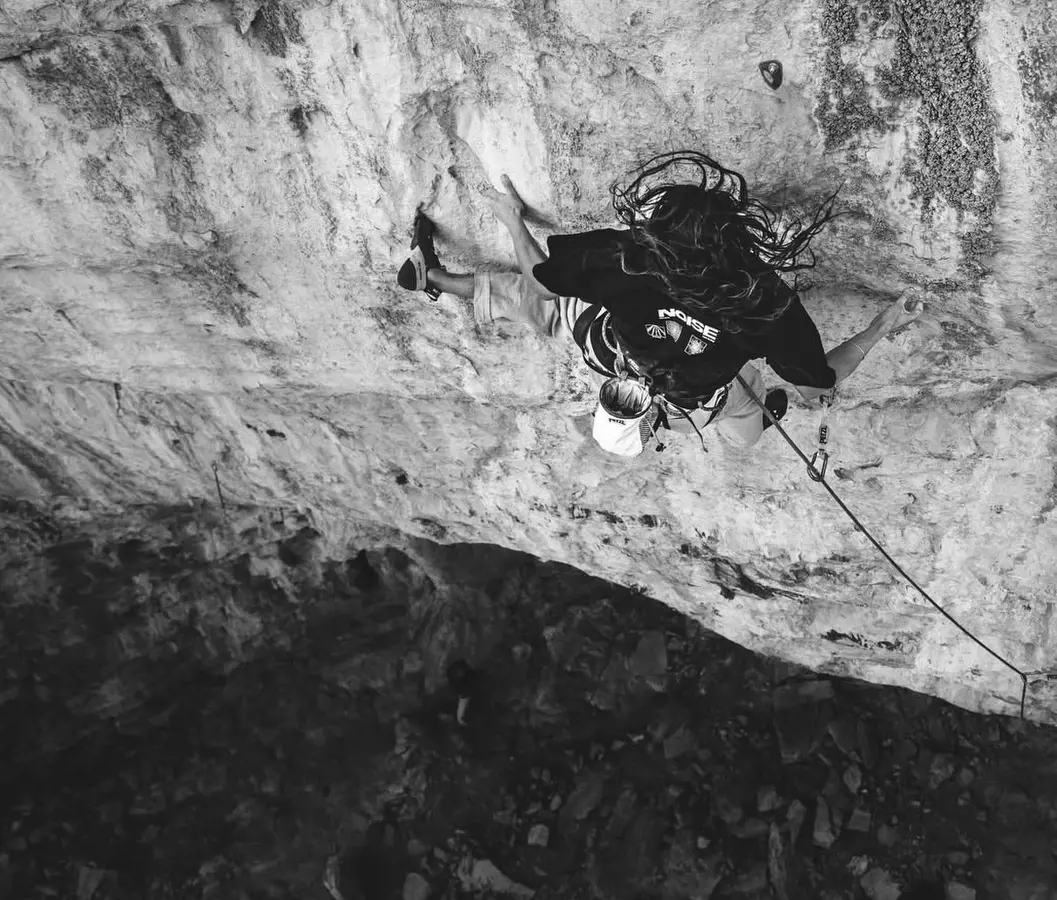
Sean Bailey reports on Instagram that he has done the first ascent of Duality of Man (9c) in Dry Canyon. ” After four total years and three seasons of climbing,…
163
69Jorge Diaz-Rullo elaborates on the reasons for him to suggest 9c for Café Colombia on Instagram, which he took down last week after projecting it for 240 sessio…
119
63