
NEWS

12 June 2022
9a and 8c+ (9a) by the Hörst brothers
Cameron Hörst has done Manphibian (9a) in Mt. Charleston and there is a video. "Currently, I am on a summer-long climbing road trip in the western United States with my brother Jon. We have been on the road for three weeks now. We started our trip climbing in the Utah Hills (for about two weeks) and now are climbing at Mt. Charleston which is outside of Las Vegas.
Manphibian was established by Andy Raether a few years back. The route breaks down into two parts. The first part being a 35 feet of bouldery 8c+ to an average rest. The second half is 8b/+. You fight your way up a steep arete feature and then have to compose yourself enough to dance your way through a desperate 5.13 slab feature to the chains! Actually enjoyed the intensity of the slabby/vertical redpoint crux at the top! Was sketched out hahaha. 8c+/9a maybe, but I did think this was fairly harder than Arrested Development (8c+), the stout 8c+ at the crag."
The day after, Cameron's little brother Jonathan did AD and comments. "Stoked to tick this line off relatively quickly before it got too hot for the summer. Got to the hole on day 2 and subsequently fell at the crimp move for 3 days ugh. As much as I would like this to be my first 9a it really is not. Amazing test of power nonetheless." More grade thoughts on the 19-year-old's Insta (c) Joe Kinder. Jon is sending AD and Cameron is belaying.
The Hörst brother started to make 8a headlines in 2013 as both were setting new standards in climbing. Jon did his first 8b at age 10 and Cameron did 8b+ being 11-years-old. Their father Eric is one of the most well-known climbing coaches out there and he has published numerous training books. Here is his first, out of many, 8a articles from 2013 on how to balance early progress for kids.
Manphibian was established by Andy Raether a few years back. The route breaks down into two parts. The first part being a 35 feet of bouldery 8c+ to an average rest. The second half is 8b/+. You fight your way up a steep arete feature and then have to compose yourself enough to dance your way through a desperate 5.13 slab feature to the chains! Actually enjoyed the intensity of the slabby/vertical redpoint crux at the top! Was sketched out hahaha. 8c+/9a maybe, but I did think this was fairly harder than Arrested Development (8c+), the stout 8c+ at the crag."
The day after, Cameron's little brother Jonathan did AD and comments. "Stoked to tick this line off relatively quickly before it got too hot for the summer. Got to the hole on day 2 and subsequently fell at the crimp move for 3 days ugh. As much as I would like this to be my first 9a it really is not. Amazing test of power nonetheless." More grade thoughts on the 19-year-old's Insta (c) Joe Kinder. Jon is sending AD and Cameron is belaying.
The Hörst brother started to make 8a headlines in 2013 as both were setting new standards in climbing. Jon did his first 8b at age 10 and Cameron did 8b+ being 11-years-old. Their father Eric is one of the most well-known climbing coaches out there and he has published numerous training books. Here is his first, out of many, 8a articles from 2013 on how to balance early progress for kids.
Read more
2
0
12 June 2022
Josh Larsson and the USA success
The USA has during the last years evolved to be one of the strongest nations in the international competition scene and they had four athletes in the Tokyo Olympics. The great progress goes in hand with Josh Larsson being their new head coach sending big teams to each event. The Japanese coach Benjamin since 2008 says he has noticed that team USA is much more of a team compared to some ten years ago. Asking Josh if he can explain the great USA progress he explains.
- You know, when I started competing in 2011, we just went to the comps by ourselves and not like in a team. I remember that I saw Daniel Woods in my first competition and realized he was on my team but we did not know each other. Since I have become the coach, I have been part of making Salt Lake City the centre for USA competition climbing. Now, most of the athletes live there and if not they come there regularly. It is great to be a big team and going on long road trips in Europe like this one is fun and it is like a long team-building activity. Everyone supports each other and I am sure this is part of why we have gotten more athletes in the semifinals and podiums.
Besides having done some 20 World Cups between 2001 and 2017, the best result is #12, Josh has since 2008 worked as a route setter, In 2014, he first became an assistant for the youth national team. A big part of his USA Team manager and coach is still setting routes in the USA national climbing centre in Salt Lake City.
Together with his partner Charlotte Durif, one of the best female climbers in the history, they run A World Less Traveled, basically pioneering and bolting new climbing destinations in the world. In total, they have published 17 feature videos from new remote climbing places like in; Nepal, Tasmania, Peru and Serbia.
- You know, when I started competing in 2011, we just went to the comps by ourselves and not like in a team. I remember that I saw Daniel Woods in my first competition and realized he was on my team but we did not know each other. Since I have become the coach, I have been part of making Salt Lake City the centre for USA competition climbing. Now, most of the athletes live there and if not they come there regularly. It is great to be a big team and going on long road trips in Europe like this one is fun and it is like a long team-building activity. Everyone supports each other and I am sure this is part of why we have gotten more athletes in the semifinals and podiums.
Besides having done some 20 World Cups between 2001 and 2017, the best result is #12, Josh has since 2008 worked as a route setter, In 2014, he first became an assistant for the youth national team. A big part of his USA Team manager and coach is still setting routes in the USA national climbing centre in Salt Lake City.
Together with his partner Charlotte Durif, one of the best female climbers in the history, they run A World Less Traveled, basically pioneering and bolting new climbing destinations in the world. In total, they have published 17 feature videos from new remote climbing places like in; Nepal, Tasmania, Peru and Serbia.
Read more
3
111 June 2022
4th straight win for smiling Natalia Grossman
Hannah Meul from Germany made the competition of her life and put extreme pressure on Natalia Grossman, by doing all problems in just six attempts. After Natalia fell one time on the last boulder, the American needed to send it on the next try, to win, which she did. Zhilu Luo from China got the bronze and amazingly this was her first-ever World Cup. The 16-year-old had actually never done a competition outside China but last year she won the Chinese Championship. Complete results (c) Lena Drapella/IFSC
Natalia comments to IFSC: “I’m really grateful and excited for more. I feel like at least during the qualification and semi-final rounds, I had the most fun I’ve had in a really long time. It felt really good to compete without pressure again, because in Salt Lake I had a lot of pressure. Hannah definitely kept me on my toes the whole final round so that was kind of fun dealing with the pressure, but I’m glad I was able to keep it together,” said Grossman following her win. “I’ve been focusing mainly on boulders this year, but I’m very excited to get the opportunity to compete in Lead because I love Lead climbing. We’ll see how it goes!” she added when questioned about the upcoming IFSC Lead World Cup season.
Hannah, who previously has been #7 and #13 in the Boulder WC in 2022, comments to 8a: "It was amazing but I had the feeling that it is my time to shine. I was confident during all rounds. I got this feeling the day before the competition and I can not explain why I got it but it sure was a great feeling. It is a dream come through :)”
Before the final, 8a talked to the German Head coach, Ingo Filzwieser, and congratulated him for the great results also for having four guys in the male final. Asking him about the reason for the great progress of the German climbers he hesitated and gave it a long thought. "I think most important is the mindset. Everyone is stronger mentally and somehow myself and they all think they can make finals. We have a great team and train together at the same time as Hannah for example is doing most of her training with her personal coach in Cologn. You know, everyone is individual and different approaches are necessary at the same time we often meet and train together. I am not surprised that Hannah made it to the final and she can send all problems in the final."
It should be mentioned that the route setting was perfectly creating a big drama. On the second move on the first boulder, we did see six different solutions with Hannah's figure-four as the most spectacular. Everyone says that it has been a great organized competition. The live commentators did together with the DJ, the athletes, the route setters and some 1 700 spectators an event to remember with a smile similar to Natalia's and Hannah's.
Natalia comments to IFSC: “I’m really grateful and excited for more. I feel like at least during the qualification and semi-final rounds, I had the most fun I’ve had in a really long time. It felt really good to compete without pressure again, because in Salt Lake I had a lot of pressure. Hannah definitely kept me on my toes the whole final round so that was kind of fun dealing with the pressure, but I’m glad I was able to keep it together,” said Grossman following her win. “I’ve been focusing mainly on boulders this year, but I’m very excited to get the opportunity to compete in Lead because I love Lead climbing. We’ll see how it goes!” she added when questioned about the upcoming IFSC Lead World Cup season.
Hannah, who previously has been #7 and #13 in the Boulder WC in 2022, comments to 8a: "It was amazing but I had the feeling that it is my time to shine. I was confident during all rounds. I got this feeling the day before the competition and I can not explain why I got it but it sure was a great feeling. It is a dream come through :)”
Before the final, 8a talked to the German Head coach, Ingo Filzwieser, and congratulated him for the great results also for having four guys in the male final. Asking him about the reason for the great progress of the German climbers he hesitated and gave it a long thought. "I think most important is the mindset. Everyone is stronger mentally and somehow myself and they all think they can make finals. We have a great team and train together at the same time as Hannah for example is doing most of her training with her personal coach in Cologn. You know, everyone is individual and different approaches are necessary at the same time we often meet and train together. I am not surprised that Hannah made it to the final and she can send all problems in the final."
It should be mentioned that the route setting was perfectly creating a big drama. On the second move on the first boulder, we did see six different solutions with Hannah's figure-four as the most spectacular. Everyone says that it has been a great organized competition. The live commentators did together with the DJ, the athletes, the route setters and some 1 700 spectators an event to remember with a smile similar to Natalia's and Hannah's.
Read more
3
011 June 2022
The Japan success story explained
Japan has dominated the male bouldering scene for many years and during the female semifinal in Brixen, where Japan got their best female result ever with four girls Top-8, I ask Yoshiyuki Ogata to explain their success. In short, he says they train hard and often together in different gyms around Tokyo. Sometimes new boulders have been set but in the end, they start creating new different dynamic boulders. All their training is focused on bouldering and he and everyone want to be the best. Toma Narasaki actually said yesterday, "I want to become a climbing legend in history". Most of the team train 23- 30 hours a week. Ogata also says that it is very deep in their culture to work together as a group.
- Benji (their german coach since 2008) challenges us to speak English and interact with the other climbers. This has also helped to stay in the isolation and to be a part of the community.
- Nice T-shirt, Sean Bailey passes by and comments that Ogata is also using the brand new Mellow T-shirt.
Ogata says, he only climbs outdoors and that he is focused on the World Cup and then the Olympics. After Brixen, he will fly home together with Kokoro Fujii, who has just become a father, to stay four days in Japan before returning for a one-month Europe trip. Asked about who of his team mate is the new star, he points at Rei Kawamata. The 18-year-old was #5 and #3 in Salt Lake City and apparently, he is much stronger than Ogata.
Kawamata is shy but when Ogata tells him that their coach wants him to practice English with 8a he smiles and says he injured one finger in SL. He is not fully recovered and says that he mainly trains on a spray wall by himself besides going for the team training twice a week in Tokyo. His English is not so good but Ogata confirms his injury story saying he is so strong that he only needs two fingers. Several times in the chat Ogata hears his teammates scream "Gambare!". He turns his head around and sees a Japanese is on the wall and he goes wild - GAMBARE!
- Benji (their german coach since 2008) challenges us to speak English and interact with the other climbers. This has also helped to stay in the isolation and to be a part of the community.
- Nice T-shirt, Sean Bailey passes by and comments that Ogata is also using the brand new Mellow T-shirt.
Ogata says, he only climbs outdoors and that he is focused on the World Cup and then the Olympics. After Brixen, he will fly home together with Kokoro Fujii, who has just become a father, to stay four days in Japan before returning for a one-month Europe trip. Asked about who of his team mate is the new star, he points at Rei Kawamata. The 18-year-old was #5 and #3 in Salt Lake City and apparently, he is much stronger than Ogata.
Kawamata is shy but when Ogata tells him that their coach wants him to practice English with 8a he smiles and says he injured one finger in SL. He is not fully recovered and says that he mainly trains on a spray wall by himself besides going for the team training twice a week in Tokyo. His English is not so good but Ogata confirms his injury story saying he is so strong that he only needs two fingers. Several times in the chat Ogata hears his teammates scream "Gambare!". He turns his head around and sees a Japanese is on the wall and he goes wild - GAMBARE!
Read more
5
011 June 2022
Perfect female semi in Brixen
Clear blue sky, 26 degrees, a fully packed stadium and Italian Camilla Moroni flashing the first problem created the perfect start of the semifinal in Brixen that lasted for another two hours. Smiling Natalia Grossman flashed all four being less than three minutes on the wall. Interesting to see that on the two first boulders she had returned to the isolation in less than a minute at the same time the other three girls had just begun climbing. Miho Nonaka also topped out all problems needing just five attempts. In the end, a score of 34 in six attempts was needed to make the final. Japan was superior with four girls in the Top-8.
The chief route setter thought it was a bit too easy and felt pity for Jessica Pilz and Futaba Ito who scored 34. Stasa Gejo #10 was probably the most unlucky as she somehow placed one hand at the top but then reversed in order to change her foot and fell. The commentators and the general view was that the setting was perfect and everyone says the venue is great.
- This wall and arena are on my Top-5 list having competed for eight years, says Mickael Mawem who made it to the semi. The Olympian continues, The Brixen city is lovely. It is like being in Chamonix or Arco.
The chief route setter thought it was a bit too easy and felt pity for Jessica Pilz and Futaba Ito who scored 34. Stasa Gejo #10 was probably the most unlucky as she somehow placed one hand at the top but then reversed in order to change her foot and fell. The commentators and the general view was that the setting was perfect and everyone says the venue is great.
- This wall and arena are on my Top-5 list having competed for eight years, says Mickael Mawem who made it to the semi. The Olympian continues, The Brixen city is lovely. It is like being in Chamonix or Arco.
Read more
1
011 June 2022
Boulder qually highlights in Brixen
Read more
0
010 June 2022
Trance 8C FA by Will Bosi
William Bosi has done the FA of Trance (8C) in Badger Cove. "The low right start to Bewilderness (8B+), start sitting with hands under the main face. Adds about 9 moves of 8A into the hard part of Bewilderness".
Read more
5
010 June 2022
Flohé and McArthur win the qualification
Yannick Flohé topped out all five boulders in eight attempts and won his group ahead of Kokoro Fujii who needed four attempts more. The other group had harder boulders and there Hamish McArthur won by doing three boulders in six tries. In the end, you needed a score of 23 to make it to the semifinal in the group of harder boulders and a score of 35 in the group with a bit easier boulders. In total, 39 participants, out of 99, did not get one zone. The chief route setter, Marcin Wszolek from Poland, says he was surprised by the difference in the group as their aim was that equally many tops in both groups. "We thought the hardest two boulders in each group would be done by six climbers and then that twelve should do the next two hardest followed by 20 for the easiest one. Sometimes we make mistakes but sometimes it is just coincidences. For example, Tomoa Narasaki did not do his easiest boulders but the three hardest."
The route setter team have been working long days since Sunday and when everyone was leaving the venue 21.30 they started to take down the ten qualification boulders before setting up and readjusting the four female semifinal boulders.
“It was a hard competition – said Flohé to IFSC – each boulder with its difficulty, I reached all the tops quite fast, so I am satisfied. The first boulder was a steep one and not a slab one! And that was something unusual. I reached the first top and then I followed the flow”. On his part, Fujii said: “It was a great competition, I did not feel complete control of my body at top 4, but then it was fine”.
Japan dominated as they always have had the last few years with six guys making it to the semi and Germany was runner-up with four. The Japanese coach talked about, "position to position", "power inpuls" and "team atmosphere" as explanations for their success. (More about this as a follow-up). Slovenia will not have any males in the semifinal on Saturday but all their team of five was Top-45. Complete results
The route setter team have been working long days since Sunday and when everyone was leaving the venue 21.30 they started to take down the ten qualification boulders before setting up and readjusting the four female semifinal boulders.
“It was a hard competition – said Flohé to IFSC – each boulder with its difficulty, I reached all the tops quite fast, so I am satisfied. The first boulder was a steep one and not a slab one! And that was something unusual. I reached the first top and then I followed the flow”. On his part, Fujii said: “It was a great competition, I did not feel complete control of my body at top 4, but then it was fine”.
Japan dominated as they always have had the last few years with six guys making it to the semi and Germany was runner-up with four. The Japanese coach talked about, "position to position", "power inpuls" and "team atmosphere" as explanations for their success. (More about this as a follow-up). Slovenia will not have any males in the semifinal on Saturday but all their team of five was Top-45. Complete results
Read more
2
110 June 2022
Great start of the Brixen WC
Natalia Grossman was first out starting in fresh conditions at 9 am, flashing all five problems with ease. Later, seven other girls topped out all qualification problems and in the end, you had to score 35 (3 T 5z) in 4 respectively 5 attempts to make it to the final. Later during the day, the lower-ranked boulderers had to fight higher temperatures and one-third of the 79 participants did not make any Top. In the end, all big names made it to the semi and Japan got five girls Top-21. Brooke Raboutou and Oriane Bertone did not participate, the latter due to a finger injury, but both plan to compete in Innsbruck. Complete results
Read more
0
110 June 2022
Full support to Team Ukraine
Team Ukraine has five boys and three girls doing the Brixen World Cup. Jenya Kazbekova is missing out, party, due to the injury she got in Salt Lake City but her family is represented by her parents, who are the coaches. They have all stayed abroad for several months and they plan to remain in Europe.
- Previously, we could just stay three months without a visa but now, due to the war, we can stay up to two years, says Fedir Samoilov and he continues. We are refugees and get 300 Euros every month from the German state. When we travel by train we just show our passport valid as a ticket in Germany, Austria and Italy.
- When we show the passport, we often hear comments like, "We support Ukraine", which is nice to hear says Sergei Topishko. We are really thankful for all support and it feels many would like to offer support and that people care about Ukraine.
Fedir continues, everyone is nice to us and most of the time we do not need to pay for training in gyms, competing or even for a place to stay.
- Here in Brixen, we stay in two different places from employees of Vertical-Life, out of which one is actually from Ukraine, says Serik Kazbekov. He was one of the best Combined competition climbers in the world during the 90'ies. In total, he made podiums eight times in Boulder or Lead and in 1993, he got the silver in the Speed World Championship.
- Previously, we could just stay three months without a visa but now, due to the war, we can stay up to two years, says Fedir Samoilov and he continues. We are refugees and get 300 Euros every month from the German state. When we travel by train we just show our passport valid as a ticket in Germany, Austria and Italy.
- When we show the passport, we often hear comments like, "We support Ukraine", which is nice to hear says Sergei Topishko. We are really thankful for all support and it feels many would like to offer support and that people care about Ukraine.
Fedir continues, everyone is nice to us and most of the time we do not need to pay for training in gyms, competing or even for a place to stay.
- Here in Brixen, we stay in two different places from employees of Vertical-Life, out of which one is actually from Ukraine, says Serik Kazbekov. He was one of the best Combined competition climbers in the world during the 90'ies. In total, he made podiums eight times in Boulder or Lead and in 1993, he got the silver in the Speed World Championship.
Read more
6
0Favorites
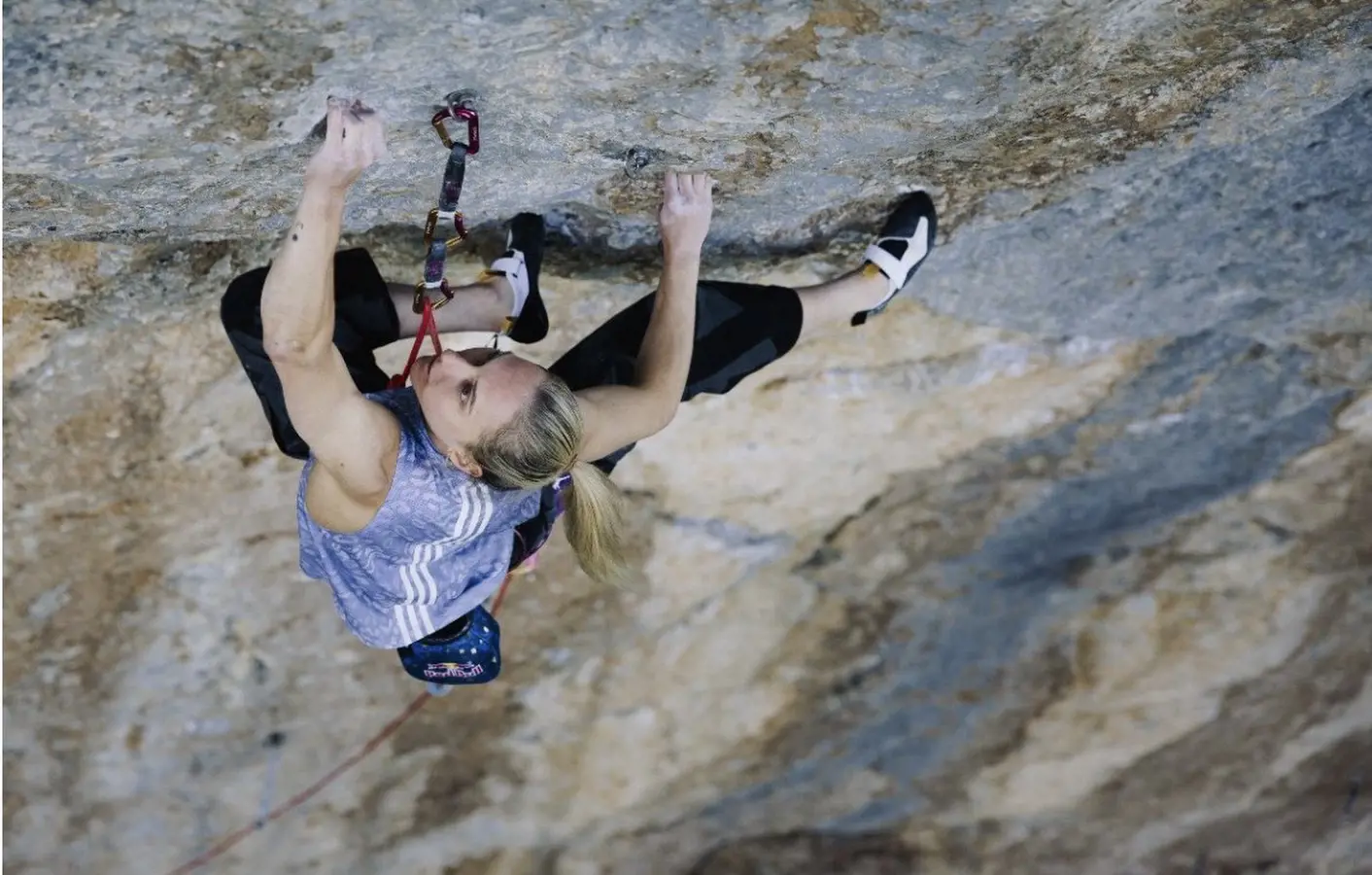
Janja Garnbret has added another milestone to her remarkable climbing career by becoming the first woman to climb Bibliographie (9b+) in Céüse, one of the harde…
360
48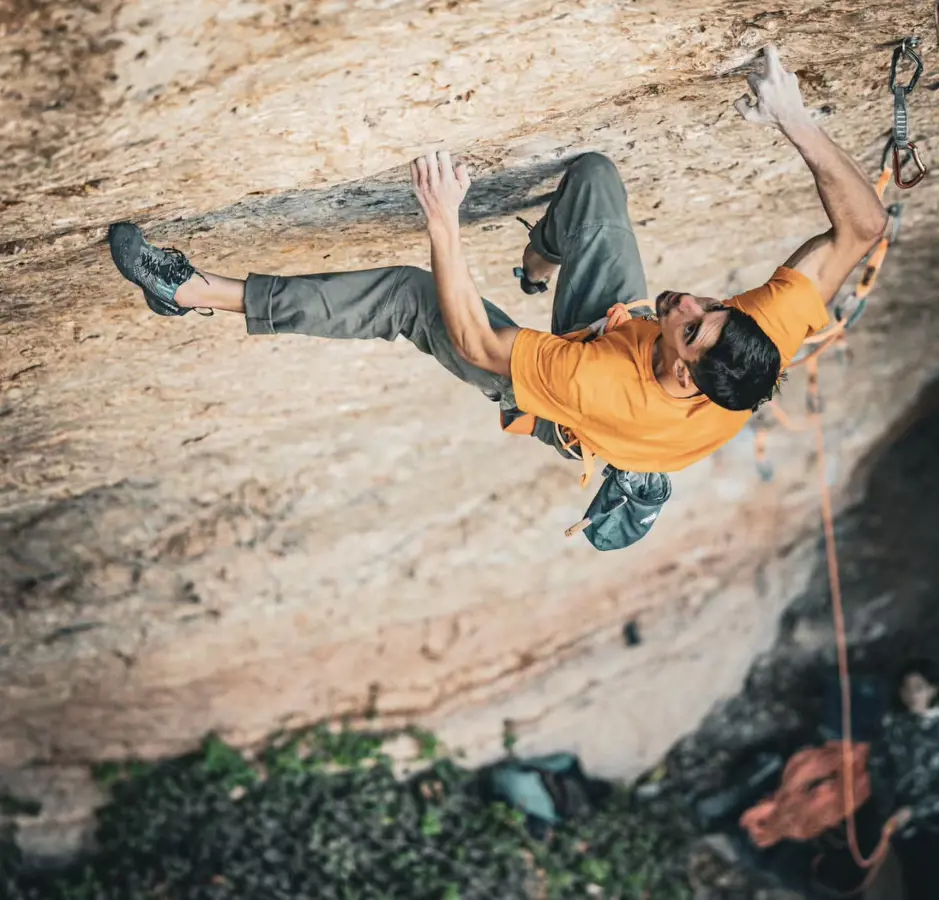
Jorge Diaz-Rullo reports on Instagram that he has made the first ascent of Cafe Colombia in Margalef. At 27, he’s already stacked four 9b+ sends and now he’s ad…
285
81
”I stopped focusing on competition bouldering after last year’s World Cup in Prague, partly because I can already feel it on my body, especially in my shoulders. The modern competition style, with a lot of jumping from one hold to another, is very demanding for the shoulders.
Outdoor bouldering is…
189
13Most commented
Jorge Diaz-Rullo reports on Instagram that he has made the first ascent of Cafe Colombia in Margalef. At 27, he’s already stacked four 9b+ sends and now he’s ad…
285
81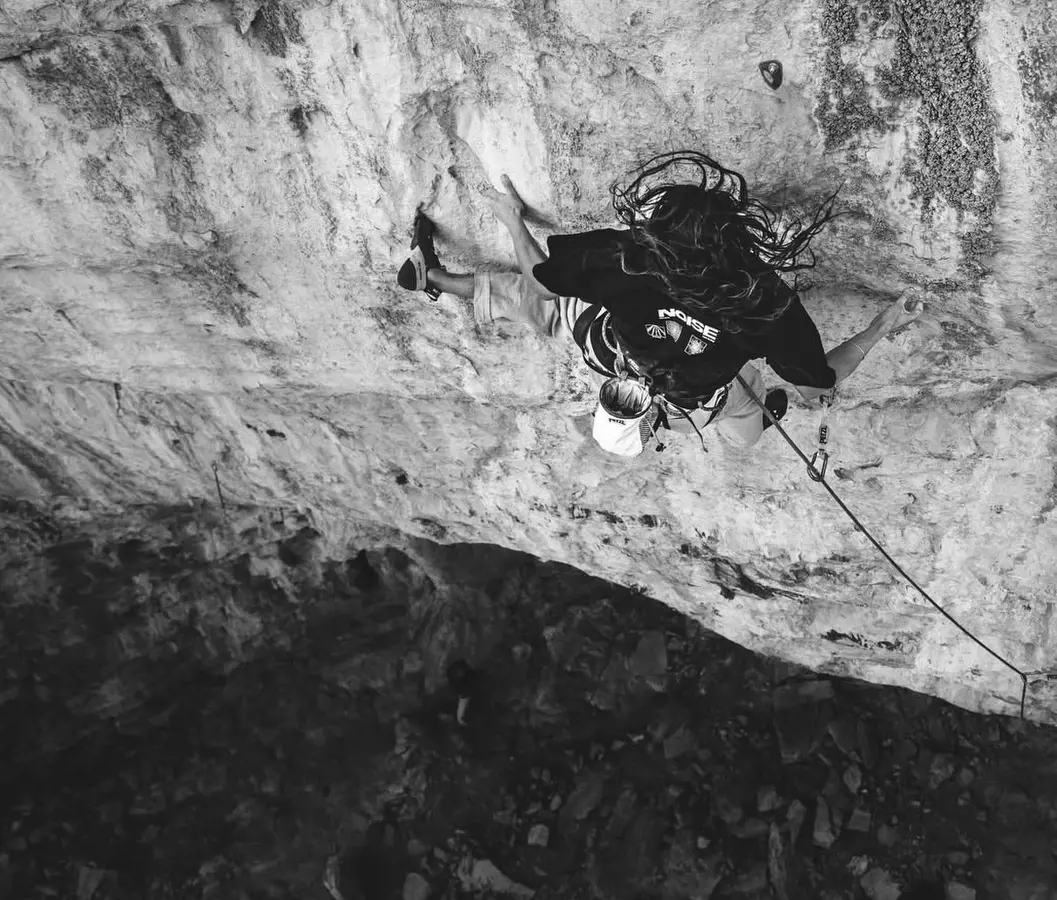
Sean Bailey reports on Instagram that he has done the first ascent of Duality of Man (9c) in Dry Canyon. ” After four total years and three seasons of climbing,…
163
69Jorge Diaz-Rullo elaborates on the reasons for him to suggest 9c for Café Colombia on Instagram, which he took down last week after projecting it for 240 sessio…
119
63