
30 January 2025
Titanium vs 316 and 304 bolts
David Reeve is an Australian rock climber who dates back to the days of hemp ropes and primitive gear of the sixties.
He is an analytical chemist by training and has spent most of his professional life working as an engineer in the design and manufacture of scientific instrumentation.
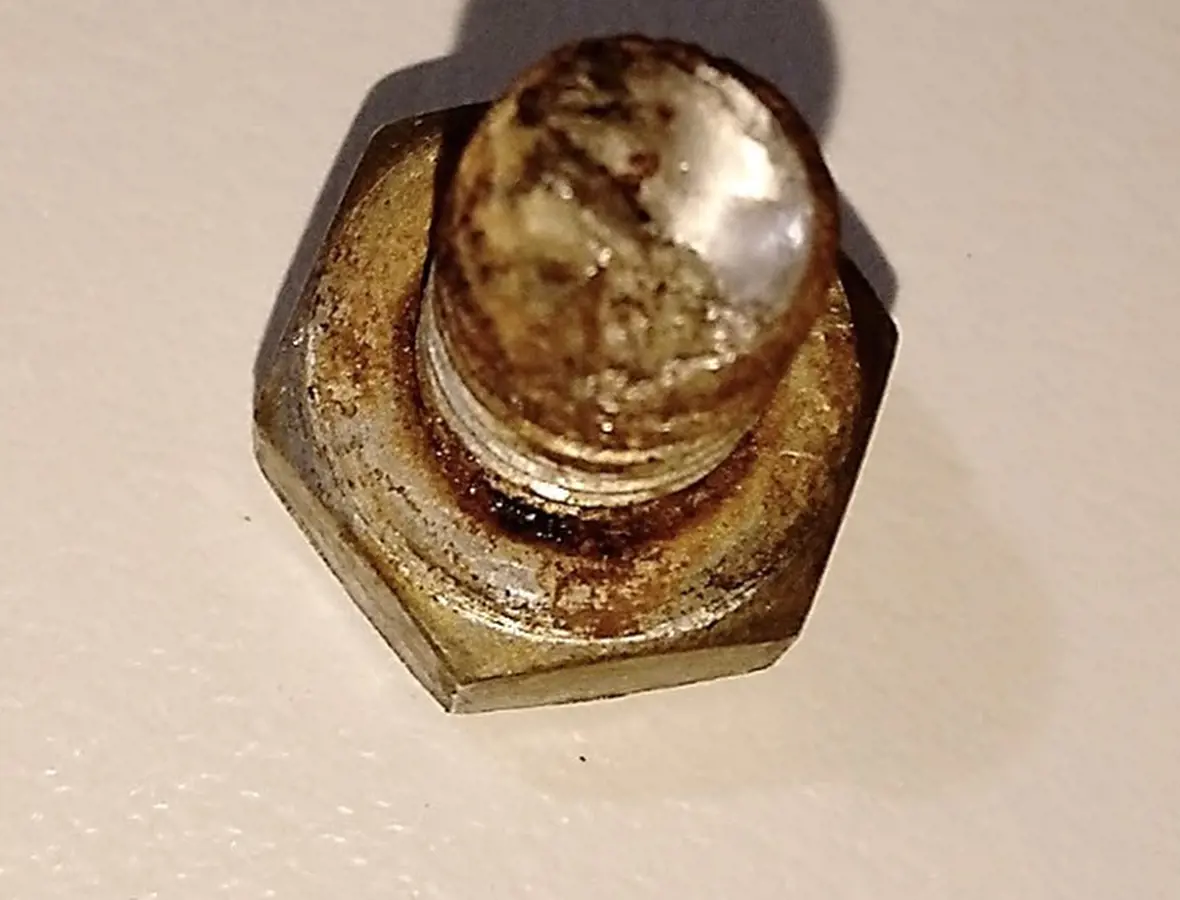
In regards aggressive corrosion of climbing anchors on certain sea cliffs he has published a long article, discussing Titanium vs 316 and 304 bolts. The picture shows a 304 bolt from Cabo da Roca, Portugal. It was hit with a hammer, and first opened along a SSC crack, to terminate in brittle fracture across the remaining solid metal. In a special summary to Vertical-Life, see below, his conclusion is that Titanium is best at the same time he says, “There are no records of verified 316 failing under SRB attack, but it is early days as far as 316 installation is concerned, and the future could hold surprises.”
”All sea-cliffs are corrosive to some degree. However, at a limited number of locations throughout the world there are crags where the corrosion of stainless steel anchors is remarkably aggressive. Not only is the rate of corrosion high, but it occurs in a way that often makes it hidden to the climber.
Railay/Tonsai in Thailand, Long Dong in Taiwan, the Western Mediterranean and the coast of Portugal are all places where this unusual corrosion phenomenon occurs.
We have sampled over 100 crags around the world and have concluded that all exceptionally corrosive sites are associated with an excess of sulphate on the rock surface. The quantity of sulphate is large enough that solid deposits of calcium sulphate will be encountered.
By itself sulphate is not corrosive to stainless steel. However, when it feeds sulphate reducing bacteria (SRB) located in the regions of low oxygen content down the hole between bolt and rock, between hanger and rock, between nut and bot, and so forth, then the resultant metabolic products can cause extreme corrosion.
We have shown that the redox chemistry of the metabolic processes favours hydrogen embrittlement of the metal leading to ultimate failure by sulphide stress cracking (SSC). We have found no evidence that this exceptional corrosion mechanism involves chloride-mediated stress corrosion cracking (SCC) as was initially postulated.
The best way to avoid the attention of SRB in high sulphate sea-cliffs is to use titanium anchors. If you must use stainless steel then choose one that is resistant to hydrogen embrittlement. For this, the nickel content must be over 10%, which means 316 might just be ok. There are no records of verified 316 failing under SRB attack, but it is early days as far as 316 installation is concerned, and the future could hold surprises. Selecting one of the high nickel HCR steels would be a surer bet, but they are more expensive than titanium so there is little point.”
In regards aggressive corrosion of climbing anchors on certain sea cliffs he has published a long article, discussing Titanium vs 316 and 304 bolts. The picture shows a 304 bolt from Cabo da Roca, Portugal. It was hit with a hammer, and first opened along a SSC crack, to terminate in brittle fracture across the remaining solid metal. In a special summary to Vertical-Life, see below, his conclusion is that Titanium is best at the same time he says, “There are no records of verified 316 failing under SRB attack, but it is early days as far as 316 installation is concerned, and the future could hold surprises.”
”All sea-cliffs are corrosive to some degree. However, at a limited number of locations throughout the world there are crags where the corrosion of stainless steel anchors is remarkably aggressive. Not only is the rate of corrosion high, but it occurs in a way that often makes it hidden to the climber.
Railay/Tonsai in Thailand, Long Dong in Taiwan, the Western Mediterranean and the coast of Portugal are all places where this unusual corrosion phenomenon occurs.
We have sampled over 100 crags around the world and have concluded that all exceptionally corrosive sites are associated with an excess of sulphate on the rock surface. The quantity of sulphate is large enough that solid deposits of calcium sulphate will be encountered.
By itself sulphate is not corrosive to stainless steel. However, when it feeds sulphate reducing bacteria (SRB) located in the regions of low oxygen content down the hole between bolt and rock, between hanger and rock, between nut and bot, and so forth, then the resultant metabolic products can cause extreme corrosion.
We have shown that the redox chemistry of the metabolic processes favours hydrogen embrittlement of the metal leading to ultimate failure by sulphide stress cracking (SSC). We have found no evidence that this exceptional corrosion mechanism involves chloride-mediated stress corrosion cracking (SCC) as was initially postulated.
The best way to avoid the attention of SRB in high sulphate sea-cliffs is to use titanium anchors. If you must use stainless steel then choose one that is resistant to hydrogen embrittlement. For this, the nickel content must be over 10%, which means 316 might just be ok. There are no records of verified 316 failing under SRB attack, but it is early days as far as 316 installation is concerned, and the future could hold surprises. Selecting one of the high nickel HCR steels would be a surer bet, but they are more expensive than titanium so there is little point.”
10 comments
Sort by:
Date
Reply
Most commented
Jorge Diaz-Rullo reports on Instagram that he has made the first ascent of Cafe Colombia in Margalef. At 27, he’s already stacked four 9b+ sends and now he’s ad…
26 January 2026
Sean Bailey FA’s Duality of Man (9c)
Sean Bailey reports on Instagram that he has done the first ascent of Duality of Man (9c) in Dry Canyon. ” After four total years and three seasons of climbing,…
23 March 2026
Jorge Diaz-Rullo proposes 9c for Café Colombia
Jorge Diaz-Rullo elaborates on the reasons for him to suggest 9c for Café Colombia on Instagram, which he took down last week after projecting it for 240 sessio…
Favorites
8 June 2026
Janja Garnbret does Bibliographie (9b+)
Janja Garnbret has added another milestone to her remarkable climbing career by becoming the first woman to climb Bibliographie (9b+) in Céüse, one of the harde…
Jorge Diaz-Rullo reports on Instagram that he has made the first ascent of Cafe Colombia in Margalef. At 27, he’s already stacked four 9b+ sends and now he’s ad…
16 March 2026
Ondra flashes 3*8C in two weeks
”I stopped focusing on competition bouldering after last year’s World Cup in Prague, partly because I can already feel it on my body, especially in my shoulders. The modern competition style, with a lot of jumping from one hold to another, is very demanding for the shoulders.
Outdoor bouldering is…
Favorites
8 June 2026
Janja Garnbret does Bibliographie (9b+)
Janja Garnbret has added another milestone to her remarkable climbing career by becoming the first woman to climb Bibliographie (9b+) in Céüse, one of the harde…
Jorge Diaz-Rullo reports on Instagram that he has made the first ascent of Cafe Colombia in Margalef. At 27, he’s already stacked four 9b+ sends and now he’s ad…
16 March 2026
Ondra flashes 3*8C in two weeks
”I stopped focusing on competition bouldering after last year’s World Cup in Prague, partly because I can already feel it on my body, especially in my shoulders. The modern competition style, with a lot of jumping from one hold to another, is very demanding for the shoulders.
Outdoor bouldering is…