
23 December 2021
The rationale behind soft FA grades
Based on all the recent suggested downgrades in Siurana here is a possible explanation of the rationale behind soft FA grades in general. I guess that at least 25 % of all the hard climbs that have been set up during the last 20 years have been or are subject tof being downgraded. This is especially the case in Spain at the same time as few of the hardest routes in Germany and Austria have been considered soft. When it comes to bouldering, very few downgrades are found in Fontainebleau meanwhile plenty of inflated grades have been found in SA, Switzerland and Australia.
1. Different style: The first time the FA tries a climb, he/she is probably already optimized for different moves and types of holds from an old project. It just might be that he spent five days doing an endurance-based challenge on slopers and the new project has a powerful crux on crimps. Logically, he will feel that this new crux "is another level", when it is in fact mainly just about recruiting new strength.
Back in the old-school days, the FA did not face so much diversity of climbing styles around the globe. Instead, they were busy developing new climbs of similar style at their local crags. Furthermore, the new generation gym climbers climb and train on smooth comfortable problems on big holds, which is the opposite style of most of the old school routes.
2. Early grade confirmation: Bernd Zangerl is one of the guys that have had a high proportion of his FAs downgraded. He has explained that the main reason for this is that all his FA were confirmed by the first repeaters so he thought he was spot on. It should also be mentioned that he was among the first putting up steep boulders and at that time, they and the first repeaters, had had very little exposure to training on steep terrain. The gyms had very few steep walls and the same goes for the old-school routes. In other words, this goes back to #1 - Different styles.
3. A grade range is wide: "This is harder than the neighbouring route", does not have to mean that there is one grade difference. If the FA add an extension or a sit start that makes the climb harder, logically another grade is added. However, it just might be that the extension has just made the climb go from a soft 8a to a hard 8a.
4. New sequences: It is very hard to find the best optimal sequence for every move for the FA. Furthermore, in relation to #1, it just might be that it is better to go for a pinch instead of carrying on and trying to optimise a crimper move. Possibly the pinch move feels harder but it would just take 15 minutes of recruiting that strength in order to understand that it is easier compared to the chosen crimp move.
5. Knee pads: A crux of a climb can turn into a no-hands rest with the use and the best technique of a knee pad. This also relates to #1. In order to take full advantage of a knee pad, you also need to train physically and mentally. As it takes years to become a kneebar expert, it is likely that there are several more climbs that will be downgraded in the future as climbers will improve their skills.
6. Using extra equipment: Boulderers have found out that the conditions can be improved by letting a portable fan blow air. Crash pads can be brought in order to skip a clip. Putting a book under your knee pad in order to extend the leg length and bringing a portable hangboard are also examples of innovations to make it possible to climb routes faster.
7. Fame and sponsors: Twenty years ago, climbing was a niche sport and even the best were lucky if they could get free equipment from their sponsors. Social media did not exist and the exposure for the best climbers was very limited. Today, you can make a living just by climbing and part of it is that you send hard graded routes.
8. Opinions instead of Facts: Often the FA let their friends try the project in order to get a grade opinion that just might be friendly. Everyone training and climbing hard expect that they are progressing and are always going for the next level. If the FA makes the project in a much shorter time than expected it is easy to think that it is his perfect style and that he is in his peak performance. Time Comparison Grading could assist in keeping the grades conservative.
9. Old neighbour/benchmark climbs are soft: It is a general saying that the climbs in a sector should have conformity, meaning that the new FA should adapt their grades to the level of the crag. All around the globe there exist several areas with soft grades like in Kalymnos or Chulilla. At the same time there exist crags also in Spain with super hard grades.
10. "Holiday grades": Almost all hard routes and boulders in Germany have been put up by local climbers that have plenty of time for extra training at home or in the gyms, meanwhile waiting for the best conditions and skin. In other words, the hardest climbs are usually put up by climbers in their prime. When it comes to Spain, a high proportion of the hardcore FAs are done by visitors that possibly in some cases were not in their prime on the day of the FA.
11. Different ethics/Missunderstandings: It should also be mentioned that in some cases, the FA graded was spot on and the reason for the suggested downgrade is due to different ethics were used by the repeaters. Possibly they have used more pre-clipped carabiners or have stacked stones and pads to start higher. Another option is that the repeaters did not use the same starting holds or that they started in a crouched position although the FA started sitting. It might also be that the FA, in fact, did an elimination and that the (taller) repeaters found bigger holds on the side.
1. Different style: The first time the FA tries a climb, he/she is probably already optimized for different moves and types of holds from an old project. It just might be that he spent five days doing an endurance-based challenge on slopers and the new project has a powerful crux on crimps. Logically, he will feel that this new crux "is another level", when it is in fact mainly just about recruiting new strength.
Back in the old-school days, the FA did not face so much diversity of climbing styles around the globe. Instead, they were busy developing new climbs of similar style at their local crags. Furthermore, the new generation gym climbers climb and train on smooth comfortable problems on big holds, which is the opposite style of most of the old school routes.
2. Early grade confirmation: Bernd Zangerl is one of the guys that have had a high proportion of his FAs downgraded. He has explained that the main reason for this is that all his FA were confirmed by the first repeaters so he thought he was spot on. It should also be mentioned that he was among the first putting up steep boulders and at that time, they and the first repeaters, had had very little exposure to training on steep terrain. The gyms had very few steep walls and the same goes for the old-school routes. In other words, this goes back to #1 - Different styles.
3. A grade range is wide: "This is harder than the neighbouring route", does not have to mean that there is one grade difference. If the FA add an extension or a sit start that makes the climb harder, logically another grade is added. However, it just might be that the extension has just made the climb go from a soft 8a to a hard 8a.
4. New sequences: It is very hard to find the best optimal sequence for every move for the FA. Furthermore, in relation to #1, it just might be that it is better to go for a pinch instead of carrying on and trying to optimise a crimper move. Possibly the pinch move feels harder but it would just take 15 minutes of recruiting that strength in order to understand that it is easier compared to the chosen crimp move.
5. Knee pads: A crux of a climb can turn into a no-hands rest with the use and the best technique of a knee pad. This also relates to #1. In order to take full advantage of a knee pad, you also need to train physically and mentally. As it takes years to become a kneebar expert, it is likely that there are several more climbs that will be downgraded in the future as climbers will improve their skills.
6. Using extra equipment: Boulderers have found out that the conditions can be improved by letting a portable fan blow air. Crash pads can be brought in order to skip a clip. Putting a book under your knee pad in order to extend the leg length and bringing a portable hangboard are also examples of innovations to make it possible to climb routes faster.
7. Fame and sponsors: Twenty years ago, climbing was a niche sport and even the best were lucky if they could get free equipment from their sponsors. Social media did not exist and the exposure for the best climbers was very limited. Today, you can make a living just by climbing and part of it is that you send hard graded routes.
8. Opinions instead of Facts: Often the FA let their friends try the project in order to get a grade opinion that just might be friendly. Everyone training and climbing hard expect that they are progressing and are always going for the next level. If the FA makes the project in a much shorter time than expected it is easy to think that it is his perfect style and that he is in his peak performance. Time Comparison Grading could assist in keeping the grades conservative.
9. Old neighbour/benchmark climbs are soft: It is a general saying that the climbs in a sector should have conformity, meaning that the new FA should adapt their grades to the level of the crag. All around the globe there exist several areas with soft grades like in Kalymnos or Chulilla. At the same time there exist crags also in Spain with super hard grades.
10. "Holiday grades": Almost all hard routes and boulders in Germany have been put up by local climbers that have plenty of time for extra training at home or in the gyms, meanwhile waiting for the best conditions and skin. In other words, the hardest climbs are usually put up by climbers in their prime. When it comes to Spain, a high proportion of the hardcore FAs are done by visitors that possibly in some cases were not in their prime on the day of the FA.
11. Different ethics/Missunderstandings: It should also be mentioned that in some cases, the FA graded was spot on and the reason for the suggested downgrade is due to different ethics were used by the repeaters. Possibly they have used more pre-clipped carabiners or have stacked stones and pads to start higher. Another option is that the repeaters did not use the same starting holds or that they started in a crouched position although the FA started sitting. It might also be that the FA, in fact, did an elimination and that the (taller) repeaters found bigger holds on the side.
0 comments
Most commented
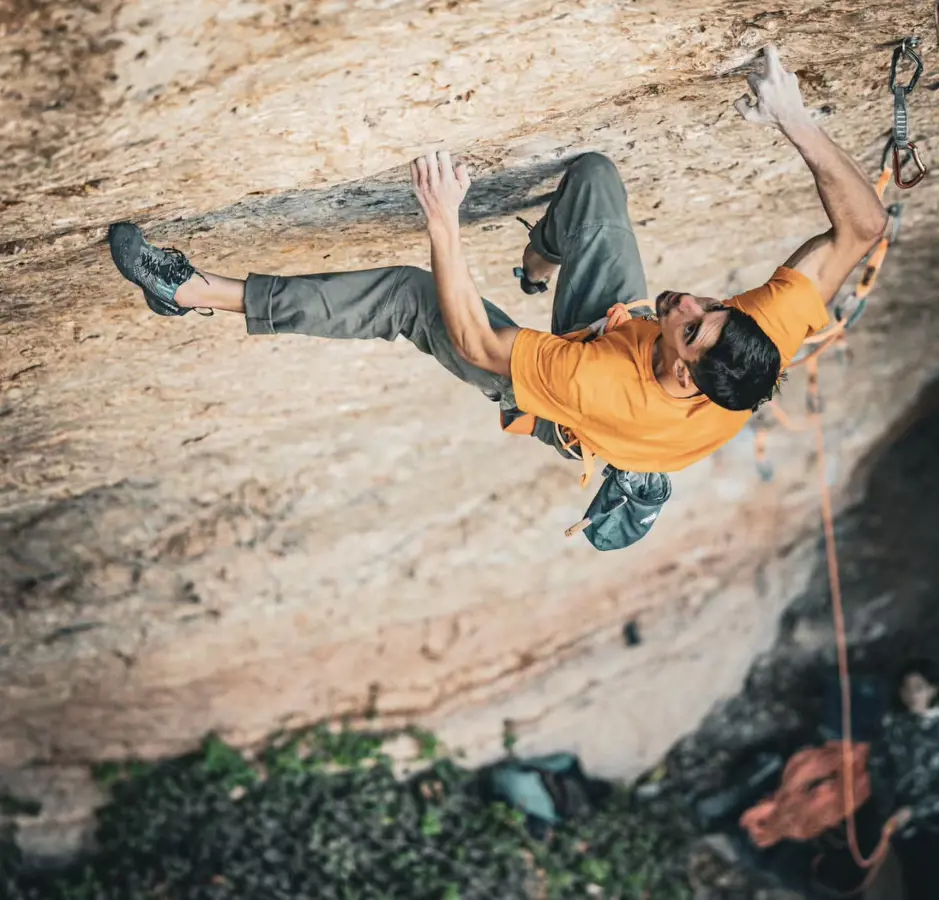
Jorge Diaz-Rullo reports on Instagram that he has made the first ascent of Cafe Colombia in Margalef. At 27, he’s already stacked four 9b+ sends and now he’s ad…
26 January 2026
Sean Bailey FA’s Duality of Man (9c)
Sean Bailey reports on Instagram that he has done the first ascent of Duality of Man (9c) in Dry Canyon. ” After four total years and three seasons of climbing,…
23 March 2026
Jorge Diaz-Rullo proposes 9c for Café Colombia
Jorge Diaz-Rullo elaborates on the reasons for him to suggest 9c for Café Colombia on Instagram, which he took down last week after projecting it for 240 sessio…
Favorites
8 June 2026
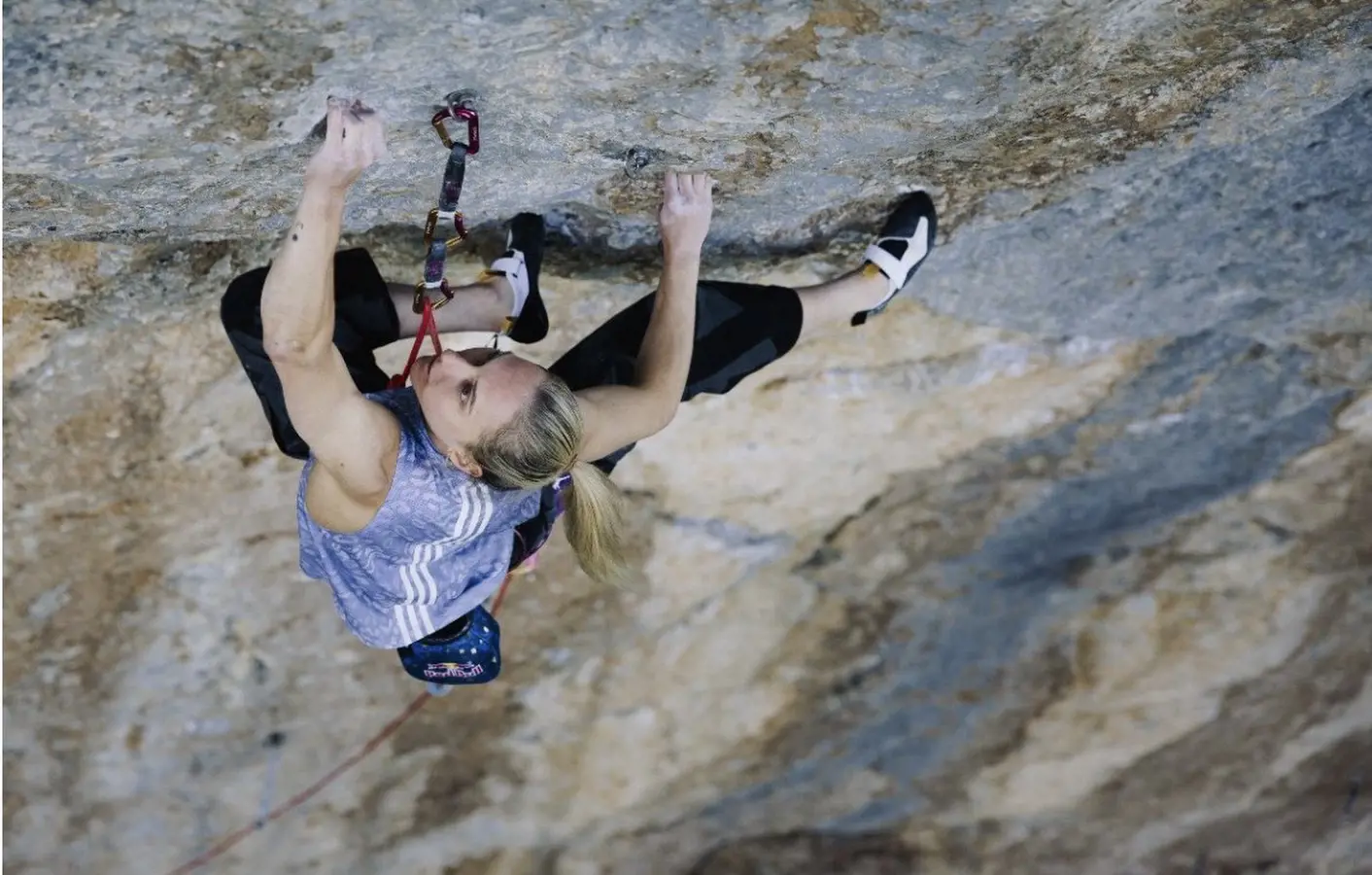
Janja Garnbret does Bibliographie (9b+)
Janja Garnbret has added another milestone to her remarkable climbing career by becoming the first woman to climb Bibliographie (9b+) in Céüse, one of the harde…
Jorge Diaz-Rullo reports on Instagram that he has made the first ascent of Cafe Colombia in Margalef. At 27, he’s already stacked four 9b+ sends and now he’s ad…
16 March 2026
Ondra flashes 3*8C in two weeks
”I stopped focusing on competition bouldering after last year’s World Cup in Prague, partly because I can already feel it on my body, especially in my shoulders. The modern competition style, with a lot of jumping from one hold to another, is very demanding for the shoulders.
Outdoor bouldering is…
Favorites
8 June 2026
Janja Garnbret does Bibliographie (9b+)
Janja Garnbret has added another milestone to her remarkable climbing career by becoming the first woman to climb Bibliographie (9b+) in Céüse, one of the harde…
Jorge Diaz-Rullo reports on Instagram that he has made the first ascent of Cafe Colombia in Margalef. At 27, he’s already stacked four 9b+ sends and now he’s ad…
16 March 2026
Ondra flashes 3*8C in two weeks
”I stopped focusing on competition bouldering after last year’s World Cup in Prague, partly because I can already feel it on my body, especially in my shoulders. The modern competition style, with a lot of jumping from one hold to another, is very demanding for the shoulders.
Outdoor bouldering is…