
21 November 2021
Jorg Verhoeven comments IFSC and eating disorders
Jorg Verhoeven, active competition climber since 1999 and overall World Cup winner in 2006, has sent us some comments in regards Marco Scolaris recently published thoughts on BMI and eating disorders.
"Scolaris' statement is very 'politically correct', unfortunately, this won't bring us much further. The IFSC has been monitoring for a long time - with the questionable methodology I can tell from my own experience - but has shifted the well-needed consequences to the national feds, which often don't care and don't act.
As an athlete representative, I've tried for years to get the IFSC to act responsibly. I've worked together closely with the medical commission, which has come up with several possible solutions, none of which have been implemented so far. Besides the awful consequences (both short- and long-term) being drastically underweight has to a person, I find the exemplary role of well-performing underweight athletes an even bigger issue. I've witnessed the negative effect it has on other - perfectly sane - athletes, who inevitably ask themselves if losing weight is the key to success. Imagine how a world cup winning role-model could influence young aspiring climbers, possibly leading them to short-term success and a lifetime of health issues. Since it's only an indicator, I think we should stop seeing BMI measurements as a way to determine a mental disease, and rather focus on accepting weight limits in international competitions. If the IFSC is serious about their athletes' health, it should send out a strong message simply defining a lower weight limit below which competing is not allowed, instead of saying 'we think you might have an eating disorder, so we're going to ask your national federation to help you with it'.
As a reference, with a height of 1,80 m, I weigh 65 kg (according to IFSC measurements 69 kg), so I could lose 5 (or 9) kg to attain a BMI below which I would be 'monitored'. Mind that I could lose 20 kilos and still participate at a WC. Out of my own experience, if I lose 1 kilo only, my body feels like it's breaking down - and yes, I try to gain weight, not lose it."
"Scolaris' statement is very 'politically correct', unfortunately, this won't bring us much further. The IFSC has been monitoring for a long time - with the questionable methodology I can tell from my own experience - but has shifted the well-needed consequences to the national feds, which often don't care and don't act.
As an athlete representative, I've tried for years to get the IFSC to act responsibly. I've worked together closely with the medical commission, which has come up with several possible solutions, none of which have been implemented so far. Besides the awful consequences (both short- and long-term) being drastically underweight has to a person, I find the exemplary role of well-performing underweight athletes an even bigger issue. I've witnessed the negative effect it has on other - perfectly sane - athletes, who inevitably ask themselves if losing weight is the key to success. Imagine how a world cup winning role-model could influence young aspiring climbers, possibly leading them to short-term success and a lifetime of health issues. Since it's only an indicator, I think we should stop seeing BMI measurements as a way to determine a mental disease, and rather focus on accepting weight limits in international competitions. If the IFSC is serious about their athletes' health, it should send out a strong message simply defining a lower weight limit below which competing is not allowed, instead of saying 'we think you might have an eating disorder, so we're going to ask your national federation to help you with it'.
As a reference, with a height of 1,80 m, I weigh 65 kg (according to IFSC measurements 69 kg), so I could lose 5 (or 9) kg to attain a BMI below which I would be 'monitored'. Mind that I could lose 20 kilos and still participate at a WC. Out of my own experience, if I lose 1 kilo only, my body feels like it's breaking down - and yes, I try to gain weight, not lose it."
3 comments
Sort by:
Date
Reply
Most commented
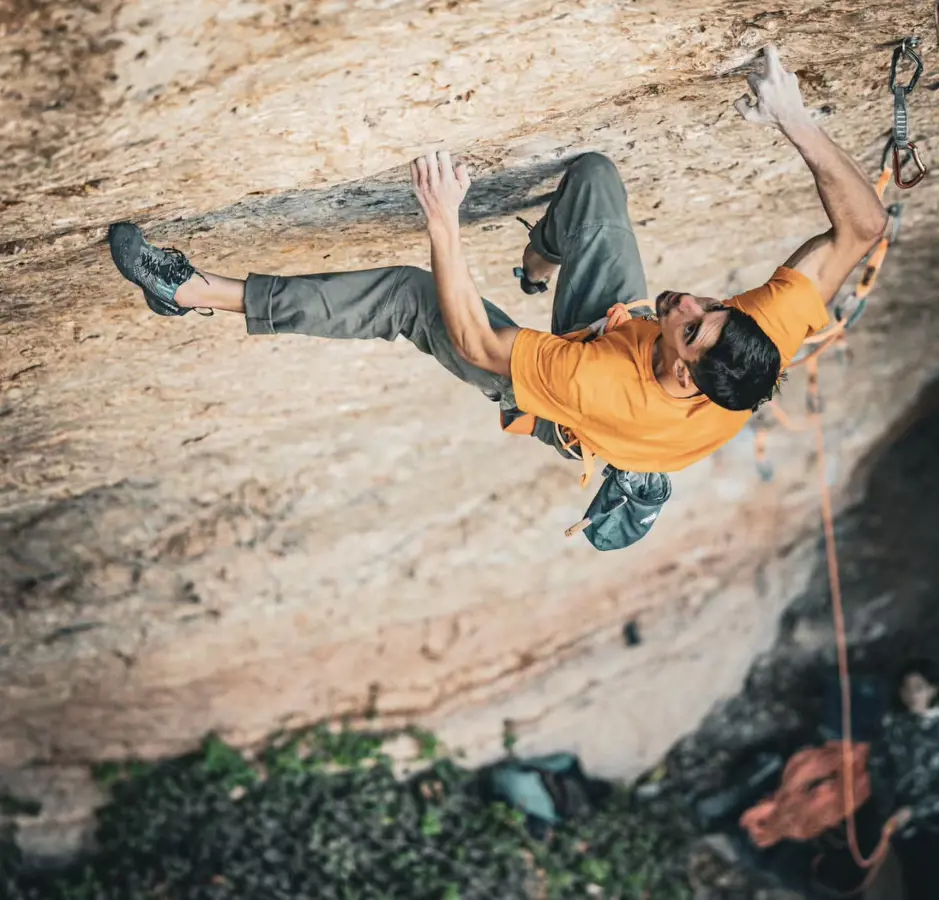
Jorge Diaz-Rullo reports on Instagram that he has made the first ascent of Cafe Colombia in Margalef. At 27, he’s already stacked four 9b+ sends and now he’s ad…
26 January 2026
Sean Bailey FA’s Duality of Man (9c)
Sean Bailey reports on Instagram that he has done the first ascent of Duality of Man (9c) in Dry Canyon. ” After four total years and three seasons of climbing,…
23 March 2026
Jorge Diaz-Rullo proposes 9c for Café Colombia
Jorge Diaz-Rullo elaborates on the reasons for him to suggest 9c for Café Colombia on Instagram, which he took down last week after projecting it for 240 sessio…
Related

18 May 2024
Jorg Verhoeven climbs Papichulo (9a+)
Jorg Verhoeven reports on Instagram that he has repeated Chris Sharma’s Papichulo (9a+) in Oliana. This route marked the first 9a+ ascent for the 38-year-old, w…
Related news
18 May 2024
Jorg Verhoeven climbs Papichulo (9a+)
Jorg Verhoeven reports on Instagram that he has repeated Chris Sharma’s Papichulo (9a+) in Oliana. This route marked the first 9a+ ascent for the 38-year-old, w…
Favorites
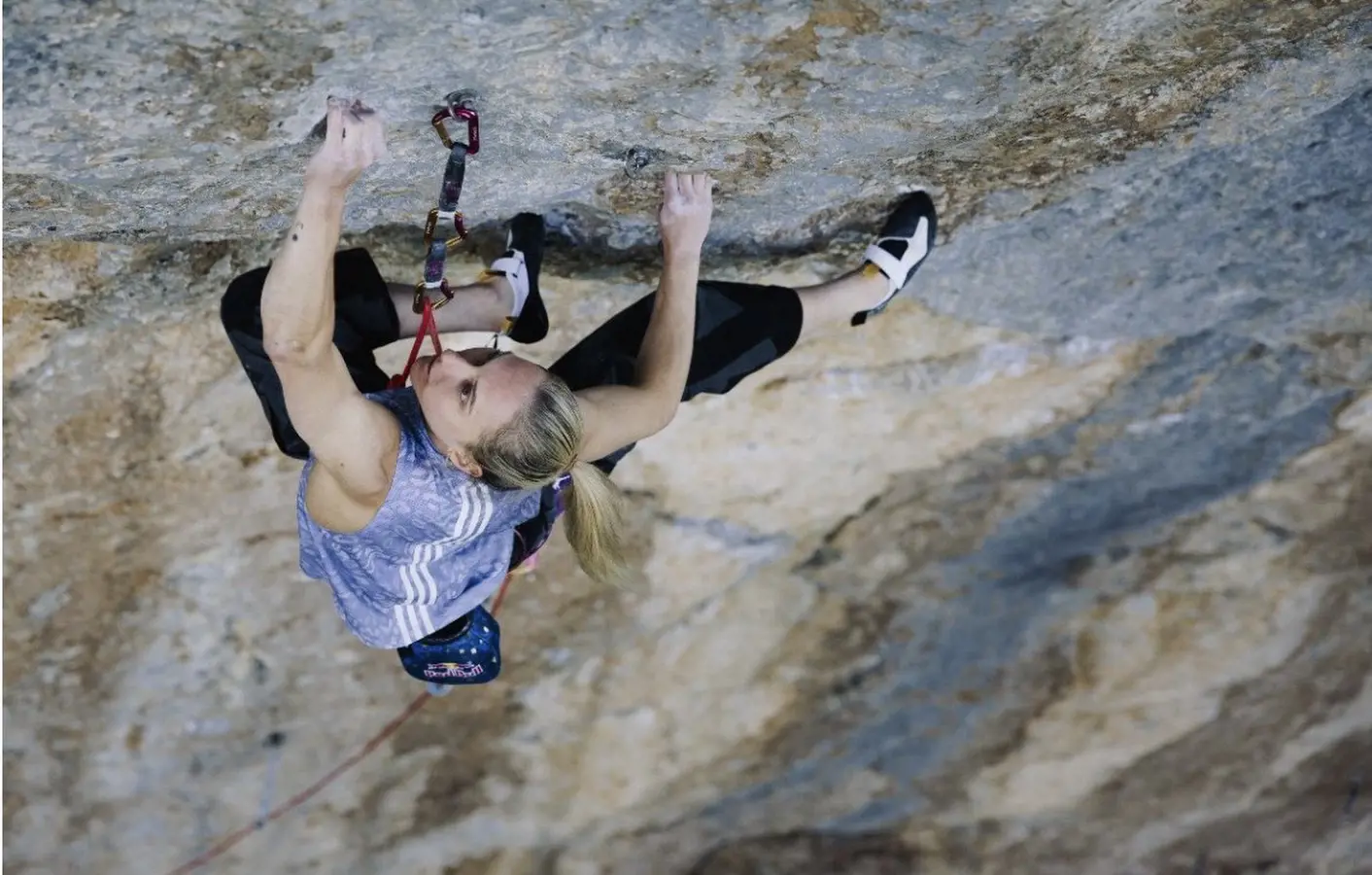
8 June 2026
Janja Garnbret does Bibliographie (9b+)
Janja Garnbret has added another milestone to her remarkable climbing career by becoming the first woman to climb Bibliographie (9b+) in Céüse, one of the harde…
Jorge Diaz-Rullo reports on Instagram that he has made the first ascent of Cafe Colombia in Margalef. At 27, he’s already stacked four 9b+ sends and now he’s ad…
16 March 2026
Ondra flashes 3*8C in two weeks
”I stopped focusing on competition bouldering after last year’s World Cup in Prague, partly because I can already feel it on my body, especially in my shoulders. The modern competition style, with a lot of jumping from one hold to another, is very demanding for the shoulders.
Outdoor bouldering is…