

31 October 2022
Climbing at 50, 60 and 70+
Last year, Irmgard Braun set a new standard for 69-year-old women by doing Open box (7c+) in Gorges Du Tarn. The German author started climbing in the 80ies and was later part of the German national team. Now she has put together some tips for climbing in your 50s, 60s and 70s+.
I find it great to go climbing at the ripe old age of 70. It is fun to move up vertical rock, and it trains my body without having to endure a dull fitness program. Through climbing, I meet old friends as well as get to know new people. But I gain even more from learning to climb better and to reach seemingly unachievable goals. For other senior citizens with a similar orientation I have put together a few tips.
These suggestions were triggered by Steve McClure’s piece “Old Folk”. Based on my own experiences, some of his rules were slightly changed and commented on. Disclaimer: It is quite possible that my advice doesn’t meet the needs of every senior climber – each body is different, and we old ones should listen to it very carefully. By the way – Steve McClure calls all people over 45 “old folk”. He was 48 years old when he sent “Rainman” 9b, the hardest route in England at that time.
Even if you aren’t a leading climber like McClure, you can profit from the following tips as an old geezer. Without suffering or mutating into a training monster:
1. Don’t injure yourself
2. Train your strong points
3. Stay or become flexible
4. Climb regularly, also at a highly intensive level
5. Don’t be scared of falling where it is safe
6. Have fun!
Before you start to train (no matter in which form), you should set a concrete goal. “To get better” or to “keep one’s standard” isn’t clear enough. In contrast, climbing a specific route or achieving the ability to climb routes of a certain grade are examples of precisely defined goals. This is much more motivating, and success can be verified.
1. Don’t injure yourself
Stay away from training on the campus board, bouldering in the modern style (dynamically between volumes - far too much strain on the shoulders!). Toprope bouldering is a much better alternative. If something hurts or even only slightly twinges, it is better to stop, at least until the following day and to look out for what develops. Really warm up well. This can take a damn long time, especially in cold weather. I need at least 5 warm-up routes on the climbing wall with increasing difficulties. Particularly train your shoulder stability. I only do two exercises twice a week, but more would be better, especially for people with long limbs. Stop climbing before you get pumped. Most injuries happen when you are tired. Treat your limitations with care. For instance, “Egyptians” are dangerous if you suffer from arthritic knees, and people with elbow problems should stay away from locking off. Most often you can substitute risky moves with other techniques.
2. Train your strong points
Most climbing coaches would advise you to improve your weak areas of performance. But I believe that this is valid more for younger climbers who are striving to become high-performing allrounders in every type of climbing, on rock as well as on plastic. At the age of now seventy years, I basically climb following the pleasure principle. So I don’t struggle up a horrible offwidth crack and avoid those revolting slopers. The climbing I most enjoy is on well structured limestone with small crimpy holds. People who prefer granite or sandstone, will naturally be dealing with cracks, that call for good holding power and advanced jamming techniques. People focussing on artificial walls will again have different priorities, like explosive dynamos and learning to work miracles on slopers by the laying on of hands. It is essential to concentrate on what you really enjoy and to choose your goals correspondingly. Then your chances for success will be the best.
3. Stay or become flexible
To train general flexibility and body tension, Yoga (and Pilates) are certainly very suitable. For people who like to practice these methods, they certainly are an excellent complement to climbing. However, they are nothing for me, finding them too time consuming and difficult to keep up. So I train my flexibility specifically for climbing. For instance, to achieve high and precise foot placement, calling for active flexibility - the limberness and power to lift the legs very high. Also, an open pelvis is useful, allowing to keep your body closer to the wall, as well as the ability to perform extended spreads in dihedrals.
4. Climb regularly, also at a highly intensive level
If you want to climb hard routes at your personal limit, it will be necessary to pull really hard at the crux moves. Young people do this without holding back, while senior climbers tend to be more hesitant. But your standard of climbing decreases if, for fear of injury, you limit yourself to the cruising routes. Except for top athletes, it is probably sufficient to try hard crux moves once or twice a week, at 80 or 90 percent of your maximal power. In roped climbing, your projects will provide a perfect opportunity for this. Hereby you can try out new moves and improve your technical abilities. If jumping off isn’t a problem, of course, you also can go bouldering. You should climb hard endurance routes always after and never before the stress of close-to-the-limit maximum-power-moves. To keep your endurance, one session per week is enough for the general customer.
5. Don’t be scared of falling where it is safe
Fear kills the fun of climbing. And it also steals your strength, as you hold on much too hard if you are afraid. On top of that your climbing technique also often evaporates. So to lose your fear of leading can easily mean advancing a whole grade. However, healthy caution also has its place – see tip number one. Check out the situation rationally. Stay away from dangerous routes and don’t hesitate to disarm a hazardous section with a clipstick. But also don’t hesitate to fall if the situation is safe! If this seems difficult, you can take a special course in air traffic control or hire a coach.
6. Have fun!
For many older climbers like myself typical climbing training, maybe on a fingerboard or a pull-up bar, just isn’t fun. So we don’t train long and hard enough - and the results are negligible. People of such persuasion can work towards their goals solely by climbing, if they follow a halfway systematic approach. But this also isn’t everybody’s cup of tea! Then you will have to accept, that the aspired goal is not that important after all and that your top priority is having fun. That’s fine too! If you’re old, you realize how little time you have left and how important it is to enjoy it.
I find it great to go climbing at the ripe old age of 70. It is fun to move up vertical rock, and it trains my body without having to endure a dull fitness program. Through climbing, I meet old friends as well as get to know new people. But I gain even more from learning to climb better and to reach seemingly unachievable goals. For other senior citizens with a similar orientation I have put together a few tips.
These suggestions were triggered by Steve McClure’s piece “Old Folk”. Based on my own experiences, some of his rules were slightly changed and commented on. Disclaimer: It is quite possible that my advice doesn’t meet the needs of every senior climber – each body is different, and we old ones should listen to it very carefully. By the way – Steve McClure calls all people over 45 “old folk”. He was 48 years old when he sent “Rainman” 9b, the hardest route in England at that time.
Even if you aren’t a leading climber like McClure, you can profit from the following tips as an old geezer. Without suffering or mutating into a training monster:
1. Don’t injure yourself
2. Train your strong points
3. Stay or become flexible
4. Climb regularly, also at a highly intensive level
5. Don’t be scared of falling where it is safe
6. Have fun!
Before you start to train (no matter in which form), you should set a concrete goal. “To get better” or to “keep one’s standard” isn’t clear enough. In contrast, climbing a specific route or achieving the ability to climb routes of a certain grade are examples of precisely defined goals. This is much more motivating, and success can be verified.
1. Don’t injure yourself
Stay away from training on the campus board, bouldering in the modern style (dynamically between volumes - far too much strain on the shoulders!). Toprope bouldering is a much better alternative. If something hurts or even only slightly twinges, it is better to stop, at least until the following day and to look out for what develops. Really warm up well. This can take a damn long time, especially in cold weather. I need at least 5 warm-up routes on the climbing wall with increasing difficulties. Particularly train your shoulder stability. I only do two exercises twice a week, but more would be better, especially for people with long limbs. Stop climbing before you get pumped. Most injuries happen when you are tired. Treat your limitations with care. For instance, “Egyptians” are dangerous if you suffer from arthritic knees, and people with elbow problems should stay away from locking off. Most often you can substitute risky moves with other techniques.
2. Train your strong points
Most climbing coaches would advise you to improve your weak areas of performance. But I believe that this is valid more for younger climbers who are striving to become high-performing allrounders in every type of climbing, on rock as well as on plastic. At the age of now seventy years, I basically climb following the pleasure principle. So I don’t struggle up a horrible offwidth crack and avoid those revolting slopers. The climbing I most enjoy is on well structured limestone with small crimpy holds. People who prefer granite or sandstone, will naturally be dealing with cracks, that call for good holding power and advanced jamming techniques. People focussing on artificial walls will again have different priorities, like explosive dynamos and learning to work miracles on slopers by the laying on of hands. It is essential to concentrate on what you really enjoy and to choose your goals correspondingly. Then your chances for success will be the best.
3. Stay or become flexible
To train general flexibility and body tension, Yoga (and Pilates) are certainly very suitable. For people who like to practice these methods, they certainly are an excellent complement to climbing. However, they are nothing for me, finding them too time consuming and difficult to keep up. So I train my flexibility specifically for climbing. For instance, to achieve high and precise foot placement, calling for active flexibility - the limberness and power to lift the legs very high. Also, an open pelvis is useful, allowing to keep your body closer to the wall, as well as the ability to perform extended spreads in dihedrals.
4. Climb regularly, also at a highly intensive level
If you want to climb hard routes at your personal limit, it will be necessary to pull really hard at the crux moves. Young people do this without holding back, while senior climbers tend to be more hesitant. But your standard of climbing decreases if, for fear of injury, you limit yourself to the cruising routes. Except for top athletes, it is probably sufficient to try hard crux moves once or twice a week, at 80 or 90 percent of your maximal power. In roped climbing, your projects will provide a perfect opportunity for this. Hereby you can try out new moves and improve your technical abilities. If jumping off isn’t a problem, of course, you also can go bouldering. You should climb hard endurance routes always after and never before the stress of close-to-the-limit maximum-power-moves. To keep your endurance, one session per week is enough for the general customer.
5. Don’t be scared of falling where it is safe
Fear kills the fun of climbing. And it also steals your strength, as you hold on much too hard if you are afraid. On top of that your climbing technique also often evaporates. So to lose your fear of leading can easily mean advancing a whole grade. However, healthy caution also has its place – see tip number one. Check out the situation rationally. Stay away from dangerous routes and don’t hesitate to disarm a hazardous section with a clipstick. But also don’t hesitate to fall if the situation is safe! If this seems difficult, you can take a special course in air traffic control or hire a coach.
6. Have fun!
For many older climbers like myself typical climbing training, maybe on a fingerboard or a pull-up bar, just isn’t fun. So we don’t train long and hard enough - and the results are negligible. People of such persuasion can work towards their goals solely by climbing, if they follow a halfway systematic approach. But this also isn’t everybody’s cup of tea! Then you will have to accept, that the aspired goal is not that important after all and that your top priority is having fun. That’s fine too! If you’re old, you realize how little time you have left and how important it is to enjoy it.
3 comments
Sort by:
Date
Reply
Most commented
Jorge Diaz-Rullo reports on Instagram that he has made the first ascent of Cafe Colombia in Margalef. At 27, he’s already stacked four 9b+ sends and now he’s ad…
26 January 2026
Sean Bailey FA’s Duality of Man (9c)
Sean Bailey reports on Instagram that he has done the first ascent of Duality of Man (9c) in Dry Canyon. ” After four total years and three seasons of climbing,…
23 March 2026
Jorge Diaz-Rullo proposes 9c for Café Colombia
Jorge Diaz-Rullo elaborates on the reasons for him to suggest 9c for Café Colombia on Instagram, which he took down last week after projecting it for 240 sessio…
Related
18 November 2025
Irmgard Braun, 73, going for 8a
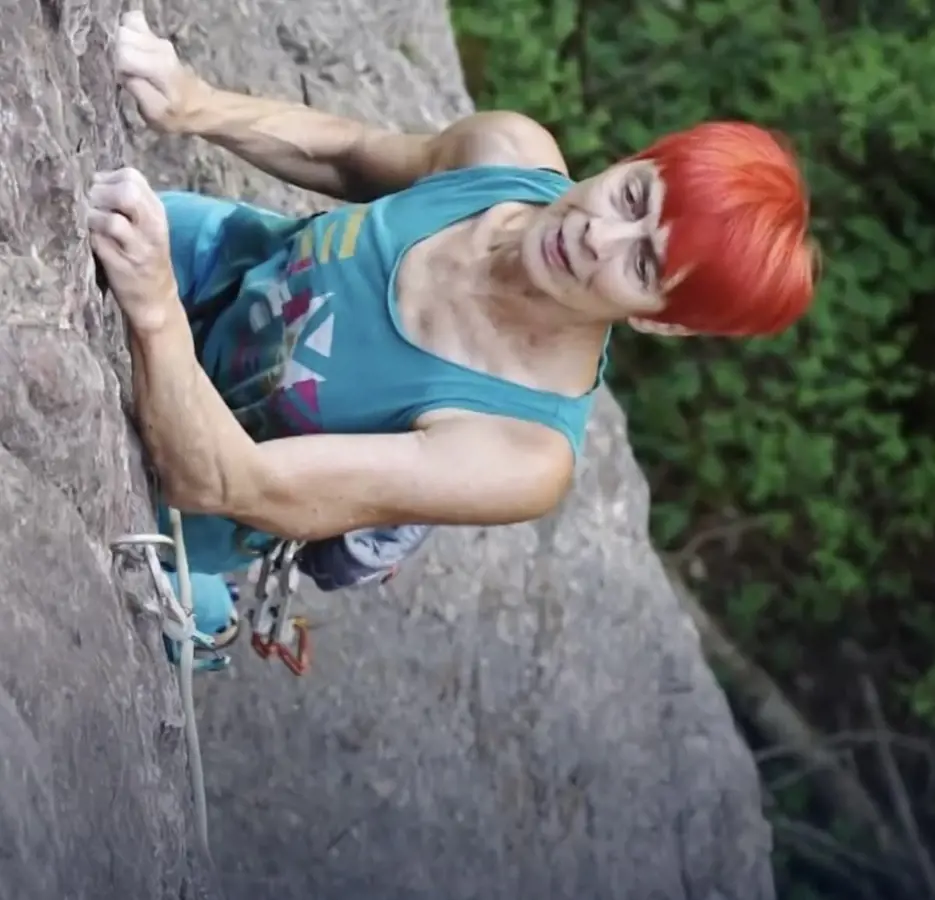
In 2021, Irmgard Braun completed her first 7c+, Open Box at age 69. Last year she sent Le string à Fredo (7c) and in 2025 she did Junge (7c). The German author …
26 May 2025
Pierre Shankland ticks his first two 9a’s
Pierre Shankland has repeated Matteo Soulé’s Trois pattes dans la chouffe (9a) and Chouffe qui plâtre (9a) in Gorges Du Tarn, after having projected them durin…
Related news
18 November 2025
Irmgard Braun, 73, going for 8a
In 2021, Irmgard Braun completed her first 7c+, Open Box at age 69. Last year she sent Le string à Fredo (7c) and in 2025 she did Junge (7c). The German author …
26 May 2025
Pierre Shankland ticks his first two 9a’s
Pierre Shankland has repeated Matteo Soulé’s Trois pattes dans la chouffe (9a) and Chouffe qui plâtre (9a) in Gorges Du Tarn, after having projected them durin…
Favorites
8 June 2026
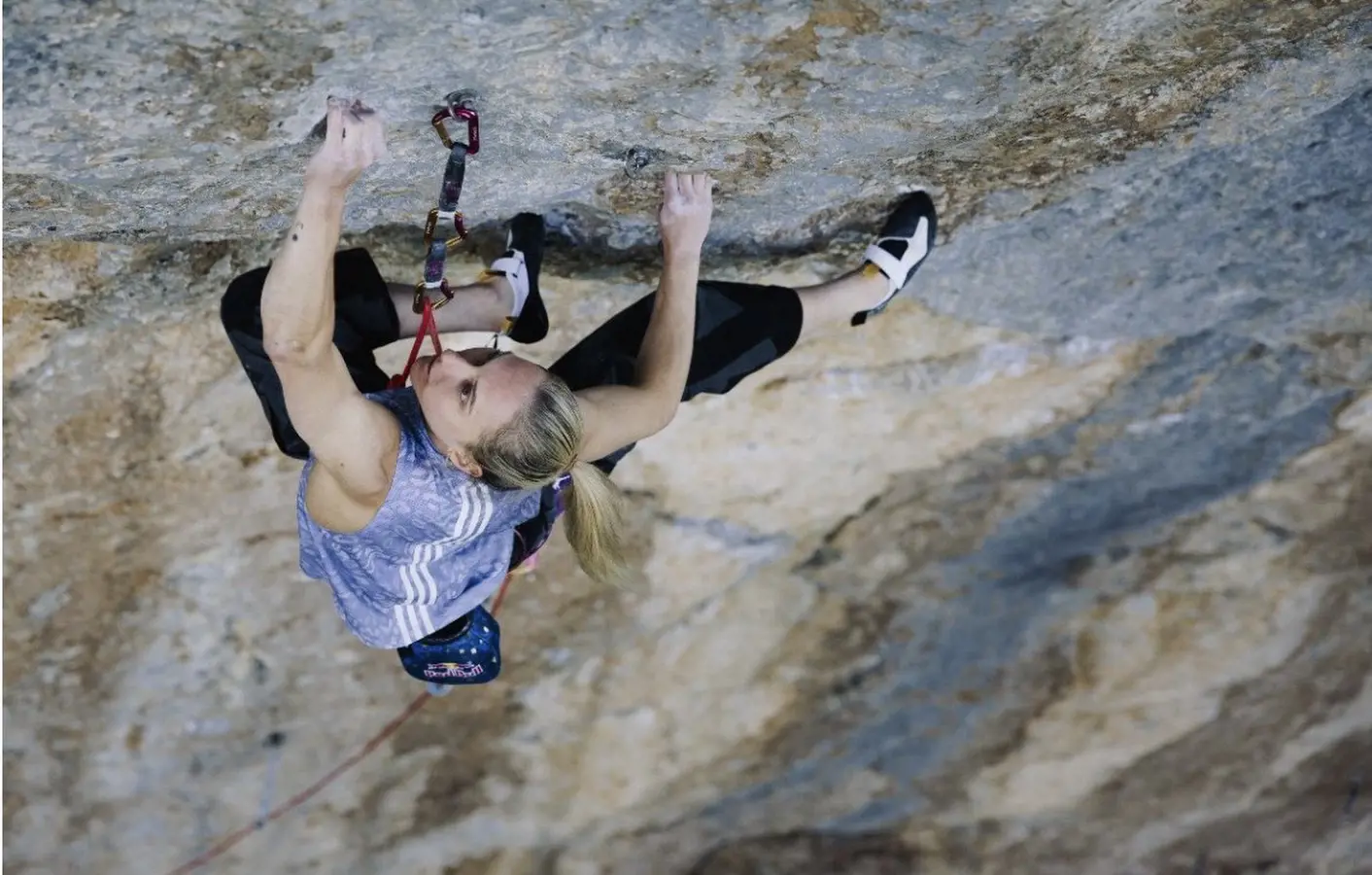
Janja Garnbret does Bibliographie (9b+)
Janja Garnbret has added another milestone to her remarkable climbing career by becoming the first woman to climb Bibliographie (9b+) in Céüse, one of the harde…
Jorge Diaz-Rullo reports on Instagram that he has made the first ascent of Cafe Colombia in Margalef. At 27, he’s already stacked four 9b+ sends and now he’s ad…
16 March 2026
Ondra flashes 3*8C in two weeks
”I stopped focusing on competition bouldering after last year’s World Cup in Prague, partly because I can already feel it on my body, especially in my shoulders. The modern competition style, with a lot of jumping from one hold to another, is very demanding for the shoulders.
Outdoor bouldering is…