
9 June 2026
Bolt Defect, Not Sulphate, Suspected in Kalymnos Failure
David Reeve has published a preliminary report in regards the fatal accident in Kalymnos in March. His conclusion is, "Until proven otherwise, all installed 10mm Petzl Goujon expansion bolts of vintage, say 2000 to 2005, should be treated as dangerous. It should be emphasized that this condition arises from the nature of the bolt itself, and is independent of its installed environment."
The Australian has several times been helpful to Vertical-Life/8a with comments on his articles.
”The problem is the bolt was badly made. Material good, manufacturing process bad. Whilst this batch of bolts was old, there is nothing to say that a modern batch could be equally bad.”
Can we generally trust Rebolt Kalymnos' "green crag" designation on Bolt Beta, i.e. crags where all bolts are listed as being from 2014 or later?
They are going on the evidence in front of them, and until we can prove otherwise, that is reasonable advice.
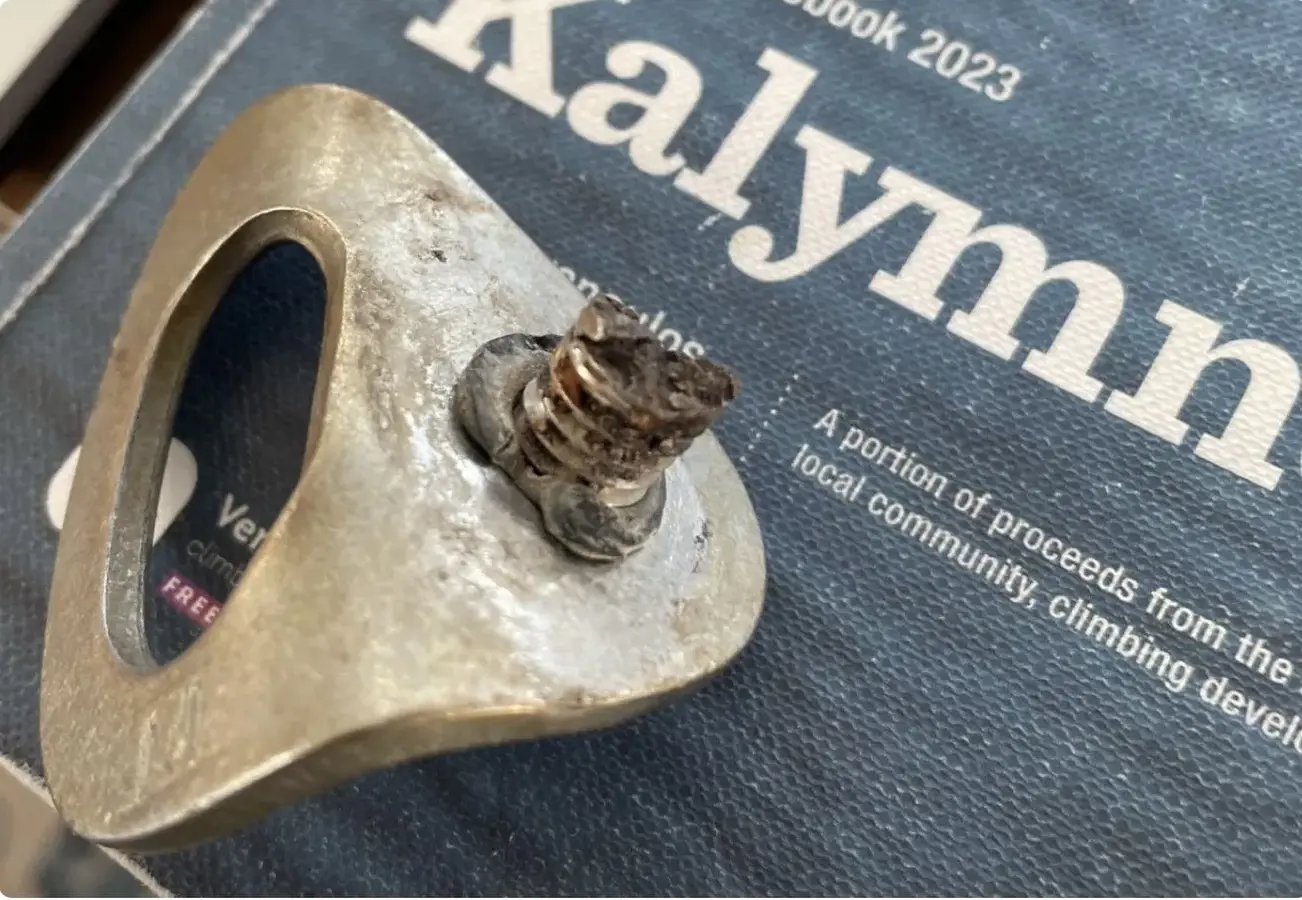
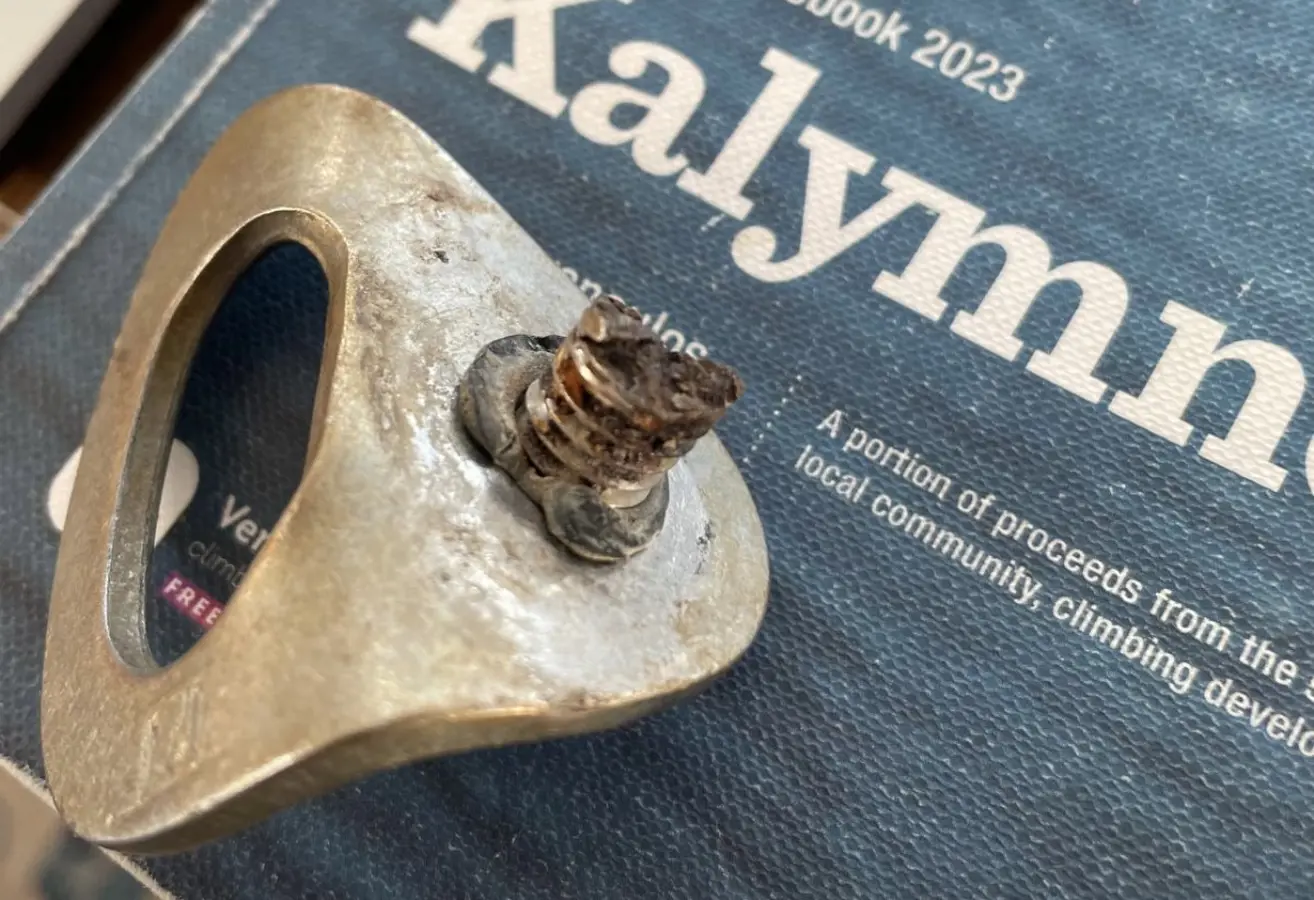
It should be mentioned that the bolt in the picture comes from Facatelendos (6b+) that broke in 2024. In this case, Reeve says it was sulphate in the crag that created SRB-mediated SSC. Rebolt Kalymnos reports that 268 routes have been rebolted with Titanium bolts, which is the only long term solution for crags with sulphate. 2376 routes are from 2014 or later with A4 bolts (316) and 1888 routes are older with A2 bolts (304) the latter should be avoided.
AI summary of the article:
The article's main conclusion is that the anchor probably failed because of a problem with the bolts, not because of chemicals in the rock.
The investigation found:
The bolts were made from the correct type of stainless steel.
There were no clear signs of corrosion causing the failure.
There was no evidence that sulphur-related chemicals or bacteria in the rock caused the cracking.
The threads on the bolts showed signs of being worked too hard during manufacturing, making them more likely to crack over time.
The author's current theory is that the bolts had a manufacturing weakness that eventually led to cracking and failure.
So the short answer is: the evidence currently points to a problem with the bolts themselves, not sulphate in the crag. More testing is still being done to confirm this.
The Australian has several times been helpful to Vertical-Life/8a with comments on his articles.
”The problem is the bolt was badly made. Material good, manufacturing process bad. Whilst this batch of bolts was old, there is nothing to say that a modern batch could be equally bad.”
Can we generally trust Rebolt Kalymnos' "green crag" designation on Bolt Beta, i.e. crags where all bolts are listed as being from 2014 or later?
They are going on the evidence in front of them, and until we can prove otherwise, that is reasonable advice.
It should be mentioned that the bolt in the picture comes from Facatelendos (6b+) that broke in 2024. In this case, Reeve says it was sulphate in the crag that created SRB-mediated SSC. Rebolt Kalymnos reports that 268 routes have been rebolted with Titanium bolts, which is the only long term solution for crags with sulphate. 2376 routes are from 2014 or later with A4 bolts (316) and 1888 routes are older with A2 bolts (304) the latter should be avoided.
AI summary of the article:
The article's main conclusion is that the anchor probably failed because of a problem with the bolts, not because of chemicals in the rock.
The investigation found:
The bolts were made from the correct type of stainless steel.
There were no clear signs of corrosion causing the failure.
There was no evidence that sulphur-related chemicals or bacteria in the rock caused the cracking.
The threads on the bolts showed signs of being worked too hard during manufacturing, making them more likely to crack over time.
The author's current theory is that the bolts had a manufacturing weakness that eventually led to cracking and failure.
So the short answer is: the evidence currently points to a problem with the bolts themselves, not sulphate in the crag. More testing is still being done to confirm this.
1 comment
Sort by:
Date
Reply
Most commented
Jorge Diaz-Rullo reports on Instagram that he has made the first ascent of Cafe Colombia in Margalef. At 27, he’s already stacked four 9b+ sends and now he’s ad…
26 January 2026
Sean Bailey FA’s Duality of Man (9c)
Sean Bailey reports on Instagram that he has done the first ascent of Duality of Man (9c) in Dry Canyon. ” After four total years and three seasons of climbing,…
23 March 2026
Jorge Diaz-Rullo proposes 9c for Café Colombia
Jorge Diaz-Rullo elaborates on the reasons for him to suggest 9c for Café Colombia on Instagram, which he took down last week after projecting it for 240 sessio…
Related
15 April 2026
Kalymnos - Safety First!
Based on the tragic accident on Kalymnos last month, and the fact that we know of two other bolts that snapped 1.5 years ago, all of which appeared ok on the ou…
Related news
15 April 2026
Kalymnos - Safety First!
Based on the tragic accident on Kalymnos last month, and the fact that we know of two other bolts that snapped 1.5 years ago, all of which appeared ok on the ou…
Favorites
8 June 2026
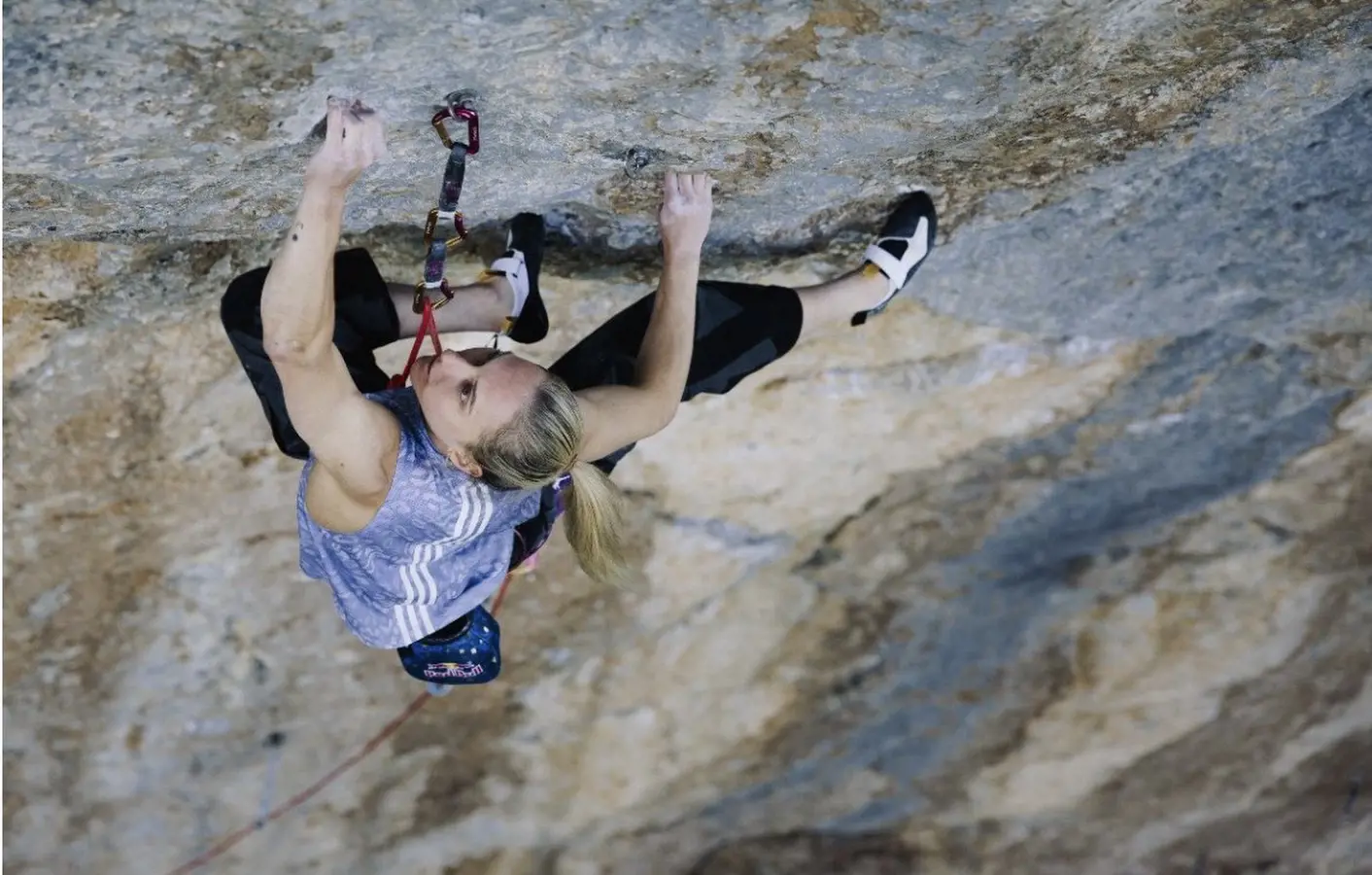
Janja Garnbret does Bibliographie (9b+)
Janja Garnbret has added another milestone to her remarkable climbing career by becoming the first woman to climb Bibliographie (9b+) in Céüse, one of the harde…
Jorge Diaz-Rullo reports on Instagram that he has made the first ascent of Cafe Colombia in Margalef. At 27, he’s already stacked four 9b+ sends and now he’s ad…
16 March 2026
Ondra flashes 3*8C in two weeks
”I stopped focusing on competition bouldering after last year’s World Cup in Prague, partly because I can already feel it on my body, especially in my shoulders. The modern competition style, with a lot of jumping from one hold to another, is very demanding for the shoulders.
Outdoor bouldering is…