NEWS

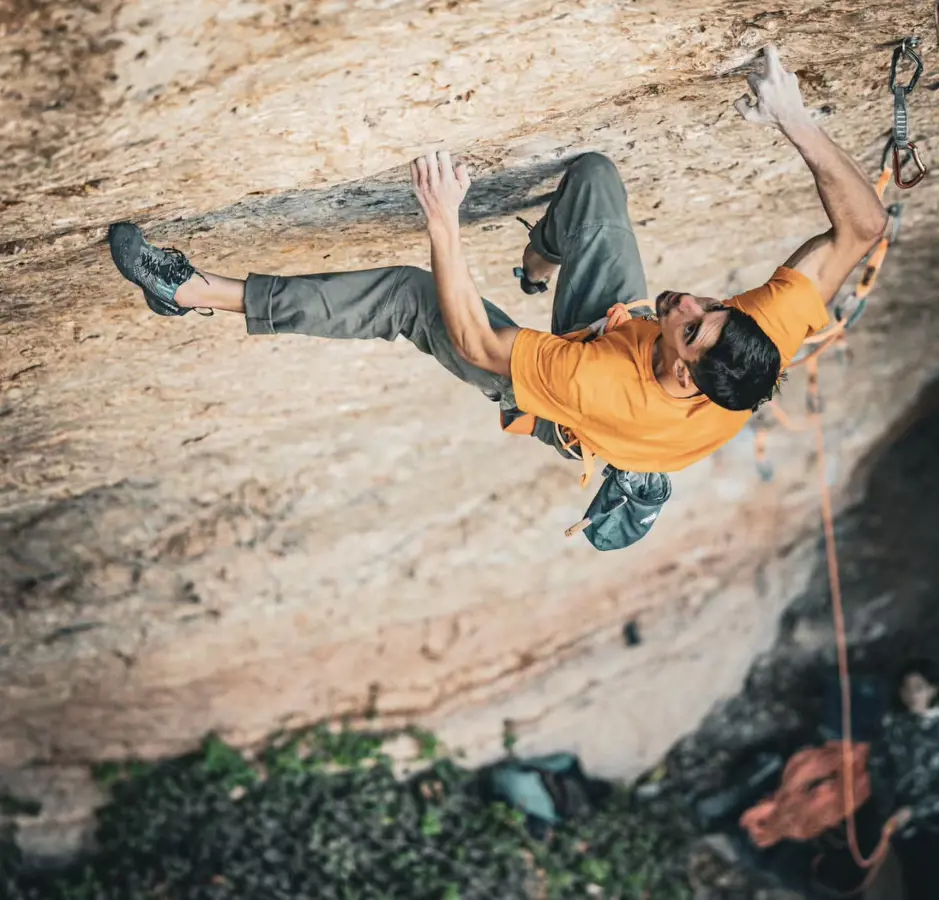
Estado Critico 9a (8c+) by Piotr Schab
Piotr Schab has done a very quick ascent of Estado critico 9a (8c+) in Siurana. "3rd go. Cool moves in the crux and then some technical pumpy climbing to the top. 9a in a day feels damn. I assume itโ€™s low end, but I had to fight very hard for it." In the 8a ranking game, the Pole is #2 after Adam Ondra. (c) Wojtek Kozakiewicz

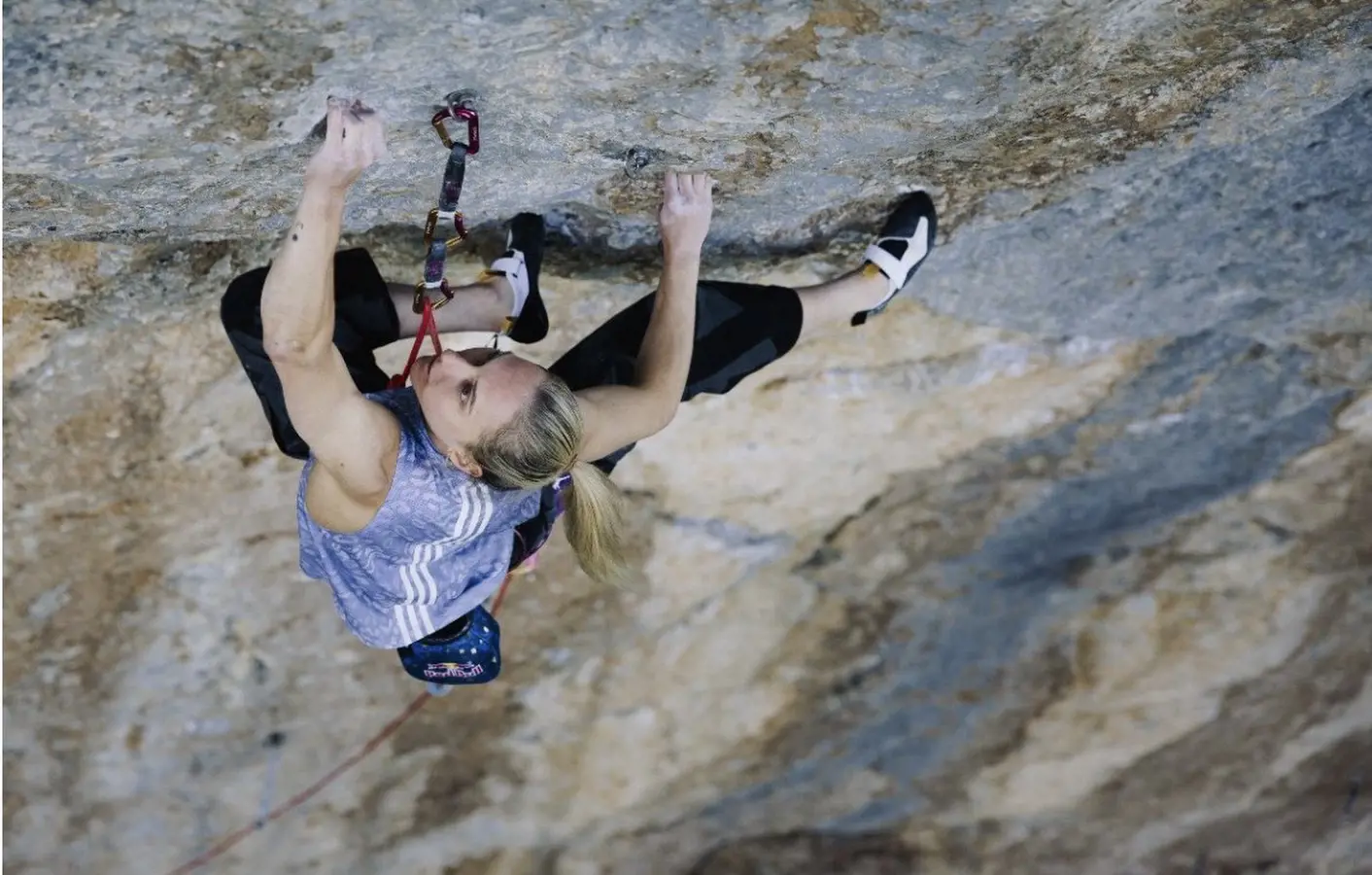
8th 8c+ by Michaela Kiersch
Michaela Kiersch has done an impressive second go ascent of American Hastle in as well as her eight 8c+, Joe Blau, both in Oliana. "Yay!!! Epic battle after breaking a hold at the top." The 152 cm american, who took the silver in the USA Lead nationals recently, is the superior 8a Combined ranking game leader. (c) Matty Hong Michaela has just graduated from University and this is her second trip to Spain. Unfortunately it has been raining a lot and she has only two weeks left and now a heat wave is coming in. Next up to try is Papier Moyat.

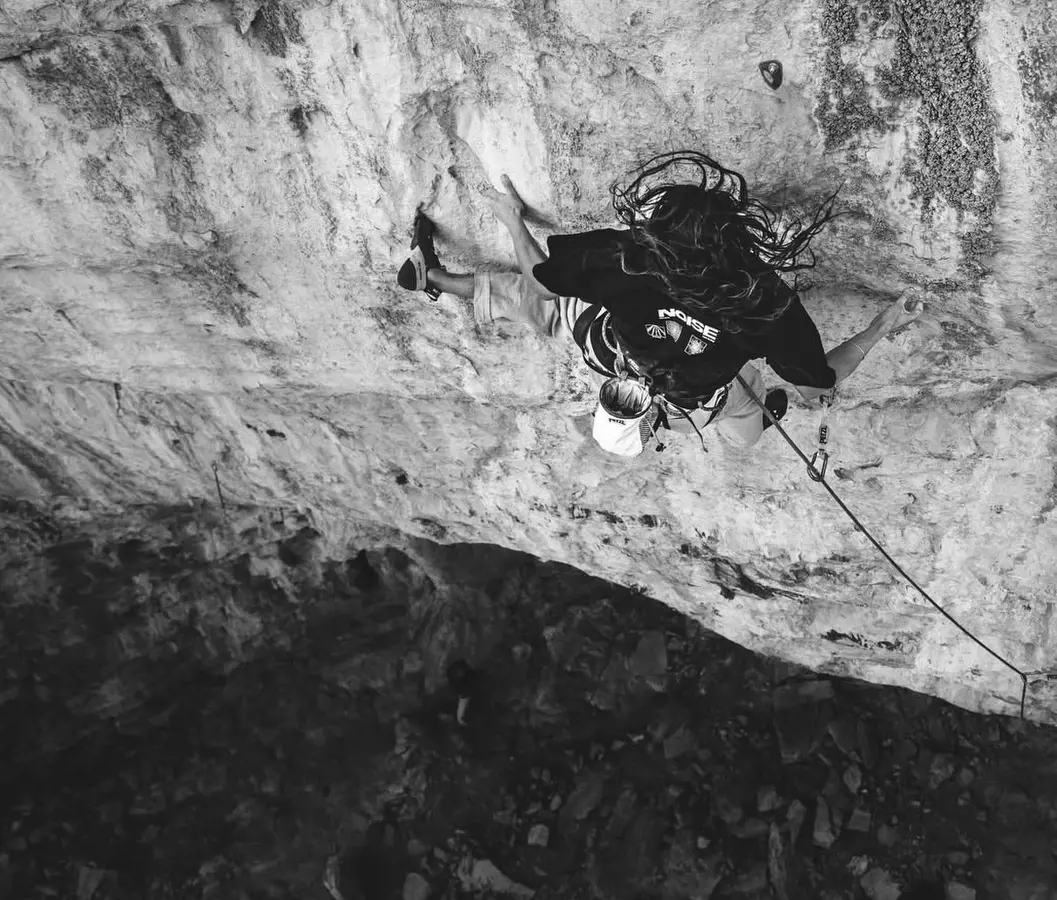
Caro Ciavaldini climbs The Quarrymen E8 7a (~8a trad)
Caroline Ciavaldini reports on Instagram that she has climbed the FFA of The Quarrymen E8 7a in Twll Mawr, Wales. This 4 pitches route was put up by legend Johnny Dawes in 1986, and it is one of the most iconic routes in the world with the extraordinary Groove Pitch (on the picture). ยฉ Neil Hart "โ€œTHAT IS NUTS" What on earth made me come up with: โ€œI want to do The Quarrymanโ€? Wellโ€ฆ It seemed impossible soโ€ฆ"

19 April 2018

Moscow prediction

The easiest way to predict the Bouldering WC in Moscow, which starts on Saturday, would of course be to just copy the Meiringen results. Another possibility is to calculate the finalist based on the total result from the qually and the semifinal, from the two groups respectively. Beside that, we should look out for the Japaneses and especially Kokoro Fujii. Bear in mind also that the Japaneses are the only team that go all in also in Speed where the qualification is just right before the Bouldering final. 1. Yuji Fuyiwaki JPN 78 (7 Tops and 8 zones) 2. Aleksei Rubtsov RUS/Tomoa Narasaki JPN 67 1. Jakob Schubert AUT 89 2. Tomoaki Nakati JPN 79 3. Jongwon Chon KOR 78 1. Akiyo Noguchi JPN 79 2. Janja Garnbret SLO 78 3. Stasa Gejo STB 58 1. Miho Nonaka JPN/Sandra Lettner AUT 69 3. Fanny Gibert FRA/Jessica Pilz AUT 58

Multi-discipline success recipe for Jernej Kruder
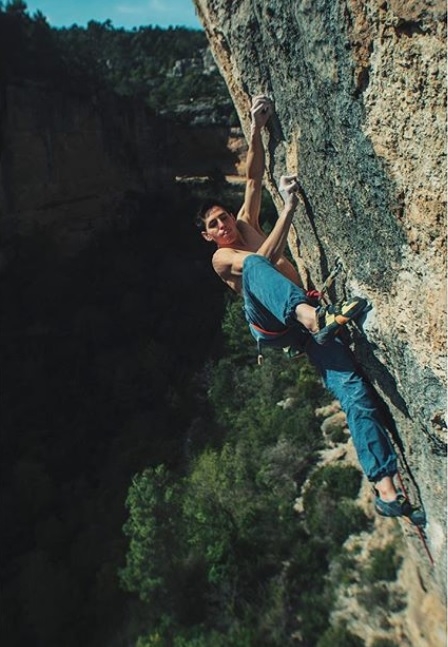
Jernej Kruder, #2 in the WCH in 2014 and who has been an active competition climbers for 15 years, won his first World Cup in Meiringen. Interesting is that the Slovenian is mainly climbing and training outdoors doing all disciplines from DWS, trad and Big Walls and that goes also for his WC preparation. As a matter of a fact, the 27 year old should be a contender to be the best multi-discipline climber in the world, together with Adam Ondra, as of today. And he is going for the Olympics. "No preparations yet. Too soon for that :)" His Insta from 2018 confirms that he likes all types of climbing including bolting up new routes. The week before Meiringen he had two projecting days on a 9a, see the picture by krimp.si. The last months he has posted from several comps, 8b+ trad, 8b+ MP and 8B boulder. It was all about the weather, so it's hard to say how many days outdoor exactly. There were also some selection trainings and competitions too. But for sure it was more than 50% outdoors."

The document published below did include some info that was not correct when it comes to the Time in between the disciplines in the Olympics. Here are the official 2018 rules which we also have confirmed with IFSC. "The Qualification round of the Combined event shall be organised such that: 15.1.5.1 Each competitor shall have a minimum [30] minutes recovery period between their last attempt in the Speed competition and the start of their attempts in the Boulder competition following; and 15.1.5.2 Each competitor shall have a minimum [120] minutes recovery period between their last attempt in the Boulder competition and the start of their attempt in the Lead competition following. where each of the Qualification and Final rounds will combine competitions in the Speed discipline, the Boulder discipline and Lead discipline in that order." 15.1.6 The Final round of the Combined event shall be organised such that: 15.1.6.1 Each competitor shall have a minimum [15] minutes recovery period between their last attempt in the Speed competition and the start of their attempts in the Boulder competition following; and 15.1.6.2 Each competitor shall have a minimum [15] minutes recovery period between their last attempt in the Boulder competition and the start of their attempt in the Lead competition following. When it comes to starting order, the highest ranked competitor should start last in all three disciplines. In the finals, the highest ranked, after each discipline, should start last. In practice this means that there could be an advantage to qualify to the Olympics as #20 as this means you will start first with fresh holds in Bouldering and the contrary applies for the #1 qualified. The starting order is based on the Seeding, i.e. who qualify first and in which position. During the final, the ranking in bouldering might be most important as a better result will give you longer resting time before Lead. IFSC has stipulated a min of 15 min rest in between disciplines, and if so, the highest ranked climber could remain with instead 40 - 60 min rest. Another consequence is that a poor result in Speed during the final might not be so bad as this means, you will save more energy skipping two Speed runs, starting first in Bouldering and getting longer rest before Lead. Imagine Adam Ondra, could be last in Speed, starting first in Bouldering which he wins, will give him the longest rest before Lead. It should be mentioned that we have commented the min 15 minutes rule with IFSC and they have answered that it is just a minimum and that there probably will be longer time in between the disciplines during the final. One problem to face is also when to do the route reading which in itself is like a 10 min procedure. It will be rather complicated to do all route reading before starting the Speed event. On the other hand, it is probably the broadcaster who will decide what type of interval in between the disciplines is best for the million television audience.

Worse friction for the semi winner
Innsbruck 2018 has published an interesting Meiringen analyses talking about technical skill adapting to different types of challenges, carried out by Udo Neuman. As the route setters will be the same in the WCH in Innsbruck 2018, important lessons have to be learnt. Udo also points out the problem with the conditions deteriorating which in practice means that the better result you had in the semi, the worse friction you will get in the final. On the first problem, that can be seen in the picture, the first three guys did it at the same time the four last guys, and higher ranked in the semi, failed. "Once someone has slipped off a foothold twice, the risk of slipping again increases dramatically. This also had a big influence on the result in Meiringen." Video of last man out, Jakob Schubert, slipping from that big yellow hold. Udo also says, "It can only be hoped that a more level playing field will be made available in the future.". IFSC comp stats since 2007, confirms that the semi winner seldom actually wins the final and this is especially true for the WCHs. Other reasons for this is of course, the increased pressure starting last out, having heard that other guys topped and also that plastic holds and the whole arena get slightly heated up from the first to the last climber.