NEWS

Tomorrow (Monday, Dec 6th), from 7 am to ~8:30 am CET (0:00 to 1:30 AM MST), 8a will undergo maintenance. We need to take the site down during this time - sorry for the inconvenience. Once it is back up, you'll notice a better way of logging repeat ascents at your local crags.

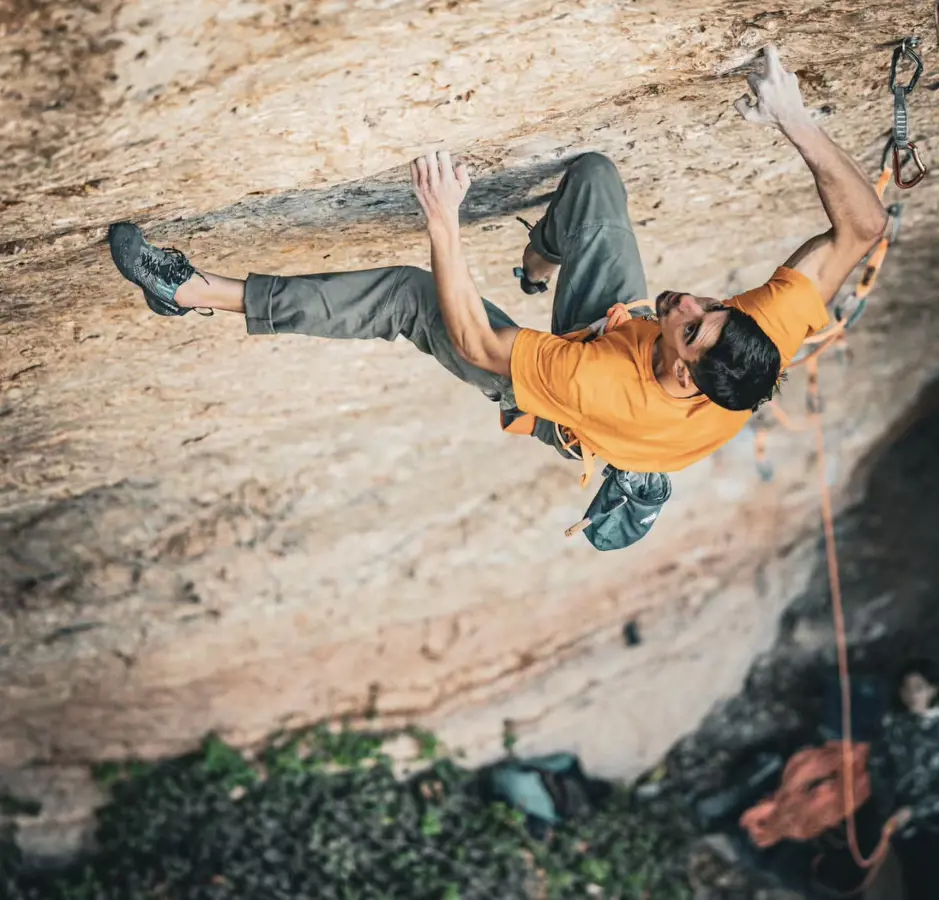
Jabberwocky Direct 8A by Miriam Borgstrom (17)
Miriam Borgstrom has done her third 8A, in Red Rock (NV). The 17-year-old did her first 7C+, out of 19, at age 15. (c) Quentin Borgstrom

"I sent Jabberwocky 7C last season, and soon started working on the direct 8A version. At the time, this wouldโ€™ve been my first of the grade, so perhaps the psyche was dangerously high. I continuously yarded for the crux pocket and ultimately took my first finger injury. I spent a year away from this line and returned somewhat hesitantly this week. The mixture of nerves from returning to my injury birthplace, and the boost of confidence from sending other 8As recently was a strange pair. I put it down in a few furious goes, and with its head, went galumphing back."

What type of finger injury did you face?
The injury was a near-constant strain in the middle finger on my right handโ€”it may have been torn tissue. I babied the finger for a month, and then I used Esther Smithโ€™s rice bucket and hang-board exercises to fully heal. The rehab took about two months.

Climbing is about creating challenges and solving them for their own sake. When climbers go out to climb, they usually do not feel the need to classify their climbs ('the hardest, the boldest, the longest...'), but they are often quantified and labelled by media and sponsors to facilitate their appreciation and to make sure they get attention. In order to make the challenges harder, one might include eliminations, sit starts, link-ups or doing a bolted route on trad gear etc. On the contrary, if the challenges are too hard they can be made easier by pre-clipping, using fans, knee pads or multiple crash pads etc.

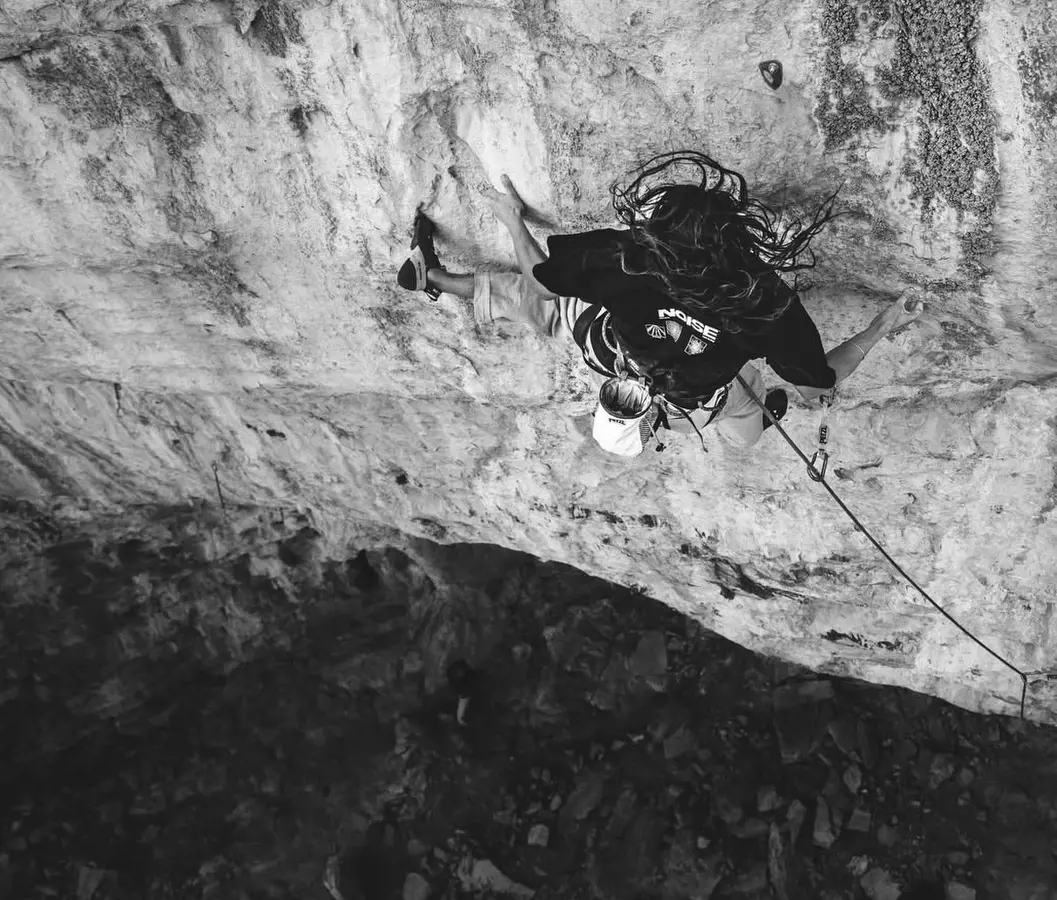
Bernd Zangerl's Into the Sun, which just got its first repeat by Jacopo Larcher, is a perfect example of a beautiful hybrid challenge, where most certainly, no label fits. It could be called a "green point", as trad gear was placed instead of bolts, it could be called a high ball or a trad link-up as a high traverse was added to a boulder problem that ends below the top-out. Zangerl graded his climb 8c+ and called it "probably one of the hardest trad climbs in the world now" in a video that was produced of his ascent. (As of today, there exist only a couple of other trad 8c+, and 9a has never been suggested.)

Into the Sun goes diagonally from right to left on a huge boulder. It starts with Zangerl's boulder Very Important Papagei (V.I.P.), originally graded 8B+, where trad gear is placed a couple of meters after a bolted anchor, and then you continue with a 7b top out. V.I.P. has been repeated and upgraded to 8B+/C due to a broken hold. It begins with an 8A (+) traverse into Der Strahler, which has been upgraded from 8A+ to 8B.

In climbing, we use subjective grades defining which routes are the hardest in the world or at a specific crag etc. History shows that climbing media often presents news that is not correct, and downgrades are frequent. In other cases, it later turns out that the used ethics are dubious, i.e. pre-clipping, down climbing, onsight beta stacking crash pads etc. Climbing news are based on trust and usually, very little verification is made. Personally, I think you can climb in any style or invent and tricks you like, like placing a book under your knee-pad as long as you are open with it - and you're not excessively changing others' experiences or the rock.

The dilemma for the climbing media is that the ethics are on a floating scale and we do not have rules like in other sports when somebody can claim a world record etc. Over the years, we can see that there has been some ethics devaluation in climbing. Personally, I think that when it comes to climbing "world records" reported in the media, high standards are needed.

In short, "Into the Sun" is one of the hardest trad challenges in the world but should it be labelled in the history books as one of the hardest trad routes in the world? What is somebody add a sit start creating a 9a challenge? Should that hybrid be called the hardest trad route in the world? What if somebody skips the trad gear and instead stack some more crash pads and make it a high ball or a free solo? Hardest in the world? The responsibility of the media is to find the balance between the need to label and compare ascents, and to describe them in such a way that their relevance is clear without 'wrong' labels. The interesting aspect of Bernd's ascent at the time was that a legendary climber came back to hard climbing with this ascent. And on Jacopo's repeat, his insight into his own motivations to climb this was also a reason to report it, independently of whether or not this route should be listed as one of the hardest trad routes in the world or not.

Zangerl's comments, after reading a draft of this article, "For me its a trad route, because I used trad gear. Isn't it that simple? I actually put out the bolts when I did Into the sun, some people put it back for probably for top roping."

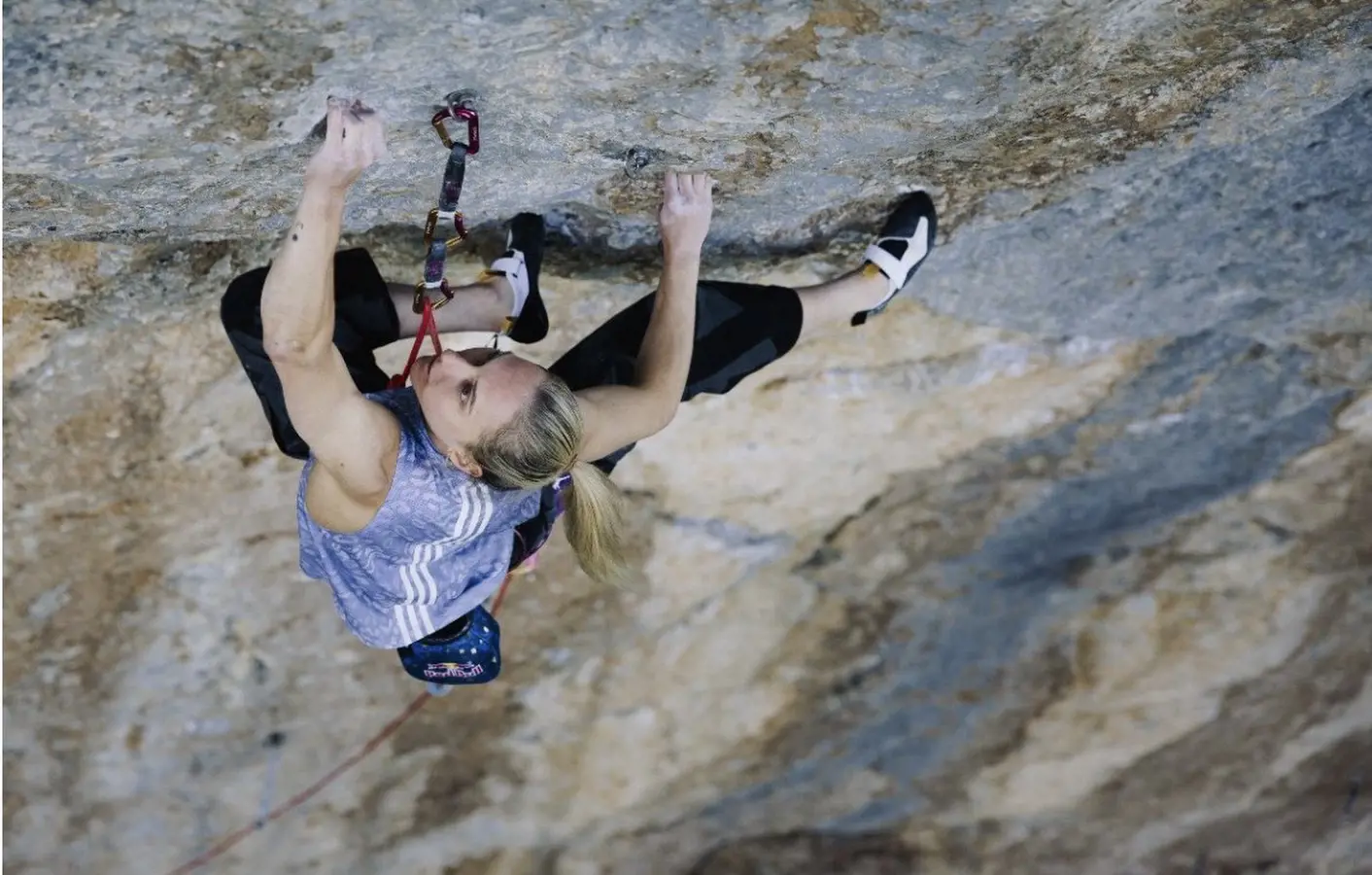
Musa 9a FA by Silvio Reffo
Silvio Reffo, who previously has done 15 routes 9a and harder, has made the FA of Musa (9a) in Covolo. (c) Giovanni Basso

"I bolted the route last year after the first lockdown. I didn't know if the route was possible because there were some moves almost impossible for me. I came back on the route last spring and I felt very fit (thanks to winter strength training) but not enough to send the route. Some days ago finally I did the F.A. of the route!"

What are your next plan?
I have tried Begining in Arco (Ghisolfiโ€™s 9a/+ route), so it will be a good goal.

Over the years, I have received plenty of emails where climbers inform about high profile climbers cheating. The most common way to cheat seems to be using tight belay, i.e. rope drag stopping the pendulum swing while doing dynamic moves in an overhang. Personally, I have also witnessed it but then the climber just responded, "It was not my fault!" In the end, my friend did the route again but according to the emails I am receiving, tight belay might be used also by the top climbers.

Other cheating comments I have received during the years are giving beta during onsights, belaying friends trying to redpoint a route as well as asking for tickmarks before his onsight attempt, pre-clipping carabiners or commenting that the logged ascents were a complete lie. When it comes to bouldering, sometimes climbers seem to misunderstand where the boulder starts, stacking crash pads or dabbing the pad or the spotter.

It should be mentioned that we have only twice received such cheating complaints about top-level or famous ascents. In both cases, I talked to the climbers and was pleased with the answers. However, as climbing is growing and there is more money and lucrative sponsor contracts out there, the cheating and crossing the ethical border will most probably increase. There are many classical examples of cheating in other sports and possibly there is no other sport where it is so easy to cheat like in climbing.

I do remember when a climber told my local community that he had done a 7a onsight. We met him at the crag and asked him if he could show us his sequence. After some five minutes working the crux with no success, he said, "It is strange but it seems I am much better onsighting!" He hang-dogged to the third bolt but also there he could not solve the second crux. My point here is that mythomaniacs are part of society and surely also found among the climbing community.

As it stands, crossing the ethical borders and cheating in climbing has not been a big problem but actually, this year I have received several emails on the subject. However, it has not have had an impact on the reported news. In the future, I could possibly send out a message to the climber involved if I get two independent emails? What do you think?

Adam Ondra comes clean in Beyond focus talking about that he is most of all a lifestyle rock climber at the same time he loves competitions. There he learns about his person and possibly it is also about the ego, showing that you are the best during the day. The preparation is like ways also something he loves. Out of all great Ondra video's, this is one of the best and there are three more episodes describing his inner journey to look forward to.

Samfaina 9a+ by Jorge Diaz-Rullo
Jorge Diaz-Rullo has made the third ascent of Samfaina 9a (+) in Margalef. Both Sharma and Ramon Julian Puigblanque, who did the second ascent in 2010, called it 9a but Jorge says it feels more like 9a+ in comparison to the other 9a's in the sector. At the same time, he says on Insta. "A route with a little endurance but with two really hard moves, my antistyle ๐Ÿ‘Š" (c) Adri Martinez

The 22-year-old Spaniard has now done 45 routes 9a to 9b, meaning he is #8 on that list. If we only count the last three years, he is probably #3 after Adam Ondra and Alex Megos.