
NEWS
30 September 2021
Train your resting skills to get better endurance
One easy way to get better endurance is to train your resting skill. Having done the crux, reaching a good hold, it is about recovery optimization. Here are some training tips that will increase your chances of sending.
1. Rest first and then clip
A common mistake is, due to you being stressed, you use the last part of your fuel tank to clip. This means that the possibility to get the power back is reduced.
2. Focus on your breathing
Get into that breathing yoga mode as quickly as possible. Focus on long breaths and start counting them.
3. Look down or close your eyes
Relaxing is about doing nothing. Create your resting bubble. Do not look up until you are fully recovered.
4. Use the friction
Hang onto the holds. Sharp edges might be painful to use but they will increase your recovery.
5. Change the positions
Try to find new positions for your feet in order to optimize the resting of all your muscles in your body.
How long to rest and in how long intervals for each hand are depending on the size of the holds, how tired you were from the beginning etc. In general, the intervals should be longer and once you reach 15-20 seconds per hand, there are probably no more gain to get in your forearms. However, being exhausted in your whole body coming to big jugs, you might need to rest for several minutes. From the other perspective, resting optimization is also something that could be done during ten seconds on a bad hold in between two cruxes. This is a very advanced skill that can only be mastered once you know how to rest properly on bigger holds.
Resting can also be done during the second your hand is moving to the next hold. Then we are practically only talking about relaxing the forearm in order to allow some new fresh blood being pumped into your muscles. One way of training this is simply to try to open up your fingers in between holds.
1. Rest first and then clip
A common mistake is, due to you being stressed, you use the last part of your fuel tank to clip. This means that the possibility to get the power back is reduced.
2. Focus on your breathing
Get into that breathing yoga mode as quickly as possible. Focus on long breaths and start counting them.
3. Look down or close your eyes
Relaxing is about doing nothing. Create your resting bubble. Do not look up until you are fully recovered.
4. Use the friction
Hang onto the holds. Sharp edges might be painful to use but they will increase your recovery.
5. Change the positions
Try to find new positions for your feet in order to optimize the resting of all your muscles in your body.
How long to rest and in how long intervals for each hand are depending on the size of the holds, how tired you were from the beginning etc. In general, the intervals should be longer and once you reach 15-20 seconds per hand, there are probably no more gain to get in your forearms. However, being exhausted in your whole body coming to big jugs, you might need to rest for several minutes. From the other perspective, resting optimization is also something that could be done during ten seconds on a bad hold in between two cruxes. This is a very advanced skill that can only be mastered once you know how to rest properly on bigger holds.
Resting can also be done during the second your hand is moving to the next hold. Then we are practically only talking about relaxing the forearm in order to allow some new fresh blood being pumped into your muscles. One way of training this is simply to try to open up your fingers in between holds.
Read more
0
029 September 2021
Mega classic Font 7A goes as 6B with kneepad
Holey Moley in Fontainebleau has 588 ascents in the 8a database where 79 % have logged it as 7A and the rest 7A+ or even 7B. Now one of the #kneebartheworld masters, Tor Johnson has a video on his Insta, where he uses a kneepad and comments, "7A(/6B?)".
Last year, we published the article It is time to start training knee bars with some advice by Tor.
"When I climb I always look for kneebars just as much as I look for holds. Finding a kneebar is often a game changer when you try to send a climb that is on your limit. Kneebars is not just about resting and making moves easier. Sometimes you can do totally new sequences using a kneebar. Some people say that using kneepads are cheating as they make the climbs easier. And they are right. That is the point! The same thing was said about climbing shoes and chalk when they first came around. Nowadays it seems very strange to climb without chalk! I'm sure kneepads are here to stay and I think they should be part of any climbers standard setup just like climbing shoes and chalk bags.
I train my kneebar skills at least once a week. Some people say they only use kneebars when they have to. That is strange to me. Technical kneebars require a high level of skill and specific strength just like heal hooks or drop knees. If you don't practice it, there is no way you will get the most out of the kneebars when you really need them."
Last year, we published the article It is time to start training knee bars with some advice by Tor.
"When I climb I always look for kneebars just as much as I look for holds. Finding a kneebar is often a game changer when you try to send a climb that is on your limit. Kneebars is not just about resting and making moves easier. Sometimes you can do totally new sequences using a kneebar. Some people say that using kneepads are cheating as they make the climbs easier. And they are right. That is the point! The same thing was said about climbing shoes and chalk when they first came around. Nowadays it seems very strange to climb without chalk! I'm sure kneepads are here to stay and I think they should be part of any climbers standard setup just like climbing shoes and chalk bags.
I train my kneebar skills at least once a week. Some people say they only use kneebars when they have to. That is strange to me. Technical kneebars require a high level of skill and specific strength just like heal hooks or drop knees. If you don't practice it, there is no way you will get the most out of the kneebars when you really need them."
Read more
0
2529 September 2021
Lift your arm at the anchor to reduce recovery time
As you are climbing an intensive gym route, generally, the forearm muscles are contracted and the hands are over your head. This results in a lack of fresh blood coming into your forearms and you take every opportunity to shake out in order to increase the blood circulation. Once having clipped the anchor and you are lowered down, with no muscle contraction and your arms at your side, there is a big risk that the forearms get flooded. The artery is pumping more blood into the capillaries than the veins can handle. This will create swollen forearms which will reduce blood circulation demanding a longer recovery time.
The easy way to avoid your forearms getting flooded is simply to rest by the anchor for a minute or so and shake out where your belayer takes half of your weight. If you are lowered down, you could do your shakeout procedure by grabbing the rope. Once you are on the ground, immediately grab some jugs and continue. After a minute or so, you will feel that the flooding dilemma in your forearms is reduced. To lift and lower your arms doing the first five minutes after your climb will improve your blood circulation and speed up your recovery.
The easy way to avoid your forearms getting flooded is simply to rest by the anchor for a minute or so and shake out where your belayer takes half of your weight. If you are lowered down, you could do your shakeout procedure by grabbing the rope. Once you are on the ground, immediately grab some jugs and continue. After a minute or so, you will feel that the flooding dilemma in your forearms is reduced. To lift and lower your arms doing the first five minutes after your climb will improve your blood circulation and speed up your recovery.
Read more
0
228 September 2021
Pneuma 9a by Nicholas Milburn
Nicholas Milburn, who three weeks ago did his third 9a, has done the second ascent of Pneuma 9a in the Temple. (c) Jessica Appelbaum
"Hot damn this thing is mega! The bulk of the route is about a 24 move ~V13 (except I normally do power endurance V13 faster than this thing) with no stopping. I skipped about every other draw and could barely even clip that many. I only chalked my right hand once and never my left. It even has an outro ~V8 boulder with a mono. One of the best power endurance routes anywhere.
Kyle O'Meara showed me this route in 2019. At this point, it was a project and I don't think anyone had put any work into it. I went up to it a couple of times to check it out. It was really dirty, but the rock was solid and the movement felt really good. I thought it felt around the 8c range. The next year, after I sent Algorithm, I spent a month trying the Temple Project. Still, nobody had tried the route, so I cleaned it up and started figuring out the beta. I started making links and I was feeling good about my progress, but I never managed to stick the middle crux move from the bottom. As time went on I started to wonder if it was harder. Maybe 8c+? I was trying it by myself, so I wasn't really sure how hard it was, but it definitely felt hard. I think I only two pieced it once that entire trip.
This year I was stronger and very excited to get back on it. I told Ben Spannuth about it and he told BJ Tilden about it and we all got psyched and tried it together. It was really fun to try it with other people after sessions by myself for so long. It was also reassuring that they both agreed it was definitely a proper hard route. I was busy with school and work, so I couldn't get up to Ten Sleep as much as I wanted, but I was feeling really good nonetheless. BJ ended up getting the first ascent after a few weeks of work and called the route Pneuma. I sent the route my next trip up. This is one of my proudest sport sends."
"Hot damn this thing is mega! The bulk of the route is about a 24 move ~V13 (except I normally do power endurance V13 faster than this thing) with no stopping. I skipped about every other draw and could barely even clip that many. I only chalked my right hand once and never my left. It even has an outro ~V8 boulder with a mono. One of the best power endurance routes anywhere.
Kyle O'Meara showed me this route in 2019. At this point, it was a project and I don't think anyone had put any work into it. I went up to it a couple of times to check it out. It was really dirty, but the rock was solid and the movement felt really good. I thought it felt around the 8c range. The next year, after I sent Algorithm, I spent a month trying the Temple Project. Still, nobody had tried the route, so I cleaned it up and started figuring out the beta. I started making links and I was feeling good about my progress, but I never managed to stick the middle crux move from the bottom. As time went on I started to wonder if it was harder. Maybe 8c+? I was trying it by myself, so I wasn't really sure how hard it was, but it definitely felt hard. I think I only two pieced it once that entire trip.
This year I was stronger and very excited to get back on it. I told Ben Spannuth about it and he told BJ Tilden about it and we all got psyched and tried it together. It was really fun to try it with other people after sessions by myself for so long. It was also reassuring that they both agreed it was definitely a proper hard route. I was busy with school and work, so I couldn't get up to Ten Sleep as much as I wanted, but I was feeling really good nonetheless. BJ ended up getting the first ascent after a few weeks of work and called the route Pneuma. I sent the route my next trip up. This is one of my proudest sport sends."
Read more
4
028 September 2021
Intermezzo XY gelöst 9a flash by Alex Megos
"I got beta from a local, (Roland Wagner) who climbed the route some years ago. He went up, brushed the holds and gave me very detailed beta. 👌🏼"
How was the flash? Robot mode with full control?
Oh yes. Total robot mode. You'll see the video in a few days 😉 Pretty much full control. Two moves were a little sketchy.
How was the flash? Robot mode with full control?
Oh yes. Total robot mode. You'll see the video in a few days 😉 Pretty much full control. Two moves were a little sketchy.
Read more
12
128 September 2021
DYNOING - A ballistic science: Fly, baby fly?
Naturally, every dyno is, to a certain extent, unique in terms of holds, angles, length etc., but there is also at least one aspect in which all dynos are similar; you have to let go... What decides if you are to succeed are your physical shape, technique, but most of all your mind. Here are 10 pieces of advice and training tips.
1. Let the catching hand go as late as possible!
A very common fault among beginners is to let the catching hand go too early in the movement. Doing this, you will lose a lot of power which the hand would have generated if you had let it go later. The best way to correct this mistake is probably to do the "candle". This means trying to get the body as high (up in the air that is) as possible without letting the hands go until they lose touch with the hold through the momentum of the body.
2. Slap on the wall/hold!
When you start working a dyno, it often feels impossible. You feel there is no use even trying really, and if you do, you don't really go for it. To get a sense of improvement, start slapping the wall as high up as possible. Try to set new personal records. In time the record often gets dangerously close to the hold, and you can start trying to grab it.
3. Recruit the whole move!
It's an easy mistake to only recruit the muscles active in the first faces of a dyno, forgetting the muscles that come in to play later, in the actual grabbing-face. The reason for this is simple: you won't use the contact muscles if you can't do the catch... Recruitment-wise, the best is if you can reach the hold and put weight on it, if only for a microsecond, since, this way, all the necessary muscle fibres gets to play. If you can't reach the hold by your own power, use someone else's, or the rope. You can also, with support, try reversing the move.
4. Push with your feet!
Don't forget most of the power in a dyno originates from your legs. Try putting as much weight as possible on the footholds, to the point where you actually skids off them. It's most often an advantage to use as soft shoes as possible since you this way get the most out of the muscles in your feet. Remember, those muscles are also recruitable!
5. Use "the bungee cord" to your advantage!
To gain momentum, you should start every dyno with a vertical motion, up and then down, to kind of extend the bungee cord, to be able to use its power to be catapulted (hopefully) toward the hold you're aiming for. If you don't have enough room for this, it's also possible to gain momentum by swinging side to side.
6. Long, even applying of the power
A common mistake is to use too much power in the first face of the move. Doing this, it's very easy to lose contact with the holds, and hence the only way to keep the momentum, in the last and often deciding face. Sometimes it's best not to use all the fuel at once...
7. Use the lower hand to the maximum
Before you've managed to literally pull the lower hand off the hold, you haven't tried how much power you can apply to it. This is, of course, not true for jugs, but on smaller holds, you must push toward the limit of what's possible to gain maximum effect. In your mind, focus on the lower hand not in the upper hand grabbing the hold.
8. Use also the weight of your head
Start the dyno by leaning the head backwards or to the side. Use the momentum of your swinging head. Once you grab the hold, lean the head back again to increase the dead-point time.
9. Hyperventilate
Experiments show you'll actually gain short term power by hyperventilating. It has probably something to do with adrenaline being freed, and that you, hence, get a bit mad... Try 4-5 fast deep breaths and go for it!
10. Practice makes perfect Last, but not least, it's the amount of dedicated training you've put in that will decide your success rate. Your body needs to learn the movement so to speak, for the muscles to be able to interact perfectly. You can't think of all the advice above when you're trying a dyno, you must work them one by one until you do it naturally. Now, fly baby fly...
1. Let the catching hand go as late as possible!
A very common fault among beginners is to let the catching hand go too early in the movement. Doing this, you will lose a lot of power which the hand would have generated if you had let it go later. The best way to correct this mistake is probably to do the "candle". This means trying to get the body as high (up in the air that is) as possible without letting the hands go until they lose touch with the hold through the momentum of the body.
2. Slap on the wall/hold!
When you start working a dyno, it often feels impossible. You feel there is no use even trying really, and if you do, you don't really go for it. To get a sense of improvement, start slapping the wall as high up as possible. Try to set new personal records. In time the record often gets dangerously close to the hold, and you can start trying to grab it.
3. Recruit the whole move!
It's an easy mistake to only recruit the muscles active in the first faces of a dyno, forgetting the muscles that come in to play later, in the actual grabbing-face. The reason for this is simple: you won't use the contact muscles if you can't do the catch... Recruitment-wise, the best is if you can reach the hold and put weight on it, if only for a microsecond, since, this way, all the necessary muscle fibres gets to play. If you can't reach the hold by your own power, use someone else's, or the rope. You can also, with support, try reversing the move.
4. Push with your feet!
Don't forget most of the power in a dyno originates from your legs. Try putting as much weight as possible on the footholds, to the point where you actually skids off them. It's most often an advantage to use as soft shoes as possible since you this way get the most out of the muscles in your feet. Remember, those muscles are also recruitable!
5. Use "the bungee cord" to your advantage!
To gain momentum, you should start every dyno with a vertical motion, up and then down, to kind of extend the bungee cord, to be able to use its power to be catapulted (hopefully) toward the hold you're aiming for. If you don't have enough room for this, it's also possible to gain momentum by swinging side to side.
6. Long, even applying of the power
A common mistake is to use too much power in the first face of the move. Doing this, it's very easy to lose contact with the holds, and hence the only way to keep the momentum, in the last and often deciding face. Sometimes it's best not to use all the fuel at once...
7. Use the lower hand to the maximum
Before you've managed to literally pull the lower hand off the hold, you haven't tried how much power you can apply to it. This is, of course, not true for jugs, but on smaller holds, you must push toward the limit of what's possible to gain maximum effect. In your mind, focus on the lower hand not in the upper hand grabbing the hold.
8. Use also the weight of your head
Start the dyno by leaning the head backwards or to the side. Use the momentum of your swinging head. Once you grab the hold, lean the head back again to increase the dead-point time.
9. Hyperventilate
Experiments show you'll actually gain short term power by hyperventilating. It has probably something to do with adrenaline being freed, and that you, hence, get a bit mad... Try 4-5 fast deep breaths and go for it!
10. Practice makes perfect Last, but not least, it's the amount of dedicated training you've put in that will decide your success rate. Your body needs to learn the movement so to speak, for the muscles to be able to interact perfectly. You can't think of all the advice above when you're trying a dyno, you must work them one by one until you do it naturally. Now, fly baby fly...
Read more
0
528 September 2021
Open Box 7c+ by Irmgard Braun (69)
Irmgard Braun has set a new standard for 69-year-old women by doing Open Box 7c+ in Gorges du Tarn. The German author started climbing in the 80'ies and was later part of the German national team.
"Don't believe you are too old to improve! It took me six days to check out the moves and I sent it on day seven. I am not ascetic and not a training beast. But I am an enthusiastic climber and like testing my limits. And I am very grateful my body doesn't grumble when I am trying hard. I want to motivate other senior climbers to project routes - they will discover they can do a lot more than they ever believed. Even if there is no send, the process is fascinating: what seemed impossible in the beginning becomes climbable after several tries - and makes you stronger. For old climbers with bad knees or other niggles, bouldering with a rope is better than bouldering and jumping down. Come on, it’s fun!"
How much and how do you train?
When not on a climbing trip, I climb 2-3 times a weak, do stretching 2 times/weak and 1/weak core/ antagonists (about 1 hour). In winter I usually have 8 weeks of training for raw power (fingers and upper body) and do not climb. It seems to help, I can hang on the smallest crimp of the Lopez training board.
What are the hardest routes you have done before?
I have climbed 7c/7c+ when I was about 50. After I had several injuries and was busy with my job - journalist and author of crime stories about climbing. In those days I climbed max 7a (sometimes onsight). When I was 65, I had a broken wrist, a complicated operation and after this, I could not even lift a pan. But I did not want to become a sometimes a 6a-slab-climber, so I set the goal to climb 7c again and started to do projects. I was successful: One year later, when I was 66, I did two 7c's.
What about going for an 8a?
8a seems very far away – but if I discover a very beautiful looking climb that fits my strengths, I might have a look at it next year.
"Don't believe you are too old to improve! It took me six days to check out the moves and I sent it on day seven. I am not ascetic and not a training beast. But I am an enthusiastic climber and like testing my limits. And I am very grateful my body doesn't grumble when I am trying hard. I want to motivate other senior climbers to project routes - they will discover they can do a lot more than they ever believed. Even if there is no send, the process is fascinating: what seemed impossible in the beginning becomes climbable after several tries - and makes you stronger. For old climbers with bad knees or other niggles, bouldering with a rope is better than bouldering and jumping down. Come on, it’s fun!"
How much and how do you train?
When not on a climbing trip, I climb 2-3 times a weak, do stretching 2 times/weak and 1/weak core/ antagonists (about 1 hour). In winter I usually have 8 weeks of training for raw power (fingers and upper body) and do not climb. It seems to help, I can hang on the smallest crimp of the Lopez training board.
What are the hardest routes you have done before?
I have climbed 7c/7c+ when I was about 50. After I had several injuries and was busy with my job - journalist and author of crime stories about climbing. In those days I climbed max 7a (sometimes onsight). When I was 65, I had a broken wrist, a complicated operation and after this, I could not even lift a pan. But I did not want to become a sometimes a 6a-slab-climber, so I set the goal to climb 7c again and started to do projects. I was successful: One year later, when I was 66, I did two 7c's.
What about going for an 8a?
8a seems very far away – but if I discover a very beautiful looking climb that fits my strengths, I might have a look at it next year.
Read more
31
128 September 2021
Victimas del futur 9a by Angie Scarth-Johnson (17)
Angie Scarth-Johnson, who has stayed in Europe since February, becomes the first Australian woman to send a 9a by Victimas del Futur in Margalef. She did her first 8c at age 11 when she had a three months homeschooling trip with her non-climbing parents in Spain. From that old interview we have some interesting quotes. "I don’t have a trainer, I tried for a couple of months having an online trainer but it didn’t work out, so I just went back to training myself.
I write my own programs and have done this since I was 8. I find that this really works for me." (c) Jan Novak
How was the process taking it down?
Well it started last season here in Margalef. I started to break it down bit by bit. Victimas has a crux section right at the top which cost me so much endurance. My body and especially my mind needed time to adapt to having to pull hard right after 8c+ climbing into the final crux. I’m happy to have sent it finally at the beginning of this season and I hope to try another 9a project 😃.
How long have you stayed in Margalef, what about homeschooling and when will you return to Australia?
I stayed last season and I will stay again and maybe travel around! At the moment I have no plans for returning to Australia because of the COVID restrictions! I have finished my homeschooling 🙏😃
How was the process taking it down?
Well it started last season here in Margalef. I started to break it down bit by bit. Victimas has a crux section right at the top which cost me so much endurance. My body and especially my mind needed time to adapt to having to pull hard right after 8c+ climbing into the final crux. I’m happy to have sent it finally at the beginning of this season and I hope to try another 9a project 😃.
How long have you stayed in Margalef, what about homeschooling and when will you return to Australia?
I stayed last season and I will stay again and maybe travel around! At the moment I have no plans for returning to Australia because of the COVID restrictions! I have finished my homeschooling 🙏😃
Read more
9
028 September 2021
10 redpoint tactical tips
Dedicated redpoint climbers may spend years trying to send a chosen route. The way to get there often includes specific physical training, diets, stretching, visualization and the search for perfect friction and patient belayers. Most people don't bother struggling with optimization like this. Here are 10 quick tactical tips for the lazier climbing population.
1. Avoid getting pumped during warm-up/training
Warm-up on very easy routes or in the gym. Make sure to always keep good blood circulation in your forearms even though this means resting every 5th meter in the beginning.
2. Recruit specific strength needed for the crux
The more you practice on the crux moves the stronger you will get. You can also do a quick hang board session. The muscle fibres will adapt to the specific gripping position used. If the contact time for your fingers is longer than 10 seconds you should divide the crux into two or three parts. Rest at least 60 seconds between every hard effort.
3. Link and train on the last part of the route
Prioritize training on the last part of the route, this way you will feel comfortable and confident on your way to the anchor.
4. Prolonged quickdraws/brushing of holds
Decide the best position to clip from, even if this means prolonging the quickdraw. If the clip still is hard decide whether the gate should be to the left or right. Brushing the holds will make you take a thorough look at them and perhaps discover a better gripping position. Don't forget to also brush off your tick marks after your climb.
5. Describe the crux and your plan to get through it for your belayer, don't forget your feet
By describing and discussing your plan with the belayer you will get prepared to tackle the hard parts of the route. IF you are thorough you include where to clip and chalk. Don't forget to go through the safety!
6. Cheering (-breath, good, crimp, come on)
Get your friends to cheer and remind you of e.g. gripping positions and your breathing etc. However, please if there are other climbers around make sure you do not disturb them.
7. Wait, rest and get the urge to climb
If you don't feel 100 % ready, wait a bit longer. Eventually, you will get restless and totally focused on challenging the route and yourself with adrenaline.
8. Chalk up, breathe and start without tension
Make sure you have enough chalk and that your shoes are clean. Get rid of every indication of anxiety or tension, focus on your breathing and visualize the moves for a minute or two before starting your redpoint attempt.
9. Climb fast and take chances
The faster you get through a hard sequence the less time you spend accumulating lactic acid which may give you a couple of extra attempts the same day. Note that faster should be interpreted as efficient and without hesitation, we are not talking about speed climbing. You should also challenge yourself to take chances or climb with very small margins to save strength for the hardest parts of the route. If you have beaten your personal record by climbing in a passive and careful way you set the goal too low.
10. Go for a new personal record and the adrenaline rush
The worst thoughts for a climber are the negative ones like - I climbed badly in the beginning, and - As tired as I am now this is never going to happen... Try to see every climb as good training where the reward is a good dose of adrenalin and maybe also a new personal best.
1. Avoid getting pumped during warm-up/training
Warm-up on very easy routes or in the gym. Make sure to always keep good blood circulation in your forearms even though this means resting every 5th meter in the beginning.
2. Recruit specific strength needed for the crux
The more you practice on the crux moves the stronger you will get. You can also do a quick hang board session. The muscle fibres will adapt to the specific gripping position used. If the contact time for your fingers is longer than 10 seconds you should divide the crux into two or three parts. Rest at least 60 seconds between every hard effort.
3. Link and train on the last part of the route
Prioritize training on the last part of the route, this way you will feel comfortable and confident on your way to the anchor.
4. Prolonged quickdraws/brushing of holds
Decide the best position to clip from, even if this means prolonging the quickdraw. If the clip still is hard decide whether the gate should be to the left or right. Brushing the holds will make you take a thorough look at them and perhaps discover a better gripping position. Don't forget to also brush off your tick marks after your climb.
5. Describe the crux and your plan to get through it for your belayer, don't forget your feet
By describing and discussing your plan with the belayer you will get prepared to tackle the hard parts of the route. IF you are thorough you include where to clip and chalk. Don't forget to go through the safety!
6. Cheering (-breath, good, crimp, come on)
Get your friends to cheer and remind you of e.g. gripping positions and your breathing etc. However, please if there are other climbers around make sure you do not disturb them.
7. Wait, rest and get the urge to climb
If you don't feel 100 % ready, wait a bit longer. Eventually, you will get restless and totally focused on challenging the route and yourself with adrenaline.
8. Chalk up, breathe and start without tension
Make sure you have enough chalk and that your shoes are clean. Get rid of every indication of anxiety or tension, focus on your breathing and visualize the moves for a minute or two before starting your redpoint attempt.
9. Climb fast and take chances
The faster you get through a hard sequence the less time you spend accumulating lactic acid which may give you a couple of extra attempts the same day. Note that faster should be interpreted as efficient and without hesitation, we are not talking about speed climbing. You should also challenge yourself to take chances or climb with very small margins to save strength for the hardest parts of the route. If you have beaten your personal record by climbing in a passive and careful way you set the goal too low.
10. Go for a new personal record and the adrenaline rush
The worst thoughts for a climber are the negative ones like - I climbed badly in the beginning, and - As tired as I am now this is never going to happen... Try to see every climb as good training where the reward is a good dose of adrenalin and maybe also a new personal best.
Read more
2
8Favorites
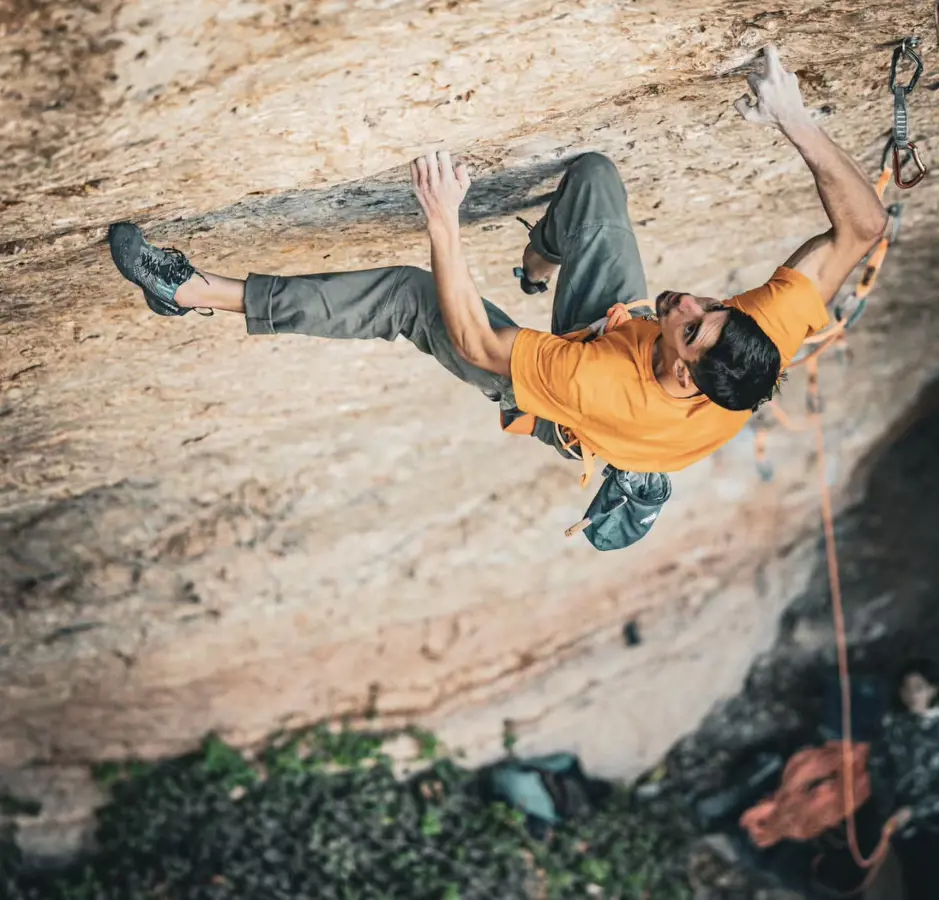
Jorge Diaz-Rullo reports on Instagram that he has made the first ascent of Cafe Colombia in Margalef. At 27, he’s already stacked four 9b+ sends and now he’s ad…
285
81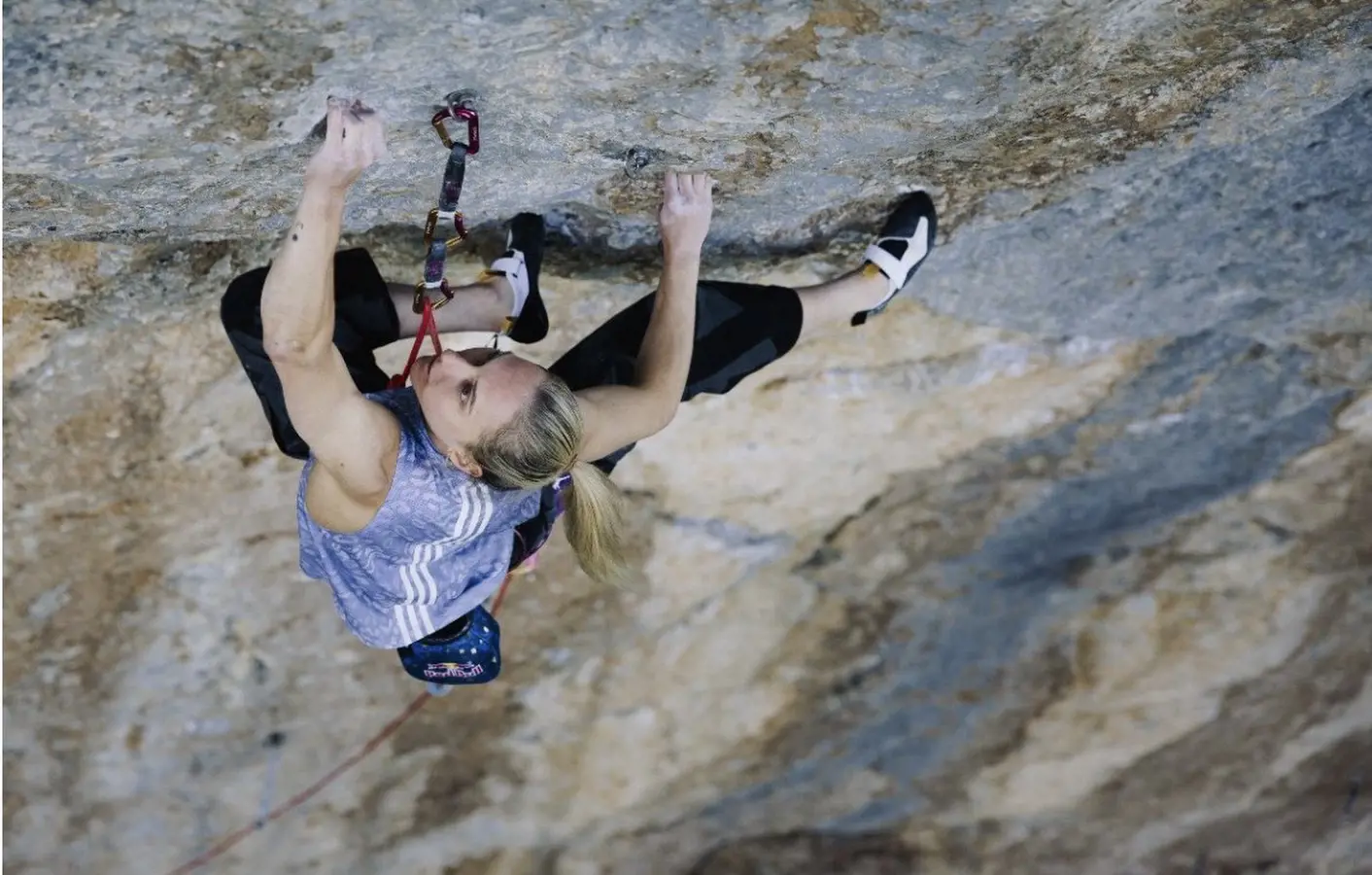
Janja Garnbret has added another milestone to her remarkable climbing career by becoming the first woman to climb Bibliographie (9b+) in Céüse, one of the harde…
229
23
”I stopped focusing on competition bouldering after last year’s World Cup in Prague, partly because I can already feel it on my body, especially in my shoulders. The modern competition style, with a lot of jumping from one hold to another, is very demanding for the shoulders.
Outdoor bouldering is…
189
13Most commented
Jorge Diaz-Rullo reports on Instagram that he has made the first ascent of Cafe Colombia in Margalef. At 27, he’s already stacked four 9b+ sends and now he’s ad…
285
81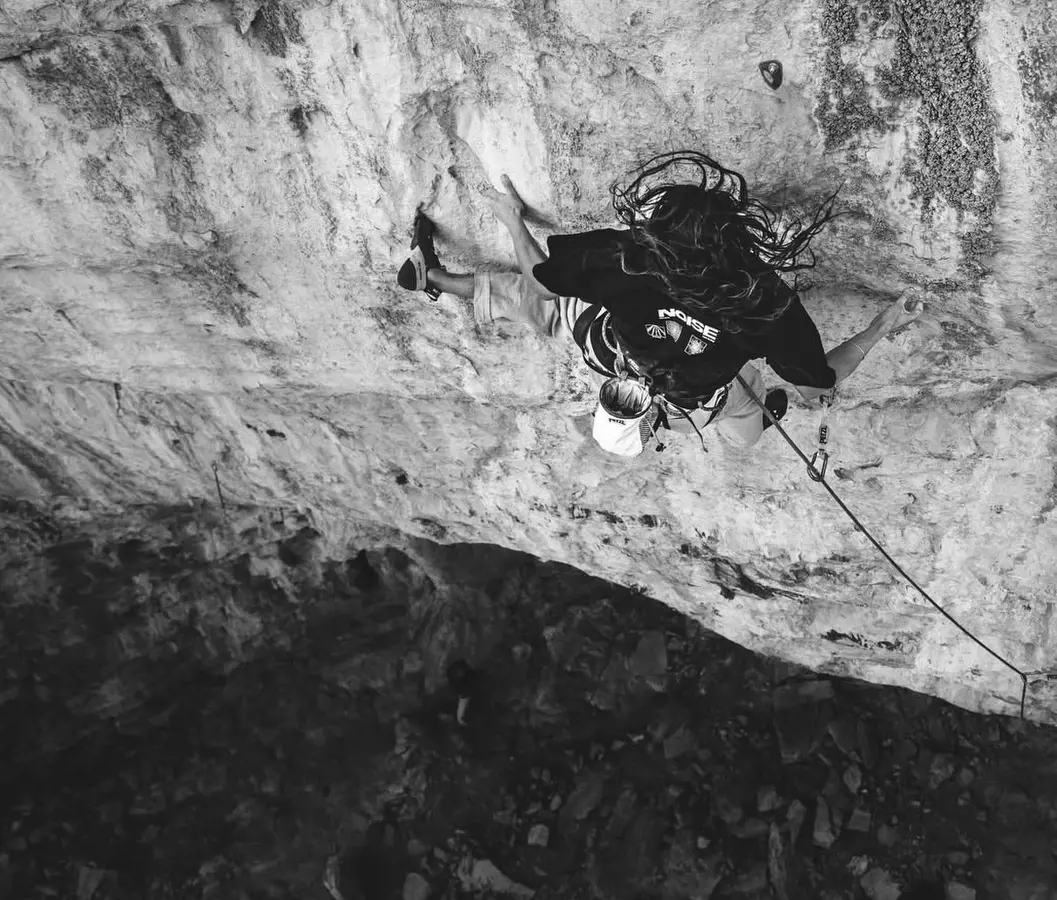
Sean Bailey reports on Instagram that he has done the first ascent of Duality of Man (9c) in Dry Canyon. ” After four total years and three seasons of climbing,…
163
69Jorge Diaz-Rullo elaborates on the reasons for him to suggest 9c for Café Colombia on Instagram, which he took down last week after projecting it for 240 sessio…
119
63